
Route vs AfterShip: The Honest Verdict for Brand-First DTC Stores


After a customer clicks Buy Now, who owns the relationship? You, or the app you installed at checkout? That question sits at the heart of the route vs aftership decision.
Route and AfterShip both promise a better post-purchase experience, but they ask you to make opposite bets: rent that experience from a multi-brand app, or own it as part of your brand. What follows is an honest verdict for DTC brands weighing the two.
The Core Difference: Brand Ownership vs a Rented Experience
Strip away the feature lists, and this decision comes down to one thing: who owns the customer relationship after checkout.
Here is the cleanest way to frame it. AfterShip provides a white-label platform for brands to own their post-purchase experience. Route's app is a cross-store hub funded by a shopper-paid protection premium. Both move a package from "ordered" to "delivered," but they put the customer in very different places while it happens.
Route's shopper app is built to be cross-merchant by design. It invites shoppers to "keep track of all of your orders in one place" and to "shop anywhere (even Amazon) and track it anytime, anywhere with Route." That is a genuinely useful consumer product. It is also a destination that belongs to Route, sitting between you and the person who just paid you.
AfterShip runs the same moment on your own domain. The tracking page, the notifications, and the returns portal all carry your brand, not a third party's. The post-purchase window is where loyalty is won or lost, and brands that treat it as owned territory rather than rented space are the ones that turn first orders into repeat ones.
One correction worth making up front: Route is no longer protection-only. After acquiring Frate Returns in January 2026, Route now offers tracking, protection, and a live returns engine. So this is not an argument about what Route can do. It is an argument about depth and ownership.
On a branded AfterShip tracking page, that ownership compounds. Merchants see roughly 3.2 views per order, and every product recommendation on the page is attributed to the store, not to a shared marketplace feed.
At a Glance: AfterShip vs Route for DTC Brands
For a brand-first DTC store, the decision comes down to control, not checkboxes.
The two platforms now overlap on tracking, protection, and returns, so a feature tally tells you very little. What separates them is who owns the customer, the data, and the upsell. The scorecard below compares them on five strategic criteria that actually move LTV: Brand Control, Customer Journey, Data Ownership, Platform Scope, and Monetization Model.
| Criteria | AfterShip | Route |
|---|---|---|
| Brand Control | White-label on your own domain: a branded tracking page and a custom-domain returns portal. | Mediates the experience through its own cross-store app and branding. |
| Customer Journey | Keeps the customer inside your ecosystem from notification to return. | Routes the tracking moment, the cash-back nudge, and "shop anywhere (even Amazon)" recommendations into its multi-brand app. |
| Data Ownership | Post-purchase data lives on your own platform. | Uses read-only inbox access to aggregate a shopper's orders across many merchants, and runs discovery and cash-back surfaces. |
| Platform Scope | End-to-end: Tracking (1,300+ carriers, AI EDD), Returns (68-carrier pool, 1 / 3 / 5 / unlimited per plan), Shipping (130+), Protection for eligible US brands. | Protection-led, with tracking and a newly-assembled returns engine. |
| Monetization Model | Predictable published SaaS subscription per product (metered overage with alerts, no hard spend cap; 25% off year one for 2+ products). | Zero monthly cost for the brand; a shopper-paid premium (flat fee under $100, a small percentage of subtotal above); a possible merchant revenue share on undisclosed terms. |
If you want a deeper teardown of the protection side specifically, we keep an honest breakdown of Route's offering on a dedicated comparison page.
Read the table one way and the pattern is hard to miss: AfterShip keeps each row inside your business, while Route routes several of them through its own app.
Tracking: A Branded Destination or a Detour to Another App?
Tracking is where the rent-versus-own choice becomes visible to your customer.
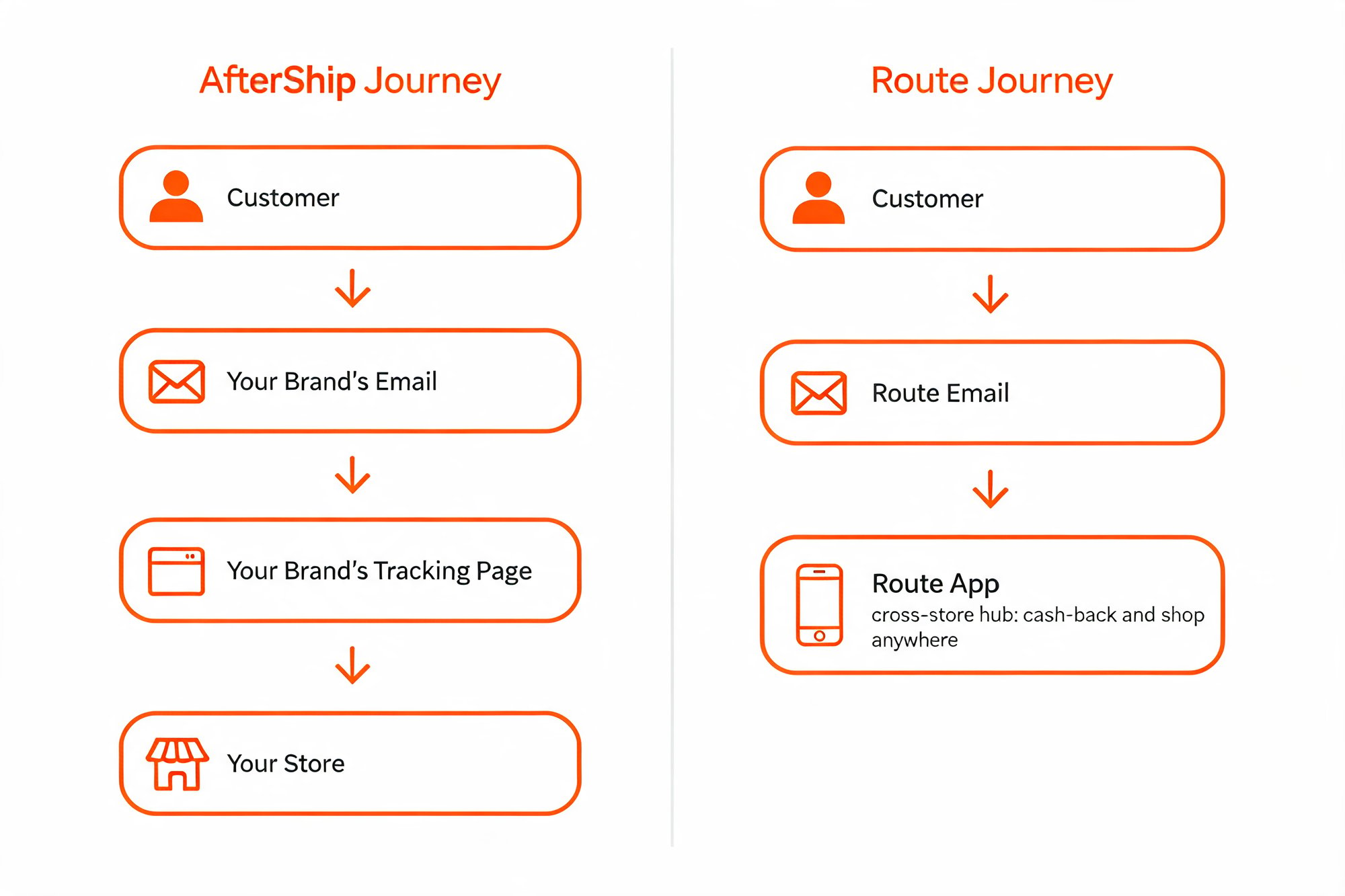
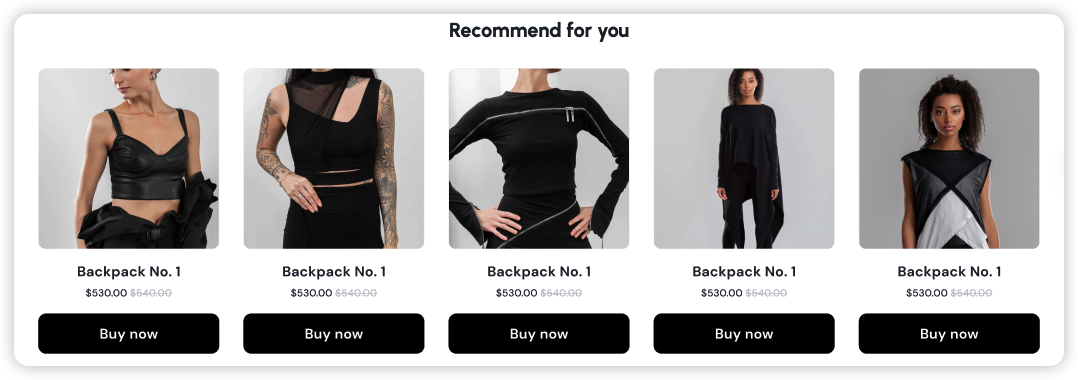
The same shipment can end on your storefront or inside someone else's app, and that routing decision quietly shapes every repeat purchase that follows. The AfterShip journey stays in your world. A customer gets your branded email, lands on your branded tracking page with its marketing and cross-sell modules, and clicks back into your store.
The data backs the model. Vivino attributes up to 30% of repeat sales to its tracking page, alongside a 79.5% email open rate, a 57.7% click-through rate, and WISMO (the "where is my order" tickets that flood support) down 50%.
Other AfterShip merchants show the same shape. Inspire Uplift credits 30% repeat sales to the tracking experience, with WISMO down 75% and 80% open and 40% click-through rates. Mous cut WISMO 54% and improved transit-time accuracy 82%. eBay raised estimated-delivery-date accuracy 10% and auto-corrects more than 200,000 packages a month.
The Route journey points the other way. A checkout widget leads to a Route email, which leads into the Route app: a cross-store hub carrying cash-back nudges and "shop anywhere" recommendations across every brand the shopper uses. The tracking moment still happens, but it builds Route's surface, not yours.
Here is what a branded destination looks like in practice, including the cross-sell modules that drive that repeat-purchase lift.
The verdict for this section is simple: both tools will tell your customer where the package is, but only one sends them back to you when they are done looking.
Package Protection: Integrated Insurance vs a Full Returns Platform
Protection and returns are not the same product, and treating them as one is the most common mistake in this comparison.
Route Protect is shopper-funded checkout insurance. The customer pays a small premium at checkout, and the policy covers shipping mishaps inside fixed windows: lost packages within 7 days domestically or 20 days internationally, stolen packages between 5 and 30 days, and damaged items filed within 30 days. When something goes wrong, Route owns the claim experience inside its own app.
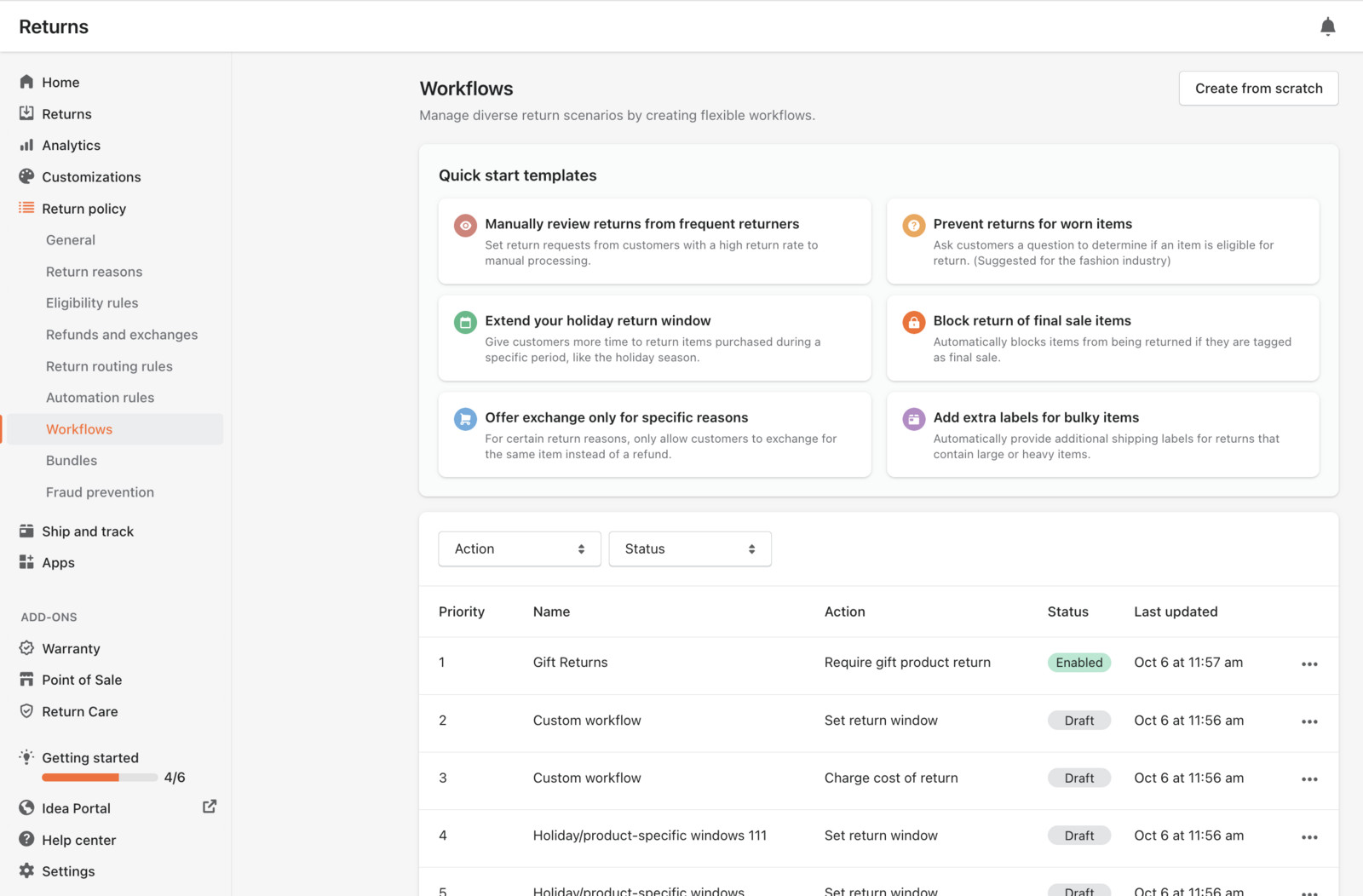
That solves one problem: shipments that get lost, stolen, or broken. It does not address the larger category of returns. Most return volume comes from fit issues, wrong items, and changes of mind, and handling those takes a full self-service any-reason returns portal, not an insurance policy. AfterShip's self-service returns portal does this on your own domain, with your own rules.
The depth lives in the automation. Returns can be routed by reason, value, and destination, with stackable rules and conditional resolutions rather than a single claim form.
AfterShip Protection covers the insurance side too, with a wider net: global coverage, full-value reimbursement, and cross-carrier scope, adjudicated by UPS Capital and InsureShield. The catch is honest and worth stating plainly. Enrollment is gated to US merchants. You need a US business entity, a USD store, Shopify or Shopify Plus, more than 5,000 orders a year, and a claim ratio at or under 3%.
For an eligible US brand, the economics are strong: premiums around 1.5%, payouts up to 120% of protected value, 95% of valid claims approved, approval in 2 to 5 business days, dents and scratches covered, no police report required for stolen packages, and free for the merchant to implement.
On Route's premium, be careful with the number. AfterShip's comparison page frames Route Protect at 1.5% to 5%, but treat that as AfterShip's framing, not a neutral fact. Independent sources put it closer to 1.5% to 2.5%, and Route's own listing sits near 2.5%, so 5% is not the standard rate.
If you sell outside the US, run multiple entities, or fall below the enrollment bar, Protect-versus-Protect is the wrong comparison. Weigh the broader platforms instead, where Tracking and Returns carry the decision.
The Hidden Costs of Route's Consumer-Funded Model
The "free" model is not free; the brand pays in customer ownership, not dollars.
Routing the highest-intent post-purchase moment through Route's app carries four strategic costs that rarely show up in a pricing comparison.
- Brand Dilution: Your tracking moment, the cash-back nudge, and "shop anywhere" recommendations all happen inside Route's app, surrounded by every other brand that shopper uses. The experience your customer remembers is Route's, not yours.
- Cross-Store Hub by Design: Route uses read-only access to the shopper's inbox to parse shipping information across every merchant, then markets cash-back loyalty discounts and product recommendations inside its own app. The hub is the point, not a side effect.
- Lost Upsell Opportunities: A customer checking delivery status sits in a high-intent window. On Route's surfaces, that attention and any resulting discovery belong to the app, not your store.
- CX Fragmentation: When the claim or return lives in Route's app rather than your branded flow, your support team loses visibility and your customer learns to go to Route, not you, when something goes wrong.
One caveat on that last point. The idea that this aggregation builds a "competitor shopping graph" is our strategic interpretation, not a claim Route makes. What is observable is the read-only inbox parsing, the "shop anywhere (even Amazon)" positioning, and the cash-back and recommendation surfaces. Whether that adds up to a competitive risk for your brand is a judgment call, and one worth making with eyes open.
AfterShip's Platform Advantage: One System for the Entire Journey
The strongest argument for AfterShip is not any single product; it is what happens when those products share one data model.
AfterShip combines tracking, returns, shipping, and protection into one unified DTC platform. Add Delivery Estimates, and the whole post-purchase journey runs on one login, one dashboard, and one shared data model. To be precise about what "one platform" means here: it is unified data, not a single invoice. Each product is a separate subscription, with a 25% first-year discount when you bundle two or more.
The payoff is operational. When the systems actually talk to each other, the fragmentation that generates support tickets goes away.
Goodr is the clearest proof. When the eyewear brand consolidated Returns and Warranty onto AfterShip, support tickets fell by about 60% and warranty claims dropped 75%, as top DTC brands like Goodr have found when they stop stitching point tools together.
“For us, AfterShip is a one-stop shop for delivery options and post-purchase support. We mainly use it for warranties and returns, where it helps with claims, processing, and customer service.”
Goodr Customer Service Team
Read their story →The pattern repeats across brands. Mejuri deflected more than 2,500 WISMO inquiries in a single peak holiday week. Aetrex, which runs on Salesforce Commerce Cloud, lifted NPS by 141 points, cut return processing by 86%, support tickets by 74%, and operating cost by 50%, across more than 120,000 packages a year. That same consolidation logic extends to fulfillment, where AfterShip adds a complete multi-carrier shipping solution to the stack.
The Honest Verdict for Brand-First Stores
If your only goal is checkout shipping insurance at zero monthly cost, Route is the cleaner fit, and we will not pretend otherwise.
AfterShip Protection is not available at all to a non-US, non-USD, non-Shopify, or sub-5,000-orders-per-year store, and Route owns claims handling end to end inside its app, which some teams genuinely prefer. There is one fit nuance worth knowing. According to a 2026 practitioner review from ATTN Agency, Route is reportedly not onboarding stores below roughly 1,000 shipped orders a month as of early 2026. Route publishes no minimum, so treat that as a practitioner-reported floor, not confirmed policy.
For any ambitious brand-first DTC store planning to scale, the calculus flips. The question stops being "what is the cheapest way to insure a package" and becomes "who owns my customer over the next three years." That is where a predictable SaaS fee starts to look like an investment rather than a cost.
The retention math is not subtle. A 5% lift in customer retention can raise profits by 25% to 95%, and acquiring a new customer costs roughly five to twenty-five times more than keeping one you already have. Acquisition has only grown more expensive: the cost to acquire a customer rose from $13 in 2013 to $29 in 2022. Seen against those numbers, a fee that protects retention and lifetime value is money spent on a core asset, your customer relationship, not an expense to trim.
If you are weighing more than two options, it is also worth comparing AfterShip to other leaders like Narvar before you commit.
The verdict for a brand that plays the long game is straightforward: rent the moment from an app, or own it as part of your brand. AfterShip is built for owning it.
Proactive shipment tracking that delights your customers, reduces WISMO tickets, and optimizes your delivery performance.
Book a demoFrequently Asked Questions
Most route vs aftership confusion comes down to five questions, so here are direct answers.
Is Route the same as AfterShip?
No. Route is a consumer-funded checkout-protection app that also offers tracking and, since acquiring Frate Returns in January 2026, a returns engine, with the shopper experience mediated through Route's cross-store app. AfterShip is a white-label post-purchase platform spanning Tracking, Returns, Shipping, and Protection that runs on your own brand and domain.
Can I use Route for returns?
Yes. Route Returns is now a live, full-service product: shoppers can file returns, receive QR or printed labels, and track progress, with exchange-first flows and AI image verification carried over from the Frate acquisition. The honest difference is depth. AfterShip Returns has been in market for years as a white-label, any-reason engine with stackable routing rules, conditional resolutions, RMA and ASN automation, incentive-driven store credit, instant exchange, and analytics, all on the same platform as Tracking.
How many carriers does AfterShip Returns support?
AfterShip Returns generates labels across a pool of 68 carriers worldwide, with per-plan entitlements of 1, 3, 5, or unlimited connected carriers on the Essentials, Pro, Premium, and Enterprise plans (Enterprise is unlimited or custom), plus discounted USPS labels on every plan. That is a distinct network from Tracking's 1,300+ integrations and Shipping's 130+ label carriers.
Does AfterShip integrate with Klaviyo and Gorgias?
Yes. Native integrations include Klaviyo, Attentive, Omnisend, and Gorgias, so your tracking and returns data can flow into the marketing and support tools you already run.
Is AfterShip Protection available outside the US?
Coverage is global, but enrollment requires a US business entity, a USD store, Shopify or Shopify Plus, more than 5,000 orders a year, and a claim ratio at or under 3%. If you are outside the US, evaluate AfterShip on Tracking and Returns, and treat Protection as a US-specific layer rather than the deciding factor.