
Narvar vs Malomo vs AfterShip: Which Cuts Support Tickets Most?


Your support team is one of your largest controllable cost lines. If 50 to 70% of their time goes to "Where Is My Order?" inquiries, you're burning your best agents on repetitive tasks. This analysis isn't about which tracking page looks prettiest. It's about which platform delivers the biggest, most defensible reduction to your support OPEX.
That reframes the whole Narvar vs Malomo vs AfterShip decision. The real question isn't which vendor has the longest feature list. It's which one removes the most tickets from your queue, across the entire post-purchase journey, for the lowest total cost. This piece gives you a verdict built on ticket-deflection ROI, not aesthetics. For tactical quick wins alongside this analysis, see our guide to strategies for reducing WISMO tickets.
The Real Cost: Why "Where Is My Order?" Is Your Most Expensive Question
WISMO ("Where Is My Order") is the single most repetitive question your agents answer. It feels cheap because each ticket is small. At volume, it's the opposite.
Be careful with the cost-per-ticket numbers floating around the internet. A "$15 to $25 per ticket" figure gets quoted constantly with no source behind it, and a CFO will catch that in your business case. The honest answer is a range. Direct agent labor alone runs about $1 to $2 (ShippyPro), blended WISMO handling lands near $5 (Claimlane) to $8 (Crisp), and a fully loaded figure with tooling and overhead reaches roughly $12 (The Retail Exec, citing Gorgias) up to $22 (LateShipment). For most DTC brands on Gorgias or Zendesk, $8 to $12 is the defensible midpoint.
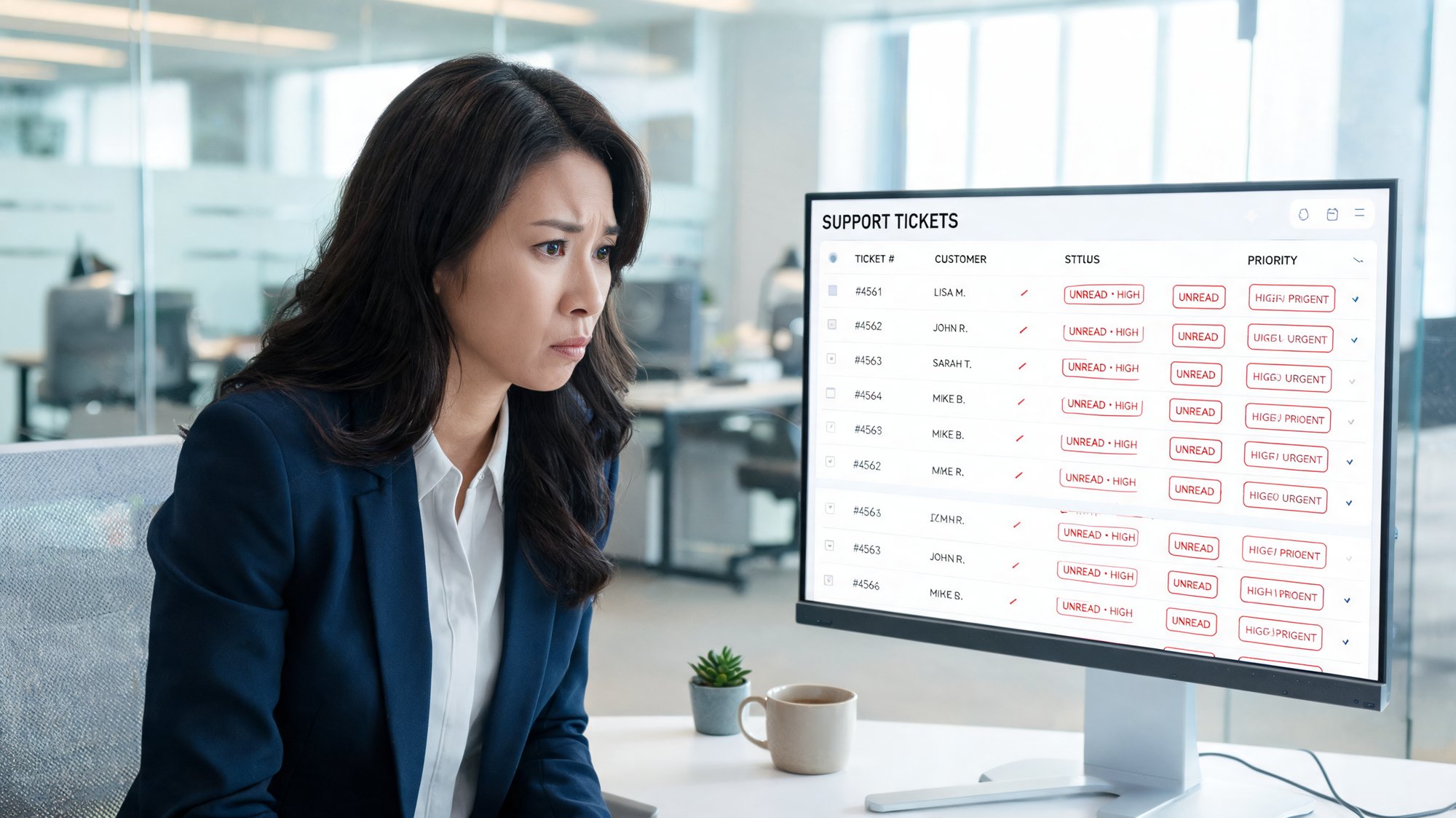
Run the math at a $10 midpoint. A brand fielding 1,500 WISMO tickets a month is spending $15,000 monthly just to tell people where their package is. Cut that volume by 54%, the reduction Mous measured, and you save $8,100 a month, or $97,200 a year.
That holds even if you're conservative. AfterShip's own internal Gorgias Ticket Analysis defaults to just $3 per ticket, and the ROI still clears easily. The point isn't one fragile number. It's the direction every published case study points: Mous cut WISMO 54%, Aetrex cut total tickets 74%, and Inspire Uplift cut tickets 75%. Your most expensive question is the one you never needed a human to answer.
The Contenders: Three Different Philosophies
These three platforms approach the post-purchase problem from genuinely different starting points. Knowing the philosophy tells you where the tickets will and won't get deflected.
- Redo (formerly Malomo): The Shopify-native specialist. Malomo, the tracking product, is now bundled into Redo's all-in-one platform spanning returns, tracking, and support. Returns are funded by a shopper-paid coverage fee (a revenue-share model), where Redo remits roughly 20% back to the merchant.
- Narvar: The enterprise-grade incumbent. It carries a broad product suite, but core capabilities are sold as paid add-ons: AI estimated delivery dates live in a "Promise" package, notifications in "Notify," and fraud in "Assist." Deployments are professional-services-led and run long.
- AfterShip: The unified post-purchase platform. Tracking, returns, and AI EDD (estimated delivery dates) sit on one stack as a single source of truth from shipment to refund, with AI EDD and 33+ notification triggers included in core Tracking rather than gated behind upgrades.
For a feature-level view of each, see a deep-dive comparison of Narvar's features and how Malomo's features stack up. The pattern matters. Redo and Narvar both ask you to assemble or upgrade your way to full coverage. AfterShip ships the coverage in the base product.
How Each Platform Proactively Reduces "Where Is My Order?" Tickets
Deflecting WISMO is a communication problem before it's a tracking problem. The winning platform tells the customer what's happening before they think to ask.
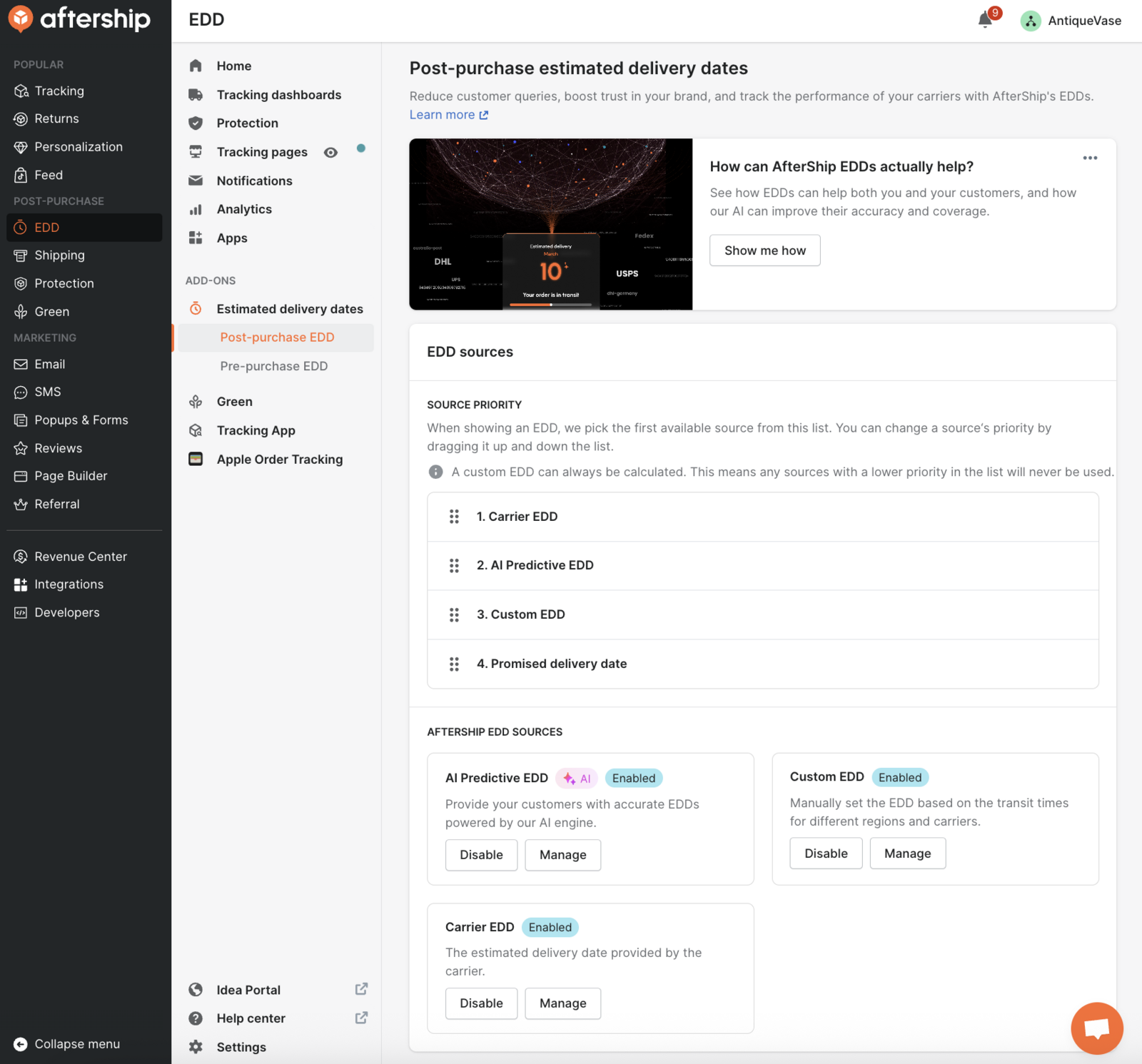
AfterShip leans on three levers here. Its 1,300+ carrier integrations keep status data accurate across regions and last-mile handoffs. AI EDD sets delivery expectations up front, so customers aren't guessing. And 33+ notification triggers across SMS, email, and app fire on specific events, included in core Tracking rather than behind a paid tier. That's a communication engine, not just a status page. You can dig into AfterShip's advanced tracking capabilities for the full feature set.
The competitors are more reactive by design. Redo and Malomo render clean Shopify tracking pages, but EDD is checkout-only and comms are email-led, so the customer still has to come check. Narvar has a solid tracking product, yet notifications and EDD sit behind the paid Notify and Promise add-ons, and Notify carries far fewer triggers than AfterShip's trigger set. Both lean on the customer to pull status rather than pushing it to them.
One honest limitation belongs here. Proactive notifications are only as accurate as carrier scan data. During peak periods or with smaller regional carriers, a delayed or stale scan can fire an outdated update and occasionally create a ticket instead of deflecting one. AfterShip mitigates this with AI-powered carrier data correction (it auto-corrected 200K+ packages a month for eBay), configurable delay buffers, and granular triggers so you only notify on high-confidence events. No platform, Narvar or Redo included, can be more accurate than the carrier data it receives. The edge is the breadth of the correction layer and the control over what fires.
The proof shows up in the numbers. Mous cut WISMO tickets 54% across more than a million monthly shipments by spotting carrier issues before they turned into complaints.
“AfterShip allowed us to set up KPI dashboards to see how well everything is going and troubleshoot before it becomes a problem.”
Rosie Jennings, Head of Logistics
Read their story →Reducing WISMO is the obvious first win. It's also where most evaluations stop, and that's the trap the next section unpacks.
Why Solving WISMO Creates a WISMR ("Where Is My Return?") Problem
Fixing your tracking page without fixing your returns process just shifts tickets from WISMO to WISMR.
Here's the trap. A great tracking experience raises the customer's expectations for the entire journey, not just the delivery leg. Baymard's order tracking and returns UX research found the returns experience is critical to retention, yet most sites still ship a returns interface with substantial UX issues. The moment they start a return, they expect the same visibility. If your returns process is a black box, the "Where Is My Return?" tickets spike to replace the WISMO tickets you just deflected.
You can patch this. A Shopify-only brand can pair Redo or Malomo tracking with a dedicated returns tool like Loop Returns or Happy Returns, and at a basic level it covers both bases. But stitching two point solutions together creates three concrete costs.
- Data fragmentation. Your agents now check two systems to answer one question. Handle time climbs, and customers risk getting conflicting answers depending on which tool the agent trusts.
- No shared analytics or exception handling. Two separate tools can't correlate a tracking exception with a returns spike. To report total post-purchase ticket volume, a CX manager has to manually merge two vendors' exports.
- Compounding cost and complexity. Two vendors means two bills, two seat structures, and two renewal cycles to manage.
The Malomo acquisition changes the pitch but not the math. A merchant evaluating it today is sold Redo's own returns product rather than Loop. That sounds unified, but Redo's coverage-fee model keeps roughly 80% of the fee while the merchant keeps about 20%, and scaling brands describe its analytics and multi-warehouse logic as surface-level. The fragmentation just moves inside one vendor.
The Superior Ticket Deflector: Self-Service Returns & Automated CX
If WISMO is the most frequent ticket, returns questions are the most expensive to resolve manually. This is where a unified platform pulls decisively ahead, and where Redo and Malomo aren't a true peer to AfterShip Returns or Narvar.
AfterShip Returns starts by removing the human from the loop. A customer enters an order number and email, selects items and a reason, and gets a prepaid label without ever opening a ticket. That single flow eliminates the "How do I return this?" question, which accounts for roughly 9.6% of all tickets in AfterShip's Gorgias analysis. Eligibility rules surface up front to head off "Can I return this?", and status notifications (around a 78% open rate) answer "Where is my refund?" before it's asked.
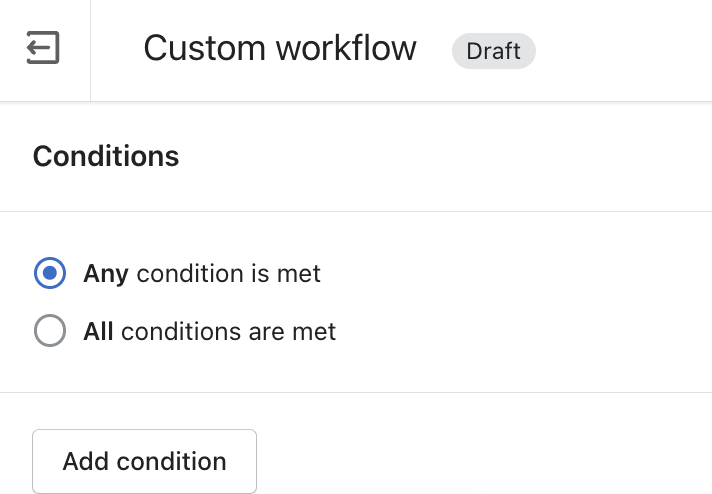
The deeper deflection comes from automation rules. You can auto-approve returns by reason, auto-route them to the right warehouse, and auto-create exchanges, which cuts returns processing time by around 50%. Narvar offers a returns product, but its more rigid automation struggles to match that level of hands-off routing.
The outcomes back it up. Aetrex cut return processing time 86%, Pelagic Gear saw a 12% drop in return-contact tickets alongside an 18% purchase lift, Marc Nolan cut time spent processing returns 97%, and Fellow shortened resolution time 52%.
One honest nuance: a self-service portal only deflects tickets when customers actually find it. Discoverability drives completion, so the return link belongs in confirmation emails, on the tracking page, and in the header, not buried in a footer FAQ. Brands that report "the tickets just shifted" almost always had a discoverability or configuration gap, not a product gap. Configure it well, and self-service returns become the second-biggest ticket deflector after proactive tracking.
The Final Verdict: Unified Platform vs. Point Solutions for Total Ticket Reduction
Step back from the feature lists and the answer gets clear. Tickets are born in the gaps between systems: the handoff from tracking to returns, the moment an EDD slips, the refund a customer can't see. AfterShip's unified platform puts tracking, returns, and AI EDD in one place, so those gaps close by default. Point solutions create the gaps by design.
| Criteria | AfterShip | Narvar | Redo (Malomo) |
|---|---|---|---|
| Proactive notifications | 33+ triggers, included in core | Paid "Notify" add-on, fewer triggers (~3-5) | Shopify-native, tracking-focused, email-led |
| AI EDD | Included; 90% first-prediction accuracy, 80%+ coverage | Paid "Promise" add-on; self-reports 95%+ on a narrow carrier set, coverage undisclosed. | Checkout-only EDD, no first-class EDD product |
| Returns | Full self-service portal + automation rules | Returns product (Shield), more rigid automation | Returns via coverage-fee revenue-share (keeps ~80% of fee) |
| Unification | Tracking + Returns + EDD on one platform, one data view in Gorgias/Zendesk | Suite, but siloed discrete products | All-in-one, but analytics described as surface-level |
| Implementation / time-to-ROI | Hours-to-days (SMB) / 4-6 weeks (mid-market) | 6-8 weeks to 6 months | Fast within Shopify |
| TCO (~5K orders/mo) | ~$270/yr (bundled Y1) | $30K-$45K/yr | ~$4,800/yr (≈$6,660 paired with Loop Returns) |
The implementation gap is where ROI is won or lost. AfterShip goes live in hours to days for self-serve Shopify brands and 4 to 6 weeks for mid-market with a technical account manager, with drag-and-drop tracking-page edits you control. Narvar's standard enterprise builds run 6 to 8 weeks and complex ones up to 6 months, bottlenecked by Narvar's own professional-services queue, locked into 2 to 3 year contracts, with page edits gated behind an account manager. Those long timelines show up in G2 reviews of Narvar too.
That delay has a dollar value. A 6-month Narvar implementation against a $15,000-a-month WISMO bill is $90,000 in savings you never captured while waiting. A 1-month AfterShip implementation forfeits $15,000. The difference in time-to-ROI is roughly $75,000 before you've compared a single subscription line.
On price, the unified option is also the cheaper one at this scale. Narvar entry deals start around $30,000 to $45,000 a year, with enterprise commitments reaching $400,000 to $500,000 over two years. AfterShip Tracking starts near $11 a month on Shopify Essentials. For a mid-market DTC brand, AfterShip is the fastest and lowest-cost path to total ticket reduction. That is the verdict.
Proof in Practice: How Aetrex Cut Support Tickets 74% with AfterShip
Aetrex is the case that ties the whole argument together, and you can read how DTC brands like Aetrex cut tickets in full. The DTC footwear brand ships more than 120,000 packages a year, runs both AfterShip Tracking and Returns, and switched to AfterShip from Narvar, the exact decision this article is about.
“After using AfterShip Tracking for several years, if we were going to trust anyone to invest money into a returns solution, would put my money on AfterShip.”
Rui Kojima, Senior Director of eCommerce
Read their story →The results validate the unified-platform thesis directly: WISMO tickets down 74%, return processing time down 86%, operating cost down 50%, and NPS up 141 points. Those gains came from running tracking and returns as one system, not from bolting two point tools together. When the same brand cuts tickets across both WISMO and returns, the single source of truth is doing the work.
Proactive shipment tracking that delights your customers, reduces WISMO tickets, and optimizes your delivery performance.
Book a demoFrequently Asked Questions (FAQ)
Is Narvar or AfterShip better for enterprise retailers?
Narvar suits large enterprises with deeply embedded legacy systems that need heavy customization, but that comes with 6-week-to-6-month implementations, paid add-ons for EDD and notifications, and 2 to 3 year contracts. AfterShip delivers unified tracking and returns with AI EDD and 33+ notification triggers included, faster setup, and self-serve control. Brands including Mejuri, Aetrex, Away, Dr. Squatch, TOMS, and Lenovo switched from Narvar to AfterShip.
How much does Malomo or Redo cost compared to AfterShip?
AfterShip Tracking and Returns are billed separately (Tracking Essentials around $29 a month, Returns Essentials around $16 a month), but a 25%-off first-year bundle brings the pair to roughly $29.25 a month with a shared $5 per seat. On total cost at about 5,000 orders a month, AfterShip bundled lands near $270 a year versus Redo (Malomo tracking plus returns) near $4,800, Loop plus Redo tracking near $6,660, and Narvar at $30,000 to $45,000. Unified does not mean more expensive here.
Does AfterShip integrate with Gorgias or Zendesk?
Yes, natively. The integration surfaces real-time tracking and returns data in the agent's ticket sidebar, which speeds up handle time and removes tab-switching. It is a resolution accelerator, not an auto-deflector: it does not auto-close tickets on a status change. Actual deflection happens upstream through proactive notifications and self-service pages. Narvar also integrates with Gorgias and Zendesk via Connect & Care, so this is not a differentiator. The upstream deflection layer is.
How long does it take to see WISMO reduction after implementing AfterShip?
Expect two phases. Most brands see an immediate drop in new-customer WISMO tickets within the first 2 to 4 weeks of going live. Full reduction across the entire base, including habitual repeat-emailers, typically stabilizes at 6 to 8 weeks. Case-study benchmarks such as Mous at 54% and Aetrex at 74% were achieved within the first reporting period, and one high-volume merchant measured an 81% WISMO ticket-rate reduction in the after-period.