
The 5 Best Easyship Alternatives for Scaling DTC Brands in 2026


Your brand is growing, but is your shipping software holding you back? If you started with Easyship, you might be noticing the cracks: rising WISMO tickets, a clunky returns process, and a customer experience that doesn't feel like your brand. You're not alone. This is the classic sign you've outgrown your initial shipping tool. The question is, what's next?
Easyship is a genuinely good place to start. It gets labels printed and parcels moving on day one. But as your monthly volume climbs from a few hundred orders to a few thousand, the limits show up in the two places that matter most to a scaling brand: customer experience and operational efficiency. This guide walks through the five strongest Easyship alternatives for 2026, each matched to the specific reason brands tend to leave.
3 Signs You've Outgrown Easyship
Most teams don't switch shipping tools on a whim. They switch because the same three problems keep landing on their desk.
- Your customer experience ends at checkout. Once the label prints, the journey hands off to a generic carrier page with no proactive updates. The shopper who just fell for your brand spends the next five days staring at a tracking screen that looks nothing like you.
- "Where is my order?" is your most common support ticket. Without a branded tracking page and automated status updates, every shipment delay turns into an inbound message. WISMO (where is my order) becomes the single biggest line item in your support queue.
- Your returns process is manual and costly. No self-service portal means your team handles each return by hand, email by email. There is no automation, no smart routing, and no easy path to an exchange that keeps the revenue in your business.
That middle problem carries a price tag, and it is bigger than most teams expect. WISMO tickets cost about $5 each to resolve (range $2-12), according to Claimlane (2026), and that is before you count the CSAT hit from a frustrated customer. Multiply that across a few hundred inquiries a month and the case for better post-purchase tooling makes itself.
The good news: this is a solvable problem. Real-time tracking alone can take up to 65% of those WISMO tickets off your team's plate, and an integrated platform does far more than that.
Quick Comparison: 2026's Top Easyship Alternatives
Before we go deep on each option, here is how the five Easyship alternatives stack up on the criteria that matter to a scaling DTC brand: an integrated post-purchase experience, brandable CX, and starting price.
| Alternative | Best For | Integrated Returns & Tracking? | Starting Price |
|---|---|---|---|
| AfterShip | All-in-one post-purchase platform for scaling DTC | Yes (deeply integrated Shipping + Tracking + Returns) | From $9/mo (Shipping Essentials, billed annually; priced per product) |
| ShipStation | High-volume marketplace sellers | Partial (Legacy branded tracking; one-service returns portal) | $14.99/mo (Starter) |
| Shippo | Pay-as-you-go / API flexibility | Basic (branded tracking on Pro; return labels, no portal) | Free Starter (30 labels); Pro from $17/mo |
| ShipBob | Outsourcing entire fulfillment (3PL) | N/A (a 3PL; pairs with AfterShip for tracking/returns) | Custom quote (software free) |
| Pirate Ship | Cheapest low-volume US domestic | No (carrier-direct tracking only; no returns portal) | Free (pay only postage) |
The pattern is hard to miss. Most tools on this list do one job well, while only one is built to run shipping, tracking, and returns as a single connected platform. That is where we will start.
1. AfterShip: The Best All-in-One Platform for Customer Experience
If your reason for leaving Easyship is the post-purchase experience, AfterShip is the most complete upgrade on this list. AfterShip provides an integrated shipping, tracking, and returns platform. Most rivals bolt those together; here they run as one connected stack. The clearest proof shows up at the hardest moment to coordinate: a return.
When AfterShip Returns approves a return, it creates the RMA directly on your 3PL platform, such as ShipBob or ShipHero, then auto-triggers a status update the moment the item is received and feeds that visibility back into inventory. A standalone returns tool that does not own the shipping and tracking data cannot close that loop. That is the practical meaning of all-in-one: the same shipment event drives the tracking page, the proactive notification, the delivery estimate, and the return window.
The ratings back up the experience. AfterShip Tracking holds 4.5 stars from roughly 1,200 reviews, Returns sits at 4.7 from 1,268 reviews, and the platform carries a 4.7 from 311 reviews on G2. Those are the suite numbers a migrating brand should weigh.
Marc Nolan
“It's also saved a lot of revenue - $125k in the last 90 days.”
Nikolas Callas, Director of Operations
Read their story →Marc Nolan is a useful benchmark precisely because the team sits close to this persona's scale. Their results are not a Fortune 500 case study with a different cost structure; they are the kind of outcome a growing brand can realistically reach.
A quick word on price before the features. AfterShip is priced per product, starting from $9 per month for Shipping Essentials billed annually, or $11 per month billed monthly. That gap is a billing-term difference, not a hidden channel markup. If you want to see exactly how the two stack up, AfterShip offers a direct, side-by-side feature comparison with Easyship. AfterShip is not the cheapest option for a tiny store, and we will say so plainly. For a brand scaling toward thousands of orders a month, the spend reads less like a subscription and more like an investment that pays back through lower support costs and higher repeat purchases.
From Generic Tracking to a Branded Journey
The first thing migrating brands feel is the tracking gap. A branded tracking page replaces the generic carrier screen with your logo, your colors, and a branded experience, so the days between checkout and delivery still feel like you.
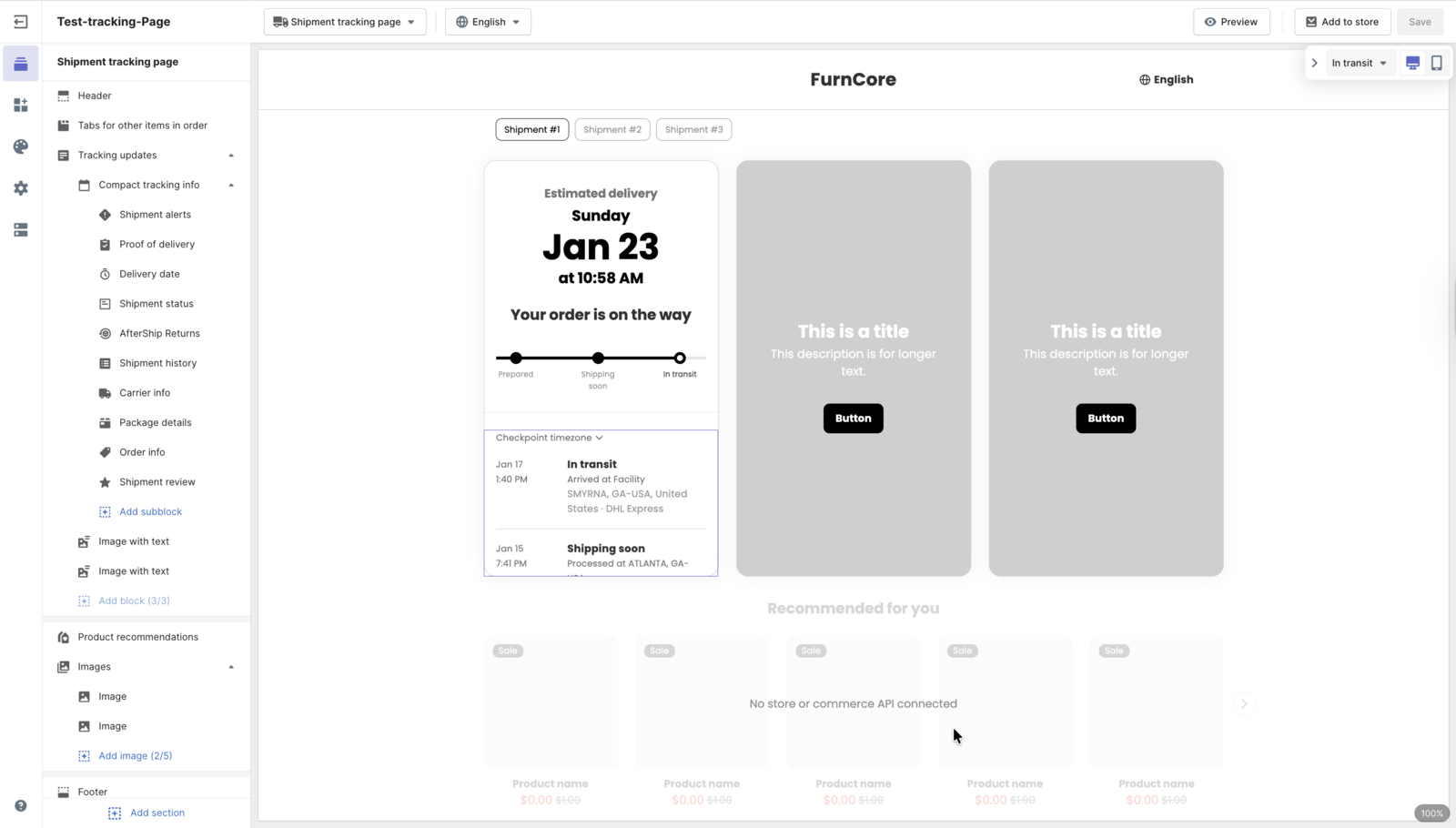
The numbers here are concrete, and each one belongs to a specific feature. AfterShip brands reduce WISMO tickets by up to 65% with real-time tracking. Proactive shipment notifications over email and SMS cut WISMO calls by 40% on their own surface. Mous, for example, cut its contact rate from 12.9% to 5.9%, a 54% reduction. Keep that figure in context: Mous operates at a larger, more enterprise scale than the 500-to-5,000-order brand this guide is written for, so treat it as directional proof rather than a like-for-like promise.
AI EDD is the pre-purchase edge none of the other four tools offer. AfterShip AI EDD shows predicted delivery dates before purchase, unlike pure shipping tools. AfterShip predicts a delivery date for at least 80% of deliveries, while most carriers manage predictions on under 40%. Accuracy reaches up to 95%, and showing that date early matters: Narvar found 73% of shoppers say delivery estimates influence their purchase, and 40% will not buy without one. AI EDD is available on the Tracking Premium tier.
From Manual Refunds to an Automated Returns Center
Returns are where the manual work hides. AfterShip Returns replaces the email-by-email grind with a self-service branded portal and a set of rules that run the process for you.
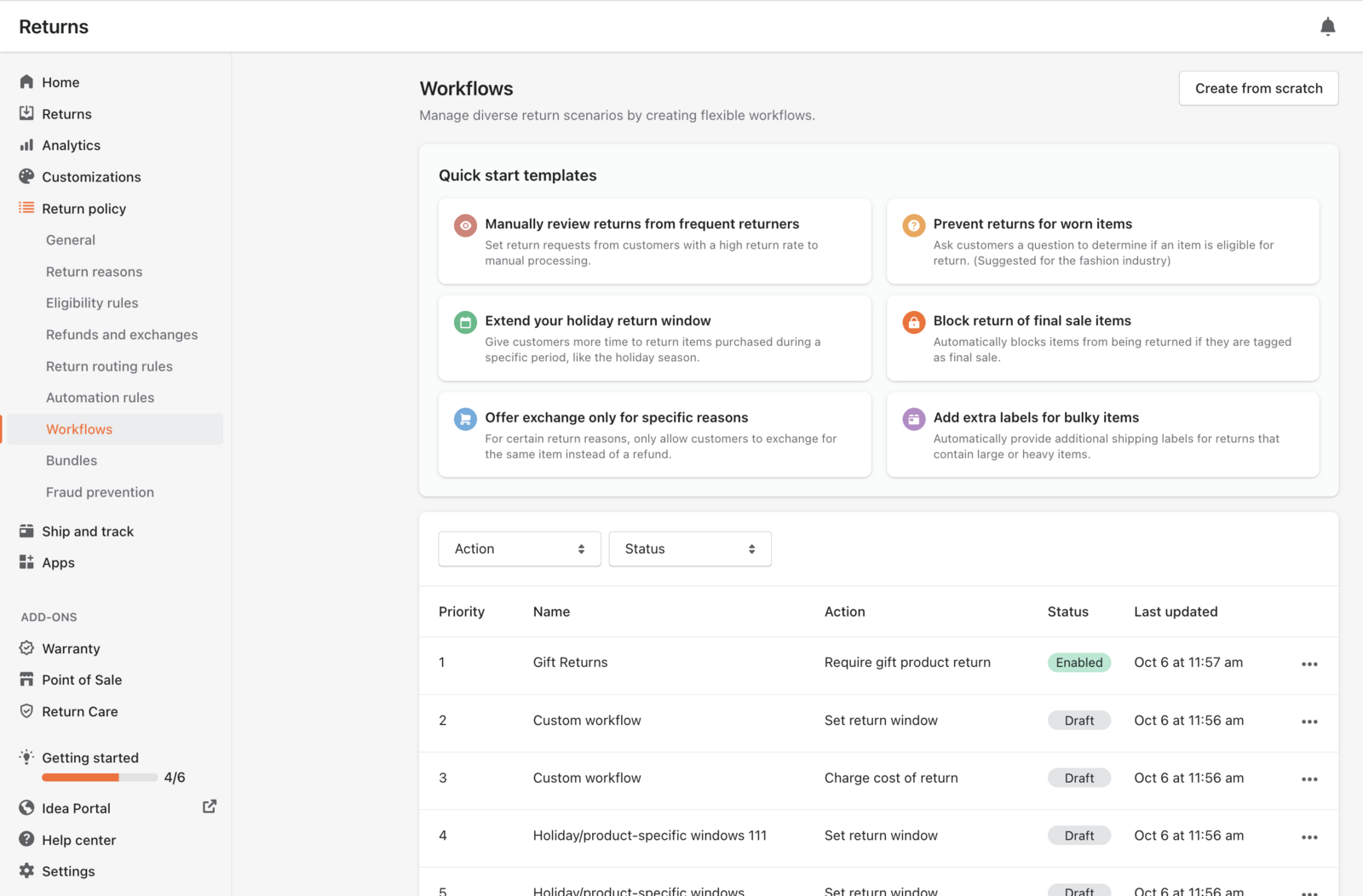
The depth is the point. AfterShip Returns covers exchanges both in-app and on-store, store-credit refunds, conditional workflows and smart routing, return fraud management, and real-time analytics. The outcomes follow: brands retain up to 50% of revenue through exchanges, see a 78% open rate on returns emails, and cut returns processing time by 50%. This is not a question of returns versus no returns against the other tools; it is how much of the work the platform takes off your team.
From Basic Labels to Optimized Shipping
Shipping is the foundation the rest of the suite sits on. AfterShip Shipping generates labels across 130+ carriers and lets you bring your own carrier accounts on every tier.
AfterShip's advanced shipping automation rules handle the routing for you. Set a condition like "if weight is over 5kg, use DHL," and the platform applies it to every matching order without anyone touching it. AfterShip advertises the best USPS discount, up to 90% off with USPS and no minimum shipping volume requirement, which keeps domestic costs in check as you grow.
The shipping layer is strong on its own. Paired with branded tracking, automated returns, and AI delivery dates on a complete post-purchase platform, it is why AfterShip is the strongest all-around Easyship alternative for a brand that cares about the whole customer experience, not just the label.
2. ShipStation: The Best for High-Volume Marketplace Sellers
If you sell across Amazon, eBay, and Walmart and your bottleneck is moving a high volume of labels, ShipStation is built for exactly that. It connects to 200+ carriers and more than 400 integrations, with unlimited automation rules that keep a busy multichannel operation flowing. Plans start at $14.99 per month. For a marketplace-first seller, that breadth is the genuine draw.
Where it differs from an all-in-one platform is the post-purchase layer. ShipStation does offer branded tracking, but it sits in its Legacy feature set and is gated by plan, so it is not the default experience on every account. Its returns portal is real too, though the help center notes a portal can currently select only one return service and package type, which limits routing flexibility as your returns grow. The capability is there; the depth and integration are shallower than a platform that owns tracking and returns natively.
3. Shippo: The Best for Pay-As-You-Go Flexibility
Shippo wins on simplicity and price flexibility. There is a free Starter plan covering 30 labels a month, or $0.05 per label when you bring your own carrier account, plus a Pro plan from $17 per month across 40+ carriers. For developers, the API is the real attraction: clean, well-documented, and easy to wire into a custom stack. If you want usage-based pricing without a platform commitment, Shippo fits.
The trade-off is that Shippo is a label-printing engine, not a customer-experience platform. Branded tracking is available on Pro, and return labels are included on all tiers, but there is no self-service returns portal for customers to manage their own returns. That is the line between generating a return label and running a returns experience. For a brand whose next priority is post-purchase CX, Shippo solves the shipping mechanics rather than the experience around them. If you are weighing API-first options, see how AfterShip compares to EasyPost.
4. ShipBob: The Best for Outsourcing Your Entire Fulfillment
ShipBob belongs in a different category, and that is the point. It is a third-party logistics (3PL) service, not shipping software you run yourself. The software is free; you pay for fulfillment on a custom quote, with fulfillment centers across the USA, Canada, UK, Australia, and the EU reaching 250+ destinations. If your goal is to hand off warehousing and shipping entirely, ShipBob is the option here that actually does that.
It is also a named AfterShip Returns 3PL partner, alongside ShipHero. That makes it a complement as much as an alternative: you can run ShipBob fulfillment and layer AfterShip on top for branded tracking and automated returns. Comparing its per-order fulfillment cost against a software subscription is not a like-for-like exercise. The real question is not "ShipBob or AfterShip," but whether you want to outsource fulfillment and still own the post-purchase experience.
5. Pirate Ship: The Best for Low-Volume US-Based Sellers
Pirate Ship offers the cheapest USPS shipping rates for low-volume sellers. It is genuinely free, with no monthly fee, and you pay only postage. It passes through up to 87% off USPS and UPS rates, supports USPS Cubic pricing, and holds a 4.9 rating from 138 reviews on Shopify, the highest-rated tool in this group. For a seller shipping under 100 simple domestic parcels a month, it is a fantastic starter.
The catch is that it shares the same ceiling you hit with Easyship. There is no branded tracking page, no returns portal, and no automation or API to grow into, and it covers USPS and UPS only. Pirate Ship is the right tool for the lowest-cost domestic label, full stop. It is not built to scale a branded post-purchase experience as your order volume climbs.
How to Choose the Right Easyship Alternative for Your Brand
The right pick comes down to four questions. Answer them honestly and the shortlist narrows fast.
- How important is post-purchase CX to retention? If branded tracking and a smooth returns experience drive your repeat rate, an all-in-one suite is a better home than a label tool.
- Do you need to automate returns? If returns are eating your team's time, prioritize a real self-service portal with routing rules, not just printable return labels.
- Are you selling internationally, and do you need duties at checkout? Here is an honest concession: AfterShip Shipping does not calculate or display landed cost or duties at checkout. If showing a customer their full duties and taxes at checkout is your top priority, Easyship is the better fit for that specific job, with duties at checkout from its Premier tier and 550+ couriers. AfterShip's international strength is different: multi-carrier rate comparison across 130+ carriers with your own carrier accounts, plus branded multi-language tracking and AI delivery dates that no label tool matches.
- What is your 12-month order volume? Sub-100 domestic parcels point to Pirate Ship. High marketplace volume points to ShipStation. A plan to outsource fulfillment points to ShipBob. A developer-led, usage-based setup points to Shippo.
If customer experience is the thing you are scaling toward, the integrated suite is the home base, and the rivals each own a narrower job.
The Verdict: What's the Best Easyship Alternative in 2026?
For a scaling DTC brand doing 500 to 5,000 orders a month, the best Easyship alternative is the one that runs the whole post-purchase experience on a single platform: AfterShip. It wins when the integrated experience (branded tracking, automated returns, and AI delivery dates) matters more than the lowest per-label price.
The niche tools keep their place. Pirate Ship is the cheapest low-volume US domestic option. Shippo is the pay-as-you-go and API pick. ShipStation is for high-volume marketplace sellers. ShipBob is for outsourcing fulfillment entirely, and it pairs with AfterShip rather than replacing it.
One honest caveat: AfterShip is not the cheapest choice for a very small store. If you ship under 100 simple domestic packages a month and only want the lowest label cost, a free tool like Pirate Ship is the sensible short-term pick. But for brands building for growth, the investment in customer experience pays for itself by cutting support costs and lifting repeat purchases.
Frequently Asked Questions
Why switch from Easyship?
Brands tend to leave Easyship when growth exposes three gaps: a generic post-checkout tracking experience, a manual returns process, and a rising volume of WISMO (where is my order) tickets that cost roughly $5 each to resolve. An integrated post-purchase platform addresses all three in one place.
What are the best Easyship alternatives?
The five strongest are AfterShip (an all-in-one shipping, tracking, and returns platform), ShipStation (high-volume marketplace sellers), Shippo (pay-as-you-go pricing and API flexibility), ShipBob (outsourcing fulfillment as a 3PL), and Pirate Ship (the cheapest low-volume US domestic labels).
Which alternative is best for my brand?
Match the tool to your priority. Choose AfterShip for an integrated branded post-purchase experience at 500 to 5,000 orders a month, Pirate Ship for the lowest-cost domestic labels under about 100 parcels, ShipStation for high marketplace volume, Shippo for usage-based pricing and developer flexibility, and ShipBob to outsource fulfillment entirely.