
Best AfterShip Alternatives for 3PLs & Enterprise Logistics in 2026


The Core 3PL Challenge: Juggling Operational Visibility vs. Client CX
Your TMS gives you visibility from warehouse to sorting hub. Your freight forwarder gives you port-to-port updates. But your clients, and their customers, only care about visibility from the "buy" button to their front door. In 2026, how do you bridge that final-mile visibility gap at scale without crippling your dev team?
That gap is the defining problem for a modern 3PL. Your operational stack was built to move freight, not to reassure a retail client's end customer at 9 p.m. that their order is two stops away. The tools that excel at one rarely touch the other.
Traditional logistics systems prove the point. A TMS or a freight-tracking platform is engineered for lane optimization, carrier settlement, and dock scheduling. None of it produces a branded tracking page, a proactive delivery notification, or a self-service returns portal your client can put their logo on.
Flip to the other side and the problem inverts. Most post-purchase tools were built for a single DTC brand running one storefront. They assume one merchant, one brand, one carrier mix. Drop a 3PL into that model and the cracks show fast: no multi-tenant architecture to isolate Client A from Client B, thin carrier coverage once you move past domestic parcel into LTL and freight, and an API that buckles under enterprise call volume.
This is why searching for AfterShip alternatives for 3PLs is harder than it looks. You are not shopping for a tracking widget. You are shopping for the layer that connects your logistics operation to the customer experience your clients are judged on, which is precisely the unique post-purchase needs of 3PLs that generic tools ignore.
Armstrong & Associates' 2026 research on 3PL and customer relationships points the same way. As the lines between traditional 3PLs, freight brokers, and technology platforms blur, shippers are consolidating toward fewer, more integrated partners. The experience you deliver becomes a retention issue, not a feature.
The 3PLs winning renewals in 2026 treat customer experience as a contract-level deliverable, not a nice-to-have. The visibility and returns experience you offer is increasingly what keeps a retail client from shopping your contract elsewhere.
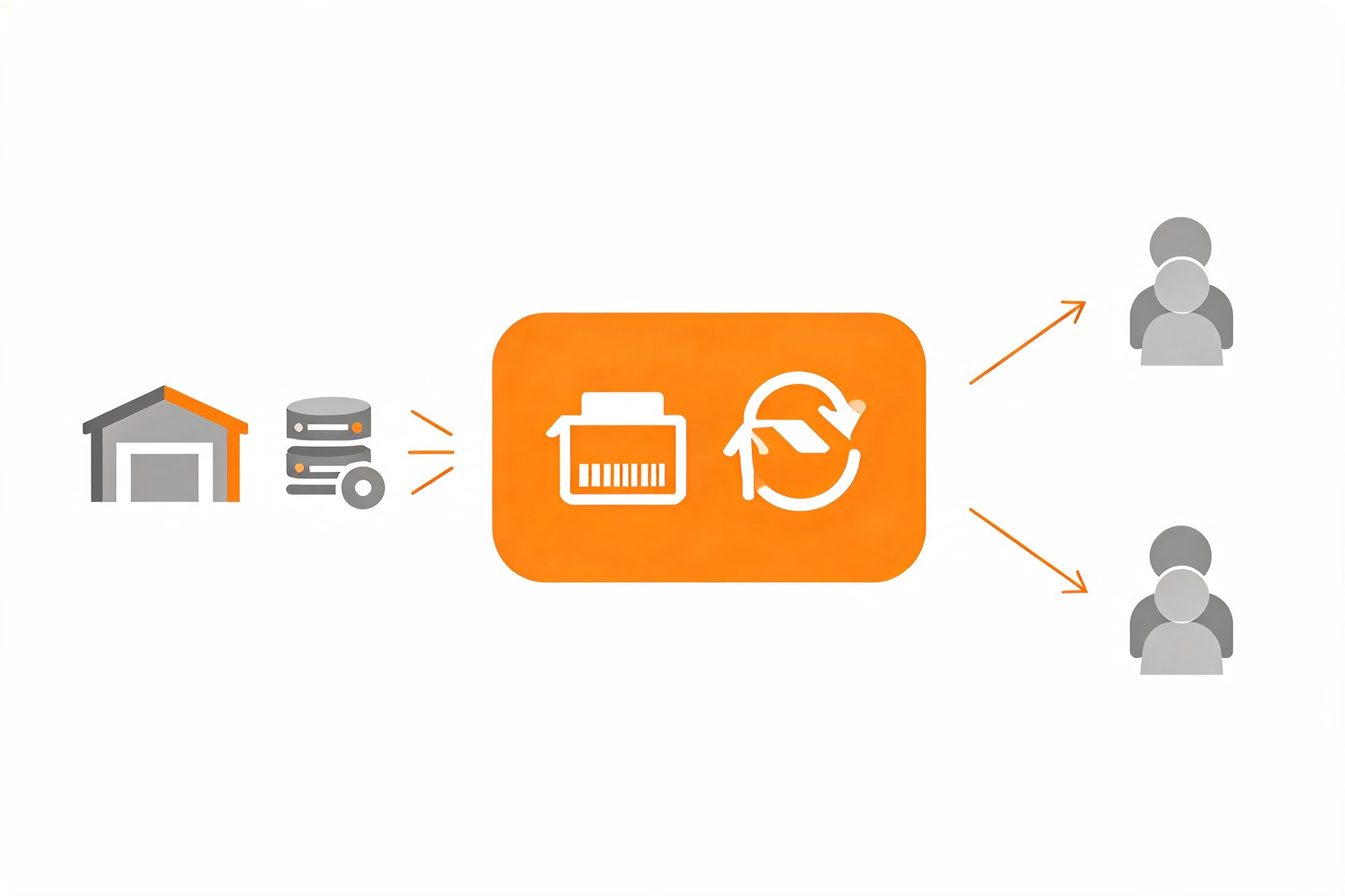
5 Non-Negotiable Criteria for Evaluating Logistics Post-Purchase Platforms in 2026
Before you shortlist a single vendor, fix your evaluation criteria. The right framework filters out tools that demo well but fail at 3PL scale. Five criteria separate a platform that survives your COO's review from one that stalls in procurement.
- API and scalability. Read the rate limits, the uptime commitment, and the webhook depth before the feature list. A platform that throttles at peak or only pushes shallow status events will not survive your highest-volume client's BFCM. Ask what the published rate limits are and what the contractual SLA looks like under an enterprise agreement.
- Carrier network breadth. Domestic parcel is table stakes. For a 3PL you need parcel, LTL, freight, and the regional carriers your largest clients actually use. Count the carriers, then confirm freight and trucking are covered, not just the household courier names.
- Multi-tenant capabilities. This is the criterion most DTC-born tools fail. Each retail client needs its own isolated environment: separate branding, separate routing rules, separate data, separate user access. If onboarding a new client means cloning a workspace and hoping the data stays segregated, the architecture was not built for you.
- Enterprise-grade security and compliance. Your client's procurement team will ask for SOC 2 and GDPR posture before anything reaches a contract. Confirm the SOC 2 report type, the encryption standards, and how tenant data is isolated between your clients. Vague answers here end deals.
- Total cost of ownership. Price per shipment is the smallest line. Implementation effort, the dev sprint to integrate your TMS, support-tier costs, and per-carrier or per-module add-on fees decide the real number. Model the 24-month TCO, not the sticker.
Score every option against these five before you compare brand names. The platform that clears all five is rare, and that scarcity is the entire point of this comparison.
The Enterprise Landscape: 2 Types of AfterShip Alternatives
Apply those criteria and the market splits into two camps, and neither was designed for a 3PL specifically. Understanding the split is how you brief your CTO without drowning in vendor decks.
The first camp is customer experience-first platforms. Narvar is the best-known name here, and a strong enterprise competitor like ParcelLab plays in the same category. These tools are built for retail brands that want a polished tracking page, branded notifications, and a returns experience that drives repeat purchases. For a single large retailer with a simple carrier profile, they are a reasonable fit.
Their limitation for a 3PL is structural. CX-first platforms generally assume one brand per account, so serving five retail clients can mean five separate accounts and constant context-switching. Carrier coverage skews to domestic parcel, and freight or LTL support thins out quickly.
The second camp is hardcore logistics visibility platforms. project44 and FourKites lead this category, and they are genuinely strong at what they do: real-time freight, ocean, and air visibility feeding your operations and analytics stack. If your problem is purely back-end multimodal tracking, they earn their place on the shortlist.
The catch sits on the other end of the journey. These platforms carry no customer-facing layer. No branded tracking page, no proactive shopper notifications, no returns portal your client can hand to their end customers. They solve your operations problem and leave your client's experience problem untouched.
That leaves a gap down the middle, and it is the gap your retail clients feel most. You can serve operations with a visibility platform and serve experience with a CX tool, then spend your dev budget stitching two systems together and reconciling two data models.
The alternative is a platform built to sit in that middle. That is the lens to carry into the head-to-head comparison that follows.
AfterShip vs. The Competition: A Head-to-Head Comparison for 3PLs
The five criteria from the last section stay abstract until you line up real platforms against them. The table below scores AfterShip, Narvar, and project44 on the six dimensions that decide a 3PL deal.
| Criteria | AfterShip | Narvar | project44 |
|---|---|---|---|
| API & Uptime SLA | Open, public API; published limits from 20 POST/sec (tracking), custom limits on Enterprise. 99.9% uptime target, contractual SLA on Enterprise. | API & webhooks are a paid add-on; API docs gated behind an enterprise account. | Enterprise API & EDI data feeds for freight/multimodal visibility; SLA terms set per enterprise contract. |
| Carrier Network (Parcel, LTL, Freight) | 1,312 carriers incl. LTL & freight; public directory; no merchant-supplied carrier accounts required. | Narrower effective coverage than its headline number; customers must supply their own carrier accounts. | Deep multimodal freight / ocean / air visibility; not built for D2C parcel last-mile. |
| Multi-Tenant Capabilities | Company → Organization model: each client isolated (data, branding, rules, users), rolled up to one parent console. | Single-tenant; serving multiple clients means separate accounts and context-switching. | No customer-facing multi-client tenant model (no branded client portals). |
| White-Label Customization | Full white-label on Premium; custom domain with auto-managed SSL; self-serve page edits. | "Powered by Narvar" mark; pages often on narvar.com; page edits routed through an account manager. | No customer-facing branded layer to white-label. |
| Analytics & Reporting (per-client) | Per-client dashboards (carrier performance, transit, exceptions) that roll up at the Company level. | Configurable BI dashboards; multi-brand needs separate accounts. | Strong freight control-tower analytics; no per-retail-client CX reporting. |
| Security & Compliance | SOC 2 Type II + ISO 27001 + GDPR DPA; tenant-level isolation; TLS 1.2 / AES-256; US data residency. | SOC 2 and GDPR. | SOC 2 Type 2 and ISO 27001 certified. |
Read across the rows and the pattern is hard to miss. AfterShip covers all six criteria a 3PL needs, while Narvar and project44 each solve one half of the problem well and leave the other half blank.
Two rows separate the field more than the others: multi-tenant capability and carrier coverage across parcel, LTL, and freight. A platform can score well on security and analytics and still be wrong for you if it cannot isolate one client from the next, or cannot follow a freight shipment from origin to doorstep. The deep dives below explain why each specialist falls on the side of the table it does.
Deep Dive: When to Choose a CX-First Platform like Narvar
No comparison is honest if it cannot name where the other option wins. Narvar earns its reputation in a specific scenario, and if that scenario is yours, it belongs on your list.
Picture a large enterprise retailer with a simple, single-carrier domestic shipping profile. One brand, one storefront, a marketing team that treats the tracking page as a revenue surface, and a separate logistics team that already owns back-end visibility elsewhere. For that buyer, a customer experience-first platform does the job well.
Narvar leans into that identity. It positions delivery dates and tracking as marketing-led revenue levers with on-site badging, and its in-store drop-off network is well established for the brands that use it. If your evaluation is purely about the on-site and post-purchase marketing experience for one brand, the AfterShip vs Narvar question gets closer than the rest of this article suggests.
Give Narvar its due on parity, too. Both platforms carry SOC 2 and GDPR posture, both offer category benchmarking, and both integrate with the major helpdesks, so the security review and the agent-workspace question rarely decide this deal on their own. A fair comparison concedes the even ground before it maps the uneven ground.
The trouble starts when you apply a 3PL's actual operating model.
⚠️ Where Narvar falls short for a 3PL: It was built for one brand, not an operator juggling many. Serving multiple retail clients means separate accounts and constant context-switching rather than isolated tenants under one roof. Customers must provide their own carrier accounts, and updating a tracking page routes through an account manager rather than your own ops team. Capabilities a 3PL leans on, including AI estimated delivery dates, returns fraud prevention, and open API access, are priced as separate add-ons rather than included. And once you move past domestic parcel into LTL and freight, the carrier coverage runs thinner than the headline number suggests.
For a 3PL, those gaps are not cosmetic. Every new retail client you onboard inherits the customer-supplied carrier-account step before a single shipment is tracked. Every tracking-page change a client requests becomes a ticket to an account manager rather than a self-serve edit, and at five clients each asking for seasonal updates, that overhead compounds across the quarter. The single-tenant model also means there is no parent view to roll usage and reporting up across your book of business.
None of that makes Narvar a weak product. It makes it a single-tenant product. If your client roster is one brand deep and customer experience is the only box to check, Narvar fits. The moment you are operating many clients across mixed carrier modes, its single-tenant DNA works against you.
Deep Dive: When to Choose a Visibility Platform like project44
The visibility platforms deserve the same honesty. project44 and its peers are not weaker tools. They are different tools, built for a problem a real slice of logistics providers have.
If your operation is exclusively B2B freight, ocean, and air, with no D2C parcel component and no retail client expecting a branded shopper experience, a pure visibility platform is the right call. It is engineered for multimodal tracking, carrier telematics, and feeding clean event data into your TMS and analytics stack.
Think of a provider moving full truckloads and ocean containers between manufacturers and distribution centers, where the customer is another business tracking a purchase order, not a shopper refreshing a tracking page. In that world, depth on freight telematics outweighs any consumer-facing notification feature.
This is an established, analyst-recognized category with serious engineering behind it. Platforms like project44 integrate deeply with freight-specific telematics and complex TMS systems, and they make raw data export into warehouses such as Snowflake or Databricks straightforward for downstream analytics teams.
Gartner backs that standing. project44 has been named a Leader in Gartner's Magic Quadrant for Real-Time Transportation Visibility Platforms for five consecutive years, most recently in the 2025 report.
In practice, that strength shows up as predictive freight ETAs, exception alerts when a load drifts off plan, and a control-tower view your operations team can run a whole network from. For a freight-forward provider, that is real value, and swapping it for a parcel-first tool would be a downgrade on the exact lanes that matter most to them.
The strength is real, and so is the boundary.
⚠️ The gap for a client-facing 3PL: Pure visibility platforms carry no customer-facing layer. There is no branded tracking page, no proactive shopper notifications, and no self-service returns portal you can hand to a retail client. They answer "where is the freight" for your operations team, not "where is my order" for your client's end customer. If even one of your clients sells to consumers, this category leaves half your mandate unmet.
So the decision rule is clean. Choose project44 when your world ends at the loading dock. The moment a retail client's customer is waiting on a doorstep, you need the other half of the stack, which is exactly the seam the next section is about.
AfterShip's Hybrid Approach: The Purpose-Built Solution for 3PLs
The platform that sits in the middle of that seam is the one this comparison has been building toward. AfterShip was designed as the layer between your logistics operation and your clients' end customers, not as a tool for one or the other.
It pairs a network of 1,312 carriers, including LTL and freight, with a fully multi-tenant customer experience layer for tracking and returns. That pairing is the thing neither a CX-first nor a visibility-first tool delivers on its own.
The multi-tenant model is concrete, not a marketing label. One parent Company sits above an unlimited number of Organizations, and each retail client lives in its own Organization with isolated data, its own branded tracking page on its own domain, its own notification templates, and its own user access. Your ops team works from the parent Company console and rolls reporting up across every client.
Be clear-eyed about one detail. Spinning up a brand-new client Organization currently runs through AfterShip support rather than a self-serve button, typically same-day under an enterprise plan. Once the Organization exists, everything inside it, from branding to carriers to routing rules to members, is self-serve for your team.
On the operational side, AfterShip exposes a robust multi-carrier shipping API with published rate limits and custom Enterprise limits for peak volume. The 1,312-carrier directory spans parcel, regional, LTL, and freight, so a client's regional carrier is far less likely to be the one gap that breaks your tracking.
Analytics is where the multi-tenant model pays off operationally. Because each client sits in its own Organization, you can report carrier performance, transit times, and exception rates per client and then roll the whole book up at the Company level. That per-client view is what lets you walk into a quarterly business review with a retail client and show them their numbers, not a blended average that hides the lane that is hurting them.
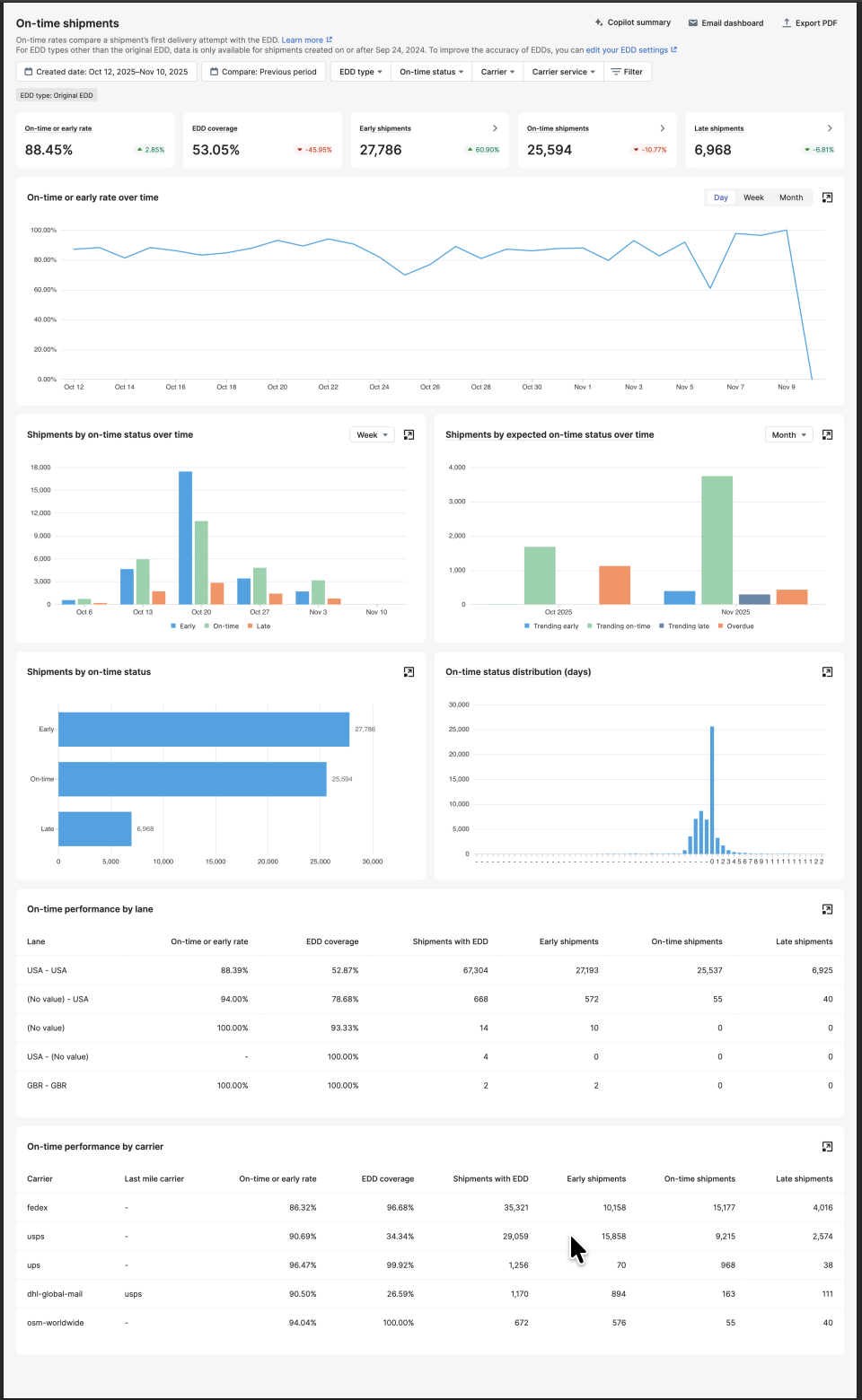
You don't have to take the architecture on faith. A supply-chain visibility technology provider scaled enterprise-grade tracking and visibility for its own clients on AfterShip, which is the kind of proof point a COO will want in the deck.
Supply Chain Visibility Technology Provider
“AfterShip Tracking acts as a one-stop solution for shipment visibility. The support team is responsive and helpful in addressing our concerns.”
Read their story →The result is one stack that serves both halves of your mandate: operational visibility for your team and a branded experience for your clients' customers.
Beyond Tracking: Managing Multi-Client Returns at Scale
Returns are where a pure visibility platform goes quiet and a 3PL's problems get loud. One client wants returns restocked at your warehouse, another wants them shipped to their own facility, and a third runs a vendor-direct model. A single-policy returns tool cannot hold all three at once.
AfterShip Returns handles this through stackable, conditional routing rules set per Organization, which means per client. Each retail client's return policy lives in its own isolated environment, with triggers based on return reason, product category, SKU, customer location, or item value.
Destinations are equally flexible. A return can route back to your warehouse, back to the vendor, back to the client's own facility, or to a partner drop-off network. So the classic dealbreaker, where Client A restocks at your warehouse and Client B ships to their own, is simply two different rule sets under one roof.
The handoff into your operation is automated, not manual. Native integrations with ShipBob and ShipHero create RMAs, generate ASNs, and automate item receipt back into the warehouse system, while refund processing can trigger automatically on a tracking scan. Drop-off through a partner network such as Happy Returns is available for clients who want a box-free, label-free option. Each client keeps its own branded returns portal throughout.
For a 3PL, that turns returns from a per-client fire drill into a configured workflow you set once and let run.
The Verdict for 2026: Which Platform Scales with Your Logistics Business?
Here is the call. If you are a 3PL or enterprise logistics provider who must deliver operational excellence and a modern customer experience for your clients, AfterShip is the strategic choice. Narvar and project44 are point solutions for a fraction of your problem; AfterShip is built for the whole of it.
That verdict comes with an honest boundary. AfterShip is not a TMS or a WMS, and it does not pretend to be. project44 will integrate more deeply with freight-specific telematics and complex transportation management systems than AfterShip does. The difference is that AfterShip plugs into your existing logistics stack through a robust API and then owns the part those systems were never built for: the customer-facing journey from shipment tracking to returns.
So the choice resolves cleanly by who you are. Choose Narvar if you are one retail brand that only needs a CX layer. Choose project44 if your world ends at the loading dock. Choose AfterShip if you are the operator in the middle, serving many clients who each expect both flawless logistics and a branded experience. For most 3PLs weighing AfterShip alternatives in 2026, that middle is exactly where you live.
Proactive shipment tracking that delights your customers, reduces WISMO tickets, and optimizes your delivery performance.
Book a demoFrequently Asked Questions
How does AfterShip keep data segregated between our different 3PL clients?
Each retail client operates as a separate Organization under your parent Company account, and data does not cross between Organizations. AfterShip is SOC 2 Type II and ISO 27001 certified, with role-based access control, TLS 1.2 encryption in transit, and AES-256 at rest. Data is currently hosted in the United States, which is worth confirming against any non-US data-residency requirements your clients have.
What is AfterShip's API uptime SLA?
AfterShip operates to a 99.9% uptime target. The contractual SLA, including service-credit terms, is part of the negotiated Enterprise agreement rather than a single published figure. Published API rate limits start at 20 POST requests per second on the tracking endpoint, and Enterprise plans can raise these with custom limits for peak periods like BFCM.
Can AfterShip integrate with our existing TMS or WMS?
AfterShip offers native connectors for platforms including NetSuite, Shopify, Salesforce Commerce Cloud, Magento, BigCommerce, ShipBob, and ShipHero. Enterprise TMS and WMS systems such as Manhattan Associates or Blue Yonder connect through AfterShip's REST APIs and webhooks rather than a pre-built connector. For those environments, plan for a Solutions Architect engagement and an internal dev sprint, typically in the four-to-six-week range.
Will each of our retail clients see only their own data?
Yes. You invite each client's team into their own Organization with an Organization-level role, and they log in to see only their own shipments, analytics, and returns, with no visibility into other clients. Your team holds Company-level roles and can switch between clients or view aggregated performance across your entire book of business.