
Shipment Tracking: When Is a Premium Plan Actually Worth It?


You are looking at your monthly expenses, and a new software subscription is a tough pill to swallow. But what if that line item was not a cost at all? What if it was your most efficient customer retention and acquisition channel? For most growing brands, the hidden costs of "free" tracking are far higher than the price of a premium plan, which starts at $59/month.
The Hidden Costs of "Free" Tracking Are Bleeding Your Business
Free and basic tracking looks like a smart way to protect margin. The obvious cost is zero, so it never shows up on a budget review. The hidden costs do not show up there either, and for a brand shipping 500 to 5,000 orders a month, they add up fast.
Start with support. WISMO ("where is my order") tickets are among the largest categories of DTC support volume, commonly estimated at 30 to 40 percent of contacts. Each one carries a real price. AfterShip's own conservative model puts a WISMO ticket at $3, while independent industry estimates put a fully loaded support ticket at $5 to $10. Every ticket your team answers by hand is a cost a premium shipment tracking plan is designed to remove.
The deeper cost is the one you cannot see on a ledger. A confusing or silent delivery experience erodes lifetime value, and the revenue you never capture from an unbranded, dead-end carrier link is revenue a competitor is happy to take instead. Free tracking does not just cost you tickets. It quietly costs you customers.
One note on pricing before the math. The $59/month figure is AfterShip Tracking's Premium price on aftership.com direct. Plan prices differ slightly by channel, so Essentials, for example, is $9/month direct versus about $11 on the Shopify App Store. Every figure below uses direct-site pricing.
The 5 ROI Levers of a Premium Tracking Plan
A premium plan earns its keep in five distinct ways. Each one maps to a business outcome you already track, not a feature you have to learn to love:
- Slash support costs by deflecting WISMO tickets before they reach an agent.
- Create a new revenue channel out of a page your customers already open.
- Protect brand reputation by catching delivery problems before customers do.
- Cut shipping spend using carrier performance data you can act on.
- Boost on-site conversion with a credible delivery promise before checkout.
The first two levers, below, often cover the entire subscription on their own.
Lever 1: Slash Support Costs with Proactive Notifications
The mechanism is simple. A premium plan sends automated email and SMS notifications for every shipment status, including In Transit, Out for Delivery, Delivered, and Exception. The customer gets the answer before they think to ask, and the ticket is never created.
Here is the math at 1,000 orders a month. Assume a 10 percent WISMO rate, which is 100 tickets. A proactive notification flow deflects a large share of them. Using AfterShip's conservative $3 per ticket, deflecting 65 of those 100 tickets saves about $195 a month. At an industry estimate of $5 per ticket, the same deflection saves about $325. Premium is $59 a month, so Lever 1 alone covers the plan three to five times over at this volume.
That 65 percent deflection is a platform-level aggregate across AfterShip's merchant base, not a guaranteed result for your store. The realized, named numbers sit in the same range and prove the direction: Vivino cut WISMO contacts by 50 percent, Mous by 54 percent, and Inspire Uplift by 75 percent.

Lever 2: Turn Your Tracking Page into a Revenue Channel
Most brands treat the tracking page as a status check. It is actually the most-opened page you own. A fully branded tracking page lives on your own domain, carries a promotional header for offers, and can run AI product recommendations powered by AfterShip Tracking's own engine, AfterShip Personalization, or Nosto.
The traffic is already there, and it is unpaid. AfterShip merchants see an average of 3.2 page views per order, from customers in a high-intent, post-purchase mindset. That attention is more engaged than your marketing list. Klaviyo's 2024 benchmarks show post-purchase flows opening at roughly 59.8 percent versus about 39.7 percent for marketing email, which is two to three times the engagement.
Put a conservative model on it. At 1,500 orders a month, 3.2 views per order is 4,800 high-intent visits. A 1 percent conversion on a $50 average order value is 48 orders, or about $2,400 a month, against a $59 plan cost. Treat that as a model, not a promise; the real number depends on your offer and catalog. The realized proof points the same way: Vivino attributes a 30 percent lift in repeat sales to its tracking page, a directional result from a brand far larger than yours.
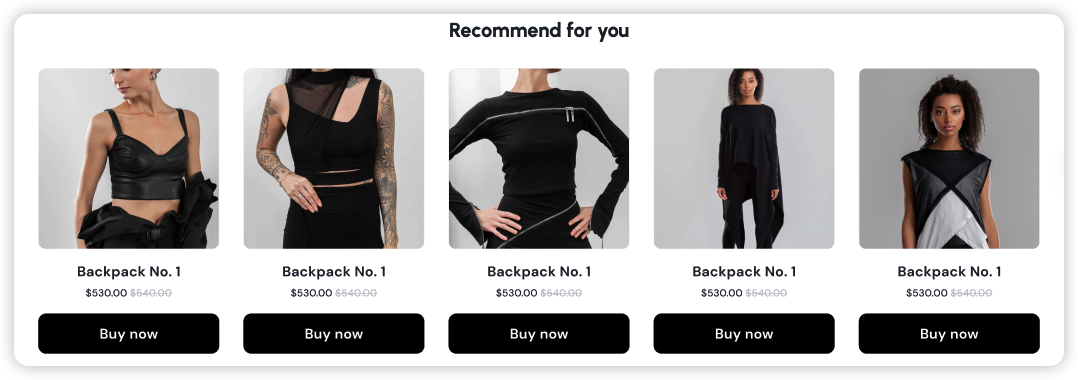
Two levers in, the picture is already lopsided. A premium shipment tracking plan is not a line item you spend money on. It is the cheapest retention and revenue channel most growing brands have not switched on yet.
The next three levers keep that money from quietly sliding off.
Lever 3: Protect Brand Reputation with Smart Exception Handling
Raw carrier tracking is noisy. Scans arrive in dozens of inconsistent formats, and a stalled package looks identical to one still moving until a customer complains. A premium plan uses AI to standardize those raw scans into clean, consistent statuses, so a stall or exception is caught automatically instead of being discovered through an angry email.
Detection only matters if it is trustworthy, and that is where AI EDD (estimated delivery date) earns its place. AfterShip's model targets a 95 percent on-time rate and runs at about 91 percent accuracy on a single-date prediction and about 96 percent on a two-day range. Those accuracy figures are platform-level results across the merchant base, not a promise for any one parcel, but they are tight enough that when the system flags a shipment as tracking behind its predicted date, the alert is worth acting on. The goal is plain: resolve exceptions before customers notice.
The ROI here is defensive, and it is large. A late or silent delivery is one of the fastest ways to lose a customer you already paid to acquire. NRF reports that about 71 percent of consumers are less likely to shop with a retailer again after a poor experience. We will not put an AfterShip-specific churn-reduction number on that, because none is published. The arithmetic is still hard to argue with. Catching the exception that would have triggered that 71 percent reaction protects lifetime value you have already banked, which is far cheaper than winning the customer back. For more on managing the final handoff, see our guidance on how to improve your last-mile experience.

Lever 4: Optimize Shipping Spend with Carrier Analytics
Shipping is usually one of your three largest variable costs, and most brands manage it on instinct. AfterShip Intelligence replaces the guesswork with data, letting you compare on-time rates, EDD coverage, and shipment volumes across your carriers and service levels, broken down by origin-destination lane.
That lane-level view is where the savings hide. Picture a carrier that is cheaper on paper but runs 15 percent later to Zone 4. Cheapest-by-default routing quietly trades a few cents of postage for a wave of late deliveries and the WISMO tickets that follow. The analytics surface that pattern, so you can route Zone 4 to a faster carrier and reserve the cheaper one for the lanes where it actually performs.
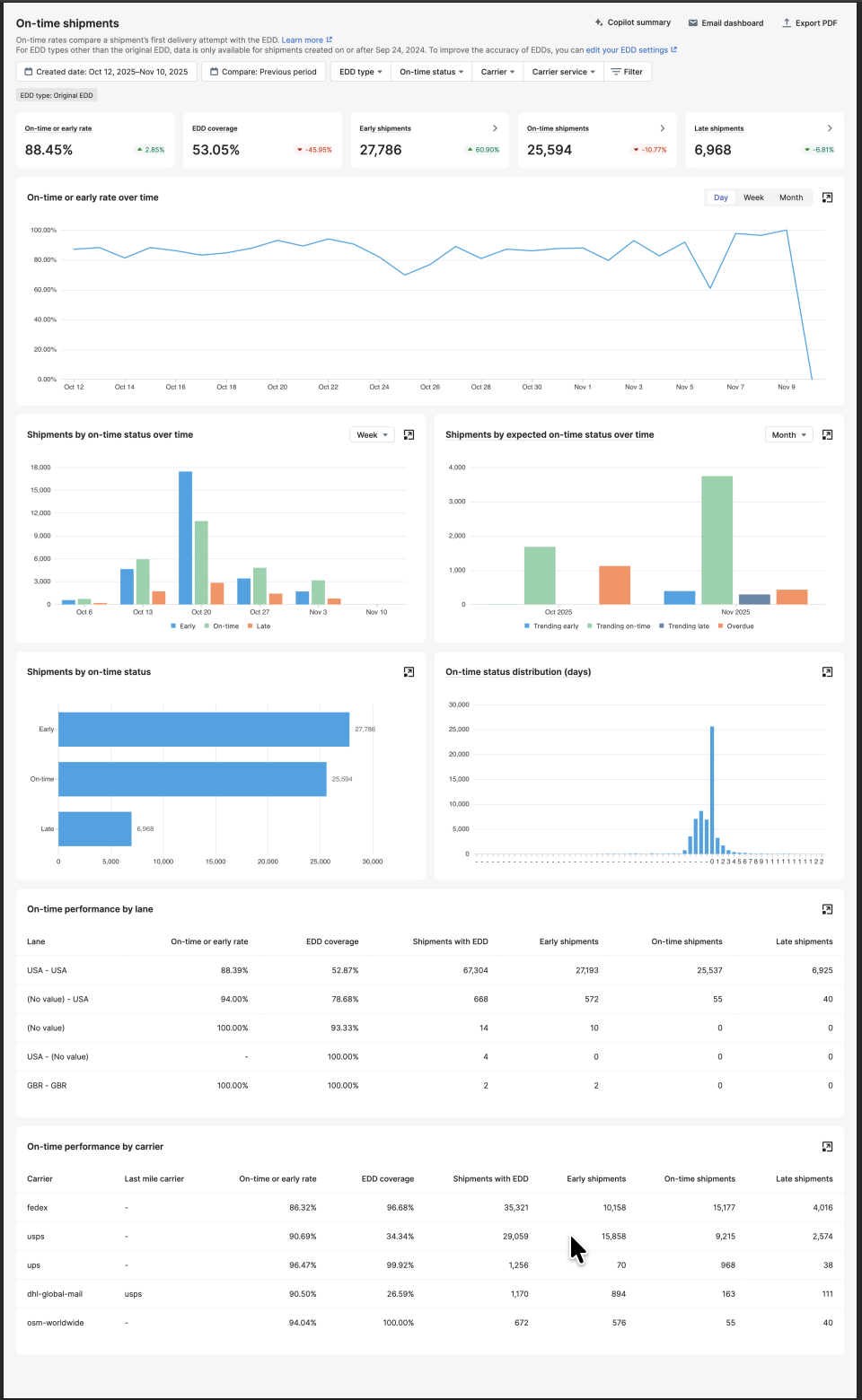
The upside is documented. Mous used carrier analytics across ten carriers to cut Canadian lead times from about two weeks to about two and a half days, an 82 percent decrease to those destinations. Read that figure correctly: it is a lane-specific result to certain destinations, not an all-shipments average. And to be precise about the mechanism, this is analytics you act on, not a black box. Automatic AI rule configuration is limited to the Shopify EDD widget on Premium and Enterprise; everything else here is decision support, not a universal engine that reroutes carriers for you. For a cost-focused deeper read, our resource on reducing your overall shipping costs goes further.
Lever 5: Boost Conversions with AI-Powered Delivery Dates
The first four levers work after the order is placed. The fifth moves upstream, to the moment a shopper decides whether to buy at all. AfterShip's pre-purchase AI EDD shows a credible delivery estimate directly on product and checkout pages. It is a Premium and Enterprise feature, which makes it part of the upgrade case rather than an afterthought.
Delivery uncertainty is a documented conversion killer. Baymard puts average cart abandonment at 70.22 percent. Among shoppers who abandon for reasons other than browsing, 21 percent cite that delivery was too slow and 39 percent cite that extra costs were too high. A vague or missing delivery promise leaves the slow-delivery objection unanswered at the exact moment it matters most.
A trustworthy estimate answers it. AfterShip's AI EDD covers more than 80 percent of deliveries, where most carriers manage predictions on under 40 percent, and it is trained on more than 4.4 billion shipments with an accuracy ceiling of up to 95 percent (about 91 percent on a single date, about 96 percent on a two-day range). We will not attach a conversion-lift percentage to it, because the honest framing is simpler. A credible date removes delivery-time uncertainty and recovers sales you were otherwise losing at checkout.
The 60-Second Test: Will a Premium Plan Pay for Itself?
You have seen the five levers and the math behind them. Here is how to tell, in about a minute, whether they apply to your store.
If you answer "Yes" to 3 or more, a premium plan will have a positive ROI in under 6 months.
- Do you ship 400+ orders/month?
- Is your WISMO rate above 5%?
- Is your AOV over $75?
- Do you use more than one carrier?
- Is retention a top-3 goal for 2026?
- Do you have no marketing assets on your tracking page yet?
The threshold is not arbitrary. At about 600 orders a month and a 5 percent WISMO rate, support savings alone break even within six months, using AfterShip's conservative $3 per ticket and the 65 percent platform-aggregate deflection rate. At an industry estimate of $5 per ticket, the same break-even arrives near 360 orders a month. Every other lever shortens the payback from there.
If the test says the value is there, understanding the different pricing models is the natural next step to match a specific plan to your order volume.
So, When is a Free Plan "Good Enough"?
A free plan is the right call when your volume genuinely does not justify the spend. Below about 50 shipments a month, where AfterShip's free entry point caps, a paid plan is hard to defend. The same is true for hobbyists, for stores still validating product-market fit, and for any business where the post-purchase experience is not a competitive differentiator. There is no shame in staying free until the numbers move.
Three signals tell you that moment has passed, and you only need one of them. You are hitting the roughly 50-shipment cap on the free tier. WISMO tickets are eating real agent hours every week. Or you want a branded tracking page or pre-purchase AI EDD, neither of which exists on free. Any one of those is the line where free stops saving money and starts costing it.
The Smartest Investment You Can Make in Your Customer Experience
A premium shipment tracking plan is a growth investment, not an operational expense. It does three jobs at once that a free tool cannot. It cuts support costs, it turns an owned page into a revenue channel, and it raises customer satisfaction by making delivery predictable. Most line items on your budget do only one of those, and many do none.
That is why not upgrading is usually the more expensive decision for a growing brand. The costs of "free" do not disappear. They move to your support queue, your churn rate, and your abandoned carts, where they are harder to see and harder to fix. A line item you can read on an invoice is easier to manage than a leak spread across three teams.
The honest way to settle it is with your own numbers. Run AfterShip's live ROI calculator at your real scale, somewhere in the 500 to 5,000 orders a month range, rather than a generic default. Treat the result as a model, a projection of what the levers could return, not realized revenue. If the projection clears $59 a month, and for most growing brands it clears it several times over, you have your answer.
Proactive shipment tracking that delights your customers, reduces WISMO tickets, and optimizes your delivery performance.
Explore AfterShip TrackingFrequently Asked Questions
How much does AfterShip Tracking Premium cost?
AfterShip Tracking Premium starts at $59/month on the direct site (about $708/year). Essentials starts at $9/month direct (about $11 on the Shopify App Store), and a free tier covers about 50 shipments a month.
Is premium shipment tracking worth it for a small business?
For a growing brand, usually yes. On support savings alone, at a conservative $3 per WISMO ticket and up to a 65% deflection rate, a store around 600 orders a month with a 5% WISMO rate breaks even within six months, before counting tracking-page revenue, retention, or recovered checkouts.
What is the difference between a free and a premium tracking plan?
A free plan covers about 50 shipments a month and basic status tracking. Premium adds proactive email and SMS notifications, a fully branded tracking page with product recommendations, AI estimated delivery dates, and carrier-performance analytics. These are the features that drive the ROI.
When should I upgrade from a free or basic plan?
Common signals are shipping more than about 50 a month (the free cap), 400+ orders a month, a WISMO rate above 5%, using more than one carrier, or wanting a branded tracking page or pre-purchase AI delivery dates, none of which exist on free.
Is AI estimated delivery date (EDD) available on every plan?
No. Pre-purchase AI EDD is a Premium and Enterprise feature, which is part of the upgrade case. AfterShip's AI EDD covers more than 80% of deliveries with an accuracy ceiling of up to 95%.