
Is UPS Tracking Enough? A Guide for Growing Shopify Stores


Your Shopify store is growing. Orders are up, and you're shipping more than ever. But your support tickets are up too, and most start with "Where is my order?". You send customers the standard UPS tracking link, but something feels off. Is that free tracking page actually costing you more than you think?
That question, is UPS tracking enough, deserves an honest answer rather than a sales pitch. And the honest answer is: it depends on where your store is in its growth.
First, Let's Be Clear: UPS Tracking is a Powerful (and Free) Utility
Let's give credit where it's due. The default UPS tracking page is a genuinely useful tool, and it costs you nothing. It pulls real scan data straight from the carrier, shows the package moving across the country, and gives a delivery estimate your customer can refresh whenever they want.
For a store doing 50 to 100 orders a month, that is often all you need. Customers get a working link, the package arrives, and the occasional "where is it?" email is easy to answer by hand. Layer on UPS My Choice, which lets shoppers reroute a package or set delivery preferences, and the experience is better still.
So if you are early, breathe easy. You have not made a mistake by relying on the carrier page. It does the one job it was built to do, which is report on a UPS shipment, and it does that job reliably.
The catch is that the carrier page was built for UPS's operational needs, not for your brand or your customer experience. That distinction barely matters at low volume. It starts to matter a lot as you scale.
The "Growth Ceiling": When Does "Enough" Stop Being Enough?
Every growing store eventually hits a ceiling where the free carrier page quietly flips from a helpful asset into a hidden liability. The hard part is knowing when you have reached it.
Here is a simple three-signal self-test. If two of these three are true for you, you have likely outgrown the default page:
- Order volume around 200 to 500 a month. Treat this as an editorial rule of thumb, not a precise trigger. It is the band where most growing stores find the manual approach stops scaling, but your real number depends on your margins and team size.
- WISMO share climbing well above the ~18% benchmark. WISMO (Where Is My Order?) questions make up roughly 18% of incoming support tickets across eCommerce, per Gorgias. Note that this is a share of tickets, not a share of orders. When your WISMO share sits well above that line, the carrier page is no longer absorbing the load, it is generating it.
- Brand and retention ambition. If you are investing in email flows, a loyalty program, or a considered unboxing moment, every touchpoint should feel like you. The instant the tracking link sends customers somewhere that does not, there is a gap between the brand you are building and the experience you are shipping.
None of these signals is about a single feature you are missing. Each one is about scale colliding with a page that was never designed to grow with you.

5 Ways the Default UPS Tracking Page Undermines Your Growing Brand
Once you cross that ceiling, the cracks show up in specific, measurable ways. Here are five.
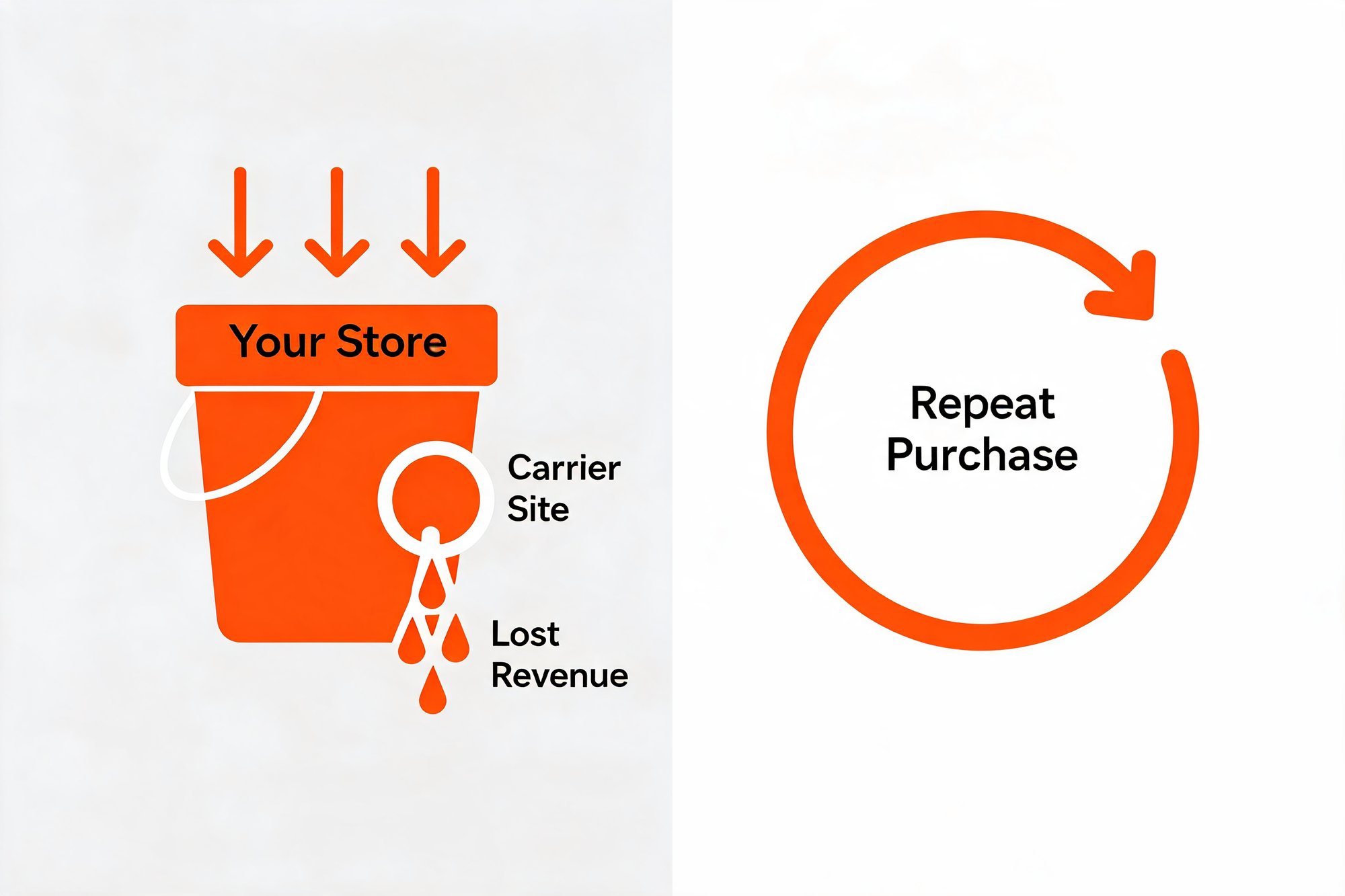
- It is a dead end that sends traffic away. Every tracking click is a customer actively thinking about your store, and the carrier page sends that attention to ups.com instead of back to you. That is the highest-intent moment in the post-purchase journey, spent on someone else's domain.
- It creates a brand disconnect. Your site is polished and on-brand. The carrier page is gray, generic, and carries another company's logo. To a customer mid-order, that handoff can feel jarring and a little amateurish, even when delivery goes perfectly.
- It is reactive, not proactive. The page waits for the customer to check it. It does not reach out when a package is delayed or stalled, so the first time you hear about a problem is usually a WISMO ticket, after the customer is already worried.
- It offers zero upsell or marketing surface. A branded tracking view is prime real estate that customers visit several times per order. The carrier page gives you no banner, no product recommendation, no reason to come back and buy again. That is repeat revenue left on the table.
- It cannot narrate a multi-carrier journey. UPS services like SurePost and Mail Innovations hand the final mile to USPS. That handoff is normal and efficient, but the carrier page is not built to tell that story, so customers see a scan gap and assume the package is lost. The result is a confused shopper and another ticket, through no fault of UPS.
Read those five together and a pattern emerges. The problem is not that UPS is doing anything wrong. It is that you are asking a carrier's operational tool to do a brand's customer-experience job, and the seams start to show right when you can least afford them.
Is UPS tracking enough at this stage? For a growing, brand-led store, the honest answer is starting to tip toward no.
The Alternative: Owning the Post-Purchase Journey with a Branded Tracking Page
If the default page is the problem, the fix is not to abandon UPS. It is to put a branded tracking page on top of it. A branded tracking page is an experience layer that sits over the same carrier data your customers already rely on. UPS still moves the package and still provides the scans. You simply control where customers land and what they see when they check.
This is not a nice-to-have. Salesforce finds 80% of customers say the experience a company provides is as important as its products and services, and the tracking page is one of the most-visited parts of that experience after checkout.
On a branded page, the experience finally matches your store. Your logo and theme replace the carrier's gray template, so the handoff that once felt jarring now reads as a continuation of your brand.
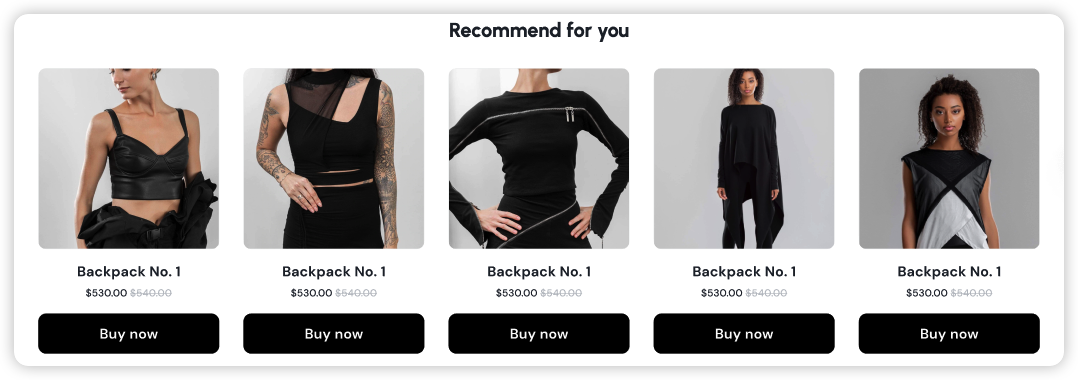
Marketing banners and product recommendations turn a status check into a second storefront. Customers return to the tracking page several times per order, and each visit becomes a chance to surface a complementary product or a returning-customer offer, instead of dead space on someone else's domain.
The layer also turns delivery into a conversation. Proactive shipping notifications by email or SMS tell a customer about a delay before they think to ask, and most WISMO tickets start in exactly that gap between something going wrong and the customer finding out.
Instead of the carrier's vague window, an AI-powered estimated delivery date gives shoppers a date they can plan around. AfterShip's AI EDD reaches around 90% first-prediction accuracy and covers more than 80% of deliveries, roughly three times the under-40% coverage of a typical carrier baseline. A confident delivery date is one of the best ways to pre-empt a WISMO (Where Is My Order?) ticket before it is ever filed.
Because the page aggregates tracking across 1,300+ carriers (scoped to Tracking only), it can narrate the full journey, including the USPS final-mile leg on UPS SurePost and Mail Innovations shipments. The scan gap that used to read as "lost package" becomes a clearly labeled handoff.
The point is not to replace UPS. It is to stop letting the carrier's page speak for your brand.
Side-by-Side: Standard UPS Tracking vs. an AfterShip-Powered Experience
Here is how the two stack up on the criteria that actually move the needle for a growing store. Price is the one column where the free page wins, so the honest comparison is what each option gives you back for what it costs.
| Criteria | Default UPS Tracking | AfterShip Branded Tracking |
|---|---|---|
| Brand consistency | ✗ Generic carrier template | ✓ Your logo, theme, and domain |
| WISMO reduction | ✗ Reactive, customer must check | ✓ Proactive delay and delivery notifications |
| Customer lifetime value (LTV) | ✗ No retention surface | ✓ Repeat visits and retention touchpoints |
| Ease of Shopify setup | ✗ No Shopify tie-in | ✓ Installs in a few clicks |
| Revenue / upsell opportunity | ✗ No marketing space | ✓ Banners and product recommendations |
Custom domain, AI EDD, and product recommendations sit on the Premium plan, so an Essentials buyer isn't misled.
On every dimension that ties to brand, retention, or revenue, the branded experience pulls ahead. The carrier page holds its ground only on price, and that is exactly the comparison worth examining next.
The ROI for a Growing Shopify Store
Mous cut its customer contact rate from 12.9% to 5.9%, a 54% reduction, after moving to a branded tracking experience. Rosie Jennings, Head of Logistics
The mechanism behind a result like that is simple to model for your own store. Start with your monthly support tickets, take the roughly 18% that are WISMO (per Gorgias, and remember that is a share of tickets, not of orders), then multiply by the industry benchmark for a human-handled support ticket, roughly $5 to $12 (Help Scout; DigitalGenius).
Work a real example. Say you field 400 tickets a month. Around 72 of them, the 18% WISMO share, cost roughly $5 to $12 each to answer, which is about $360 to $864 a month spent on "where is my order?" replies. Proactive notifications and a self-service branded page can deflect roughly half of that volume, saving on the order of $180 to $432 a month. Set even the low end against the Shopify App Store Premium plan at $70/mo, and the case still makes itself. Annualized, that deflection puts roughly $2,000 to $5,000 a year back into the business, before you count the upsell revenue the carrier page never had a place to offer.
And ticket savings are only half the story. Shopify's own data shows loyal, repeat customers drive 44% of revenue and 46% of orders despite being just 21% of the customer base, exactly the shoppers a polished post-purchase experience helps you keep.
Mous is not a one-off. We have seen merchants such as StackCommerce cut WISMO contacts by 71% and Inspire Uplift by 75% with the same proactive approach. Results vary by store and category, so treat these as what branded tracking can and has done, never as a guaranteed law. The spread depends on how many of your tickets are delivery-related to begin with, and on how aggressively you switch on proactive alerts.
It is fair to name the trade-off plainly: the free page returns nothing for its zero cost, while AfterShip's monthly fee tends to earn itself back through lower support overhead and stronger lifetime value.
The same pattern shows up in public ratings. AfterShip Tracking holds 4.7 out of 5 across 311 reviews on G2, and 4.5 out of 5 across 1,199 reviews on the Shopify App Store.
For a growing, brand-led store, the question stops being whether you can afford a branded tracking page. It becomes whether you can afford to keep sending high-intent customers to a page that returns nothing.
If your store has pushed past the growth ceiling, here is the simplest way to put a branded tracking page in front of your own orders and see the difference for yourself. You do not have to commit to anything to find out what it looks like.
Proactive shipment tracking that delights your customers, reduces WISMO tickets, and optimizes your delivery performance.
Start free trialAnswering Your Top Questions
A few questions come up almost every time a growing store weighs this move. Here are straight answers.
Will this replace UPS?
No. AfterShip integrates with UPS rather than replacing it. UPS still carries the package and provides the tracking scans, and AfterShip layers a branded experience on top of that same data. You keep the carrier relationship you already have and simply control what your customer sees.
Is this hard to set up on Shopify?
Setup takes a few clicks. You need an active AfterShip Tracking account and an active Shopify account, and the Instant Mockup Generator lets you preview your branded page before you commit. There is no fixed go-live timer, but most stores go live the same day.
What does it cost?
For a Shopify store, the prices you install from are the Shopify App Store ladder: Free at $0/mo, Essentials at $11/mo, and Premium at $70/mo. Weigh that against the support hours it gives back. A store deflecting a few hundred dollars of WISMO tickets each month often finds Premium pays for itself. The aftership.com direct page lists a different ladder, so if you see a $59 figure, that is the aftership.com direct price, not the Shopify App Store one.
Does it support carriers other than UPS?
Yes. AfterShip Tracking aggregates 1,300+ carriers (1,321 live today, scoped to Tracking only), so it covers far more than UPS, including the USPS final-mile leg on SurePost and Mail Innovations shipments.
Verdict: Is UPS Tracking Enough for Your Shopify Store?
So, is UPS tracking enough for your Shopify store? The honest answer comes down to a single threshold.
If you are under roughly 200 orders a month and brand is not yet a priority, the default UPS page is genuinely enough. It is free, it works, and adding a paid tool would solve a problem you do not have yet. There is no prize for paying for software before you feel the pain it removes. Stay there with a clear conscience.
But once you are actively growing and building a brand customers remember, that same free page has quietly turned into a liability. It sends your highest-intent moments to someone else's domain, stays silent when a package stalls, and gives you no surface to retain or upsell the customer you worked so hard to win.
If you are unsure which camp you are in, go back to the three-signal test: order volume, your WISMO share against the ~18% benchmark, and whether brand is now part of how you compete. Two out of three is your answer.
Reframe the cost one last time. The UPS page is free, and that is precisely the catch: it costs $0 and returns $0. A branded tracking page carries a monthly cost, but it converts your most-visited post-purchase touchpoint into support savings, stronger retention, and new revenue, usually paying for itself within months. The real return is not only the tickets you stop answering; it is the repeat customers a confident, on-brand delivery experience earns you.
If your store has crossed the growth ceiling, the next step is simple. See what your own branded tracking page would look like with AfterShip Tracking, and let your order volume, not the carrier's default, decide what your customers experience. Your store has earned a post-purchase experience that looks like you, not like a carrier's back office.