
Happy Returns Alternatives: The Honest Verdict for Growing DTC Brands


Your Happy Returns contract is up for renewal. You have appreciated the convenience of their Return Bars, but a nagging question remains: is this platform built for where your brand is going, or just where it has been? As you scale, the lack of brand control, inflexible carrier options, and opaque data can start to feel less like a convenience and more like a constraint.
This guide cuts through the noise on Happy Returns alternatives and gives growing DTC brands a clear, evidence-based read on which returns platform actually fits the next stage of growth.
Why Growing Brands Graduate from Happy Returns
Returns are now a retention decision, not a back-office cost, and the data is blunt about it. Per the NRF and Happy Returns 2025 Retail Returns Landscape, 71% of consumers are less likely to shop again after a poor returns experience, up from 67% in 2024. When more than two in three shoppers will quietly walk after one bad return, the returns portal stops being plumbing and becomes part of your growth engine.
Give Happy Returns its due first. As a UPS company, it turned the boxless return into a habit, and its Return Bar network reached 10,000 US drop-off locations as of April 2026. For a US shopper, dropping off a label-free return in minutes is genuinely convenient, and that convenience is why most brands signed on.
The friction tends to show up later, as you scale. None of the following are flaws in Happy Returns. They are signals that your brand has outgrown a single-feature setup:
- One-size-fits-all brand experience. The returns portal carries limited branding, so the highest-intent moment in your post-purchase journey looks generic instead of like your store.
- US-centric logistics. The drop-off network and carrier options are anchored to the US and do not flex by plan, which strands the international customers you are working to win.
- Pricing that is hard to model. Happy Returns publishes no public pricing and quotes case by case, so your cost per return drifts as volume climbs and budgeting turns into guesswork.
- Shallow return-reason data. You see that returns happened, not the SKU-level reasons why, which is exactly the insight you need to fix sizing, photography, or quality at the source.
Read together, these are graduation signals, not red flags. The only real question is where you graduate to.
The Top Happy Returns Alternatives for DTC Brands in 2026
For most growing DTC brands, the shortlist of Happy Returns alternatives comes down to three platforms built around three different centers of gravity. The right pick depends less on a feature checklist and more on what you are scaling toward.
- AfterShip Returns is the control and flexibility platform. It pairs a fully branded returns portal with an auto-label pool of 68 carriers and stackable automation rules, so you own the experience, the logistics, and the data as you grow.
- Loop Returns is the exchange-first Shopify specialist. Built on the original Loop Returns product plus the acquired Wonderment tracking tool, it is Shopify-first and leans hard into driving exchanges over refunds, with signature features like Bonus Credit.
- Narvar is the enterprise-grade CX platform. It sells a suite of discrete post-purchase products, each as its own line, with quote-based enterprise pricing and no public self-serve tier, which suits large retailers that have dedicated implementation teams.
That spread is what makes this a real decision rather than a default. AfterShip Returns is our pick for brands that need to own brand, cost, and analytics at the same time, and the verified review below speaks to the flexibility that distinction depends on.
G2 verified review, AfterShip Returns (Returns Center): 4 out of 5 stars. The reviewer describes the return process as "much clearer for customers, with a simple portal," and notes an honest limitation in the same review: "form or email customization are somewhat limited without using more advanced options." Verified User in Retail, Small-Business segment, reviewed December 17, 2025. Incentivized review, collected via G2 invite.
Head-to-Head: AfterShip Returns vs. Happy Returns
On the criteria that decide a scaling brand's returns program, AfterShip Returns leads on control, carrier flexibility, and analytics, while Happy Returns leads on the single feature that made it famous: its drop-off network. The table below is a direct head-to-head comparison across the dimensions that matter to a brand shipping 1,000 to 50,000 orders a month.
| Criteria | AfterShip Returns | Happy Returns |
|---|---|---|
| Brand Experience and Portal Customization | Branding out of the box (logo, colors, return reasons); full custom-domain white-label at Enterprise | Limited, one-size-fits-all portal branding |
| Logistics and Carrier Flexibility | 68-carrier worldwide auto-label pool; carrier accounts by tier (3 Essentials, 5 Premium, unlimited Enterprise) | US-centric carrier and drop-off options that do not flex by plan |
| Boxless Return Options | Printless QR for FedEx, USPS, Royal Mail, and Canada Post, plus Return Bar drop-off via the Happy Returns integration (more than 9,000 Return Bars and 300K-plus sites) | Proprietary Return Bar network of 10,000 US drop-off locations (a UPS company) |
| Automation and Rules Engine | Stackable rules across return reason, product tag, and customer value, mapped to refund, exchange, or store credit | Centered on the Return Bar drop-off experience; rules-based automation is not a publicly detailed differentiator |
| Fraud and Abuse Controls | Rules-based controls (return-frequency flags, weight-discrepancy checks, blocklisting) on Premium and above, not AI-powered | Centered on the Return Bar drop-off experience; not a publicly detailed differentiator |
| International Capabilities | Multi-language returns portal; worldwide auto-label pool including Royal Mail and Canada Post QR | Primarily US reach |
| Pricing Model and Scalability | Published tiers: Essentials $16, Premium $99, Enterprise custom (about 18% annual discount) | Quote-only pricing with no public price |
| Analytics and Reporting | SKU-level and variant-level return-reason analytics (size, color, quality) | Operational-only return data, not SKU-level "why" |
The pattern is clear: AfterShip Returns is the broader operating platform, and Happy Returns is the deeper drop-off network. Here is how that maps back to the four pains from the last section.
Start with branding. The generic portal you were stuck with becomes a fully branded returns experience: your logo, colors, and return reasons out of the box, with full custom-domain white-label available at the Enterprise tier. The highest-intent moment in the journey finally looks like your store, which is exactly the brand-consistency gap a one-size-fits-all portal leaves open.
Then logistics. AfterShip Returns auto-generates labels across a pool of 68 carriers, and carrier accounts scale with you, 3 on Essentials, 5 on Premium, and unlimited on Enterprise. Printless QR drop-off covers FedEx, USPS, Royal Mail, and Canada Post, so the international customers a US-only network left stranded are back in scope.
On cost predictability, AfterShip publishes its pricing in clear tiers instead of quoting case by case, so you can model cost per return before you commit. On data, you move from "a return happened" to SKU-level and variant-level return reasons, the size, color, and quality signals you need to fix the product, not just process the refund. That is the difference between reacting to returns and preventing the next batch of them.
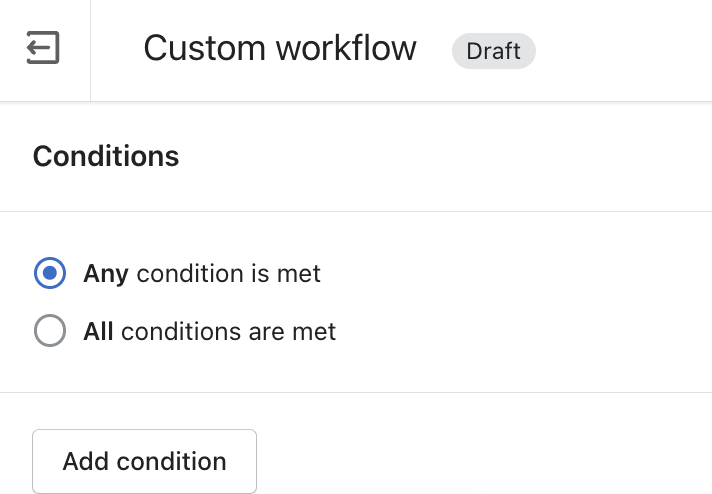
The automation engine is where the cost math turns. Stackable rules let you combine conditions, such as return reason plus product tag plus customer value, and route each case to a refund, exchange, or store credit automatically. That is what shrinks manual processing time and keeps your team off the queue. Fraud controls sit alongside it as rules-based checks, including return-frequency flags, weight-discrepancy checks, and blocklisting, available on Premium and above rather than an AI black box.
Now the objection that keeps most brands from switching: the Return Bars. Here is the plain version. Through AfterShip's Happy Returns integration, a brand that migrates keeps drop-off at more than 9,000 Return Bars plus 300K-plus additional drop-off sites (activating that network requires a separately signed Happy Returns contract). You add control, carrier flexibility, and analytics without giving up the in-person convenience your US shoppers already use.
When is Loop Returns a Better Fit?
Loop wins in one specific scenario, and naming it honestly is what makes this verdict trustworthy. If you are a Shopify-only brand under roughly $5M GMV and your single biggest goal is driving exchanges over refunds, Loop is an excellent choice. Its workflow is purpose-built for exchange-first retention, and signature features like Bonus Credit nudge shoppers toward keeping their spend with you.
That focus is also its ceiling. As your brand grows past a single storefront, the requirements change, and how it compares to Loop Returns favors AfterShip Returns:
- Multi-platform and multi-store support. Loop is Shopify-first; AfterShip Returns runs across multiple commerce platforms and consolidates several stores under one account.
- Carrier flexibility. The same 68-carrier auto-label pool and tiered carrier accounts give you room to negotiate and route, rather than a single fixed lane.
- International reach. A multi-language portal plus Royal Mail and Canada Post QR returns make cross-border returns workable, not an afterthought.
- Lower entry cost. AfterShip's Essentials at $16 and Premium at $99 sit well below Loop's Essential at $155 and Advanced at $272, though at high volume both platforms move to custom quotes.
- Return Bar access stays. The same Happy Returns integration means you do not trade Loop's polish for lost drop-off convenience.
The proof that this scales is on the record. After moving its returns onto AfterShip, Marc Nolan, a growing DTC brand, freed its team from hours of manual returns work and shifted far more returns into exchanges instead of refunds, letting them focus on the cases that actually need a human.
Marc Nolan: AfterShip Returns customer story
- 97% less time spent on returns
- 2X more exchanges vs refunds
The team also saved about $125,000 in 90 days.
"It's just so easy and effortless for me to check in on things and work with the returns portal. I don't have to worry about it anymore. There's so much time that I've saved so that I can direct my focus elsewhere."
Nikolas Callas, Director of Operations, Marc Nolan
Source: AfterShip customer story, /customers/marc-nolan
The takeaway is not that Loop is weak. It is that Loop is built for a narrower job. If your roadmap includes more platforms, more countries, and more control over cost and data, the exchange-first specialist becomes the constraint. AfterShip Returns becomes the platform you grow into, and the Happy Returns integration means you carry the drop-off network you already rely on with you rather than leaving it behind.
How to Justify the Switch: The ROI of a Flexible Returns Platform
A flexible returns platform earns its place on four lines of the P&L, not just the software line. That matters because returns are no longer a side cost: 31% of retailers say managing the returns process has an impact on their profit margin, which return analytics surfaces. Here is the business case you can take to your VP or founder.
- Lower carrier and processing costs. AfterShip Returns auto-labels across 68 carriers, with carrier accounts scaling 3 on Essentials, 5 on Premium, and unlimited on Enterprise, so you route to pre-negotiated rates instead of a single fixed lane.
- Reduced support and processing time. Stackable rules auto-approve and auto-route returns by reason, product tag, and customer value. That is the mechanism behind the Marc Nolan automation story: less manual handling, fewer touches per return, and a team pulled off the queue.
- Higher customer LTV and revenue retention. Steering resolutions toward exchange and store credit (the refund-to-exchange shift) keeps revenue in house, and an on-brand returns experience protects the repeat purchase.
- Transparent, published pricing. You can model cost per return against clear tiers instead of negotiating a custom quote with no public anchor.
Put the numbers side by side and the case gets easier to defend. Happy Returns publishes no public price and quotes case by case. Loop lists Essential at $155 per month and Advanced at $272 per month. AfterShip Returns starts at $16 per month for Essentials and $99 per month for Premium, with Enterprise on a custom quote and roughly 18% off for annual billing. For a brand watching cost per return climb with volume, that transparency is the difference between a budget you can forecast and one you cannot.
The Verdict: The Best Happy Returns Alternative for Growth
For a growing DTC brand that needs control over its brand, logistics, and data, AfterShip Returns is the clear choice. The reasons stack up: full brand control on the returns portal, multi-carrier flexibility across the 68-carrier pool for domestic and international scale, SKU-level return-reason analytics that tell you why returns happen, and a Happy Returns integration that keeps your Return Bar drop-off intact when you switch.
Be honest about the exception. If you are a small Shopify-only brand whose single goal is exchanges over refunds, Loop is a strong pick and may serve you better today. And AfterShip's fullest customization, full custom-domain white-label, arrives at the Enterprise tier rather than on day one, though branded control over logo, colors, and return reasons is there from your first plan.
For everyone scaling past that point, the move is straightforward. You graduate to more control without losing the drop-off convenience that kept you on Happy Returns in the first place. See it in action with a demo, or start a trial and route your first returns through a platform built for where your brand is going.
Returns automation that enhances the returns and exchanges experience, reduces costs, and retains more revenue.
Book a demoFrequently Asked Questions
What are the best Happy Returns alternatives?
The strongest Happy Returns alternatives for DTC brands are AfterShip Returns, Loop Returns, and Narvar. AfterShip Returns is the control-and-flexibility platform, Loop is the exchange-first Shopify specialist, and Narvar is the enterprise-grade CX suite.
Is AfterShip Returns better than Happy Returns?
For brands that need brand control, carrier flexibility, and return-reason analytics, yes. Happy Returns leads on its in-person Return Bar network, but AfterShip Returns resells that same drop-off access through integration while adding the control and data a scaling brand needs.
How does AfterShip handle boxless returns?
AfterShip Returns supports printless QR drop-off with FedEx, USPS, Royal Mail, and Canada Post, so most shoppers can return without a box or a printer. Through the Happy Returns integration, it also adds in-person Return Bar drop-off, giving you both the digital and the physical boxless options in one platform.
Does switching from Happy Returns lose Return Bar access?
No. Switching to AfterShip keeps drop-off at more than 9,000 Return Bars plus 300K-plus additional drop-off sites through the Happy Returns integration, so you keep the in-person convenience and gain brand, carrier, and analytics control.