
The Top 3 Go.MyCarrier.io Alternatives for LTL & Parcel Shipping


You chose Go.MyCarrier.io for its LTL freight capabilities, and it worked. But now your parcel volume is climbing, and you are managing two different systems, two sets of analytics, and two workflows. This siloed approach is inefficient. The right move is to consolidate the parcel side, plus the customer-facing tracking and returns layer, onto one platform, and keep your LTL freight where it runs best.
That is the honest framing this guide runs on. Go.MyCarrier.io is LTL-native and well-priced, so it earned its place when freight was the center of your operation. Outgrowing its parcel scope is not a knock on the tool. It is a sign your business scaled into a problem MyCarrier was never built to solve.
When shippers go looking for Go.MyCarrier.io alternatives, they are usually solving for one of two halves of the same operation. One half is the parcel-plus-customer-experience side: too many parcel carriers, no shared view of spend, and a post-purchase experience that falls apart the moment the box ships. The other half is freight itself, meaning rate-shopping LTL, truckload, and parcel in one neutral system.
The three alternatives in this guide each own a different lane, and being clear about which is which saves you a painful migration:
- AfterShip Shipping is the parcel-plus-post-purchase consolidation platform. It rate-shops and labels parcel carriers, then connects every shipment to branded tracking and self-serve returns. It is parcel-only, so it does not touch your LTL freight leg.
- Freightview is the genuine LTL-plus-parcel unifier. It is a multi-modal TMS that rate-shops LTL, truckload, and parcel in one place, which is the right answer when freight sits at the center of your operation.
- ShipStation is the parcel-first leader, with LTL available as an add-on rather than a native core mode.
Only Freightview unifies LTL and parcel inside one tool. AfterShip and ShipStation are both parcel-first. Keep that distinction in mind as we go, because it decides which tool actually fixes your version of the problem.
Why Your Business Has Outgrown an LTL-Only Shipping Tool
The tell is simple: your parcel volume now creates more daily friction than your freight does.
When freight was the bulk of your shipping, a dedicated LTL tool covered the hard part and parcel was an afterthought handled in carrier portals. As parcel scaled, those manual workarounds quietly turned into a second full-time job. The symptoms show up in the same few places every week:
- No consolidated view across your parcel carriers, so spend and performance live in separate portals you reconcile by hand.
- Manual, per-order parcel decisions instead of rules that auto-select the right service for the destination, weight, and delivery date.
- Hours lost to repetitive data entry and stitched-together reporting on the parcel side.
- A disconnected post-purchase experience, with no branded tracking or unified returns once the parcel leaves the dock.
Here is the part most alternatives lists get wrong. Your LTL freight is a separate problem, and the fix is not to force it into a parcel tool. Freight belongs in a freight system, whether that stays MyCarrier, a broker, or a multi-modal TMS like Freightview. What you actually need to consolidate is the parcel side and the customer-facing layer on top of it. That is where multi-carrier shipping, branded tracking, and returns can finally live on one record instead of five.
Fixing the parcel-plus-post-purchase half is the higher-leverage move for a growing brand, because it is the half that touches both your team's daily workload and your customer's experience. Get that consolidated, and the freight leg keeps running exactly where it runs best.
3 Go.MyCarrier.io Alternatives for a Smarter Shipping Strategy
Three tools come up most often when growing shippers compare Go.MyCarrier.io alternatives, and they do not compete for the same job. AfterShip Shipping consolidates your parcel carriers and wires them into the customer experience. Freightview is the one true multi-modal unifier of the group, rate-shopping LTL, truckload, and parcel in a single neutral system. ShipStation is the established parcel-first platform that bolts on LTL when you need it.
Read that lineup carefully, because only Freightview puts LTL and parcel in one tool. AfterShip and ShipStation are both parcel-first by design. The right pick depends on which half of your operation hurts more: the parcel-and-customer-experience side, or the freight side. Pick the tool that fixes the painful half, and resist buying one platform that promises both and does neither well.
1. AfterShip Shipping: The Parcel + Post-Purchase Consolidation Platform
AfterShip Shipping is the strongest pick when your pain is parcel sprawl plus a broken post-purchase experience, not freight.
It is a multi-carrier shipping software that supports 100+ parcel carriers in the docs, marketed as 130+ on the product page. It does not rate-shop or label LTL freight, and it is not trying to. Its edge is connecting parcel shipping to a branded customer experience that the freight tools in this list do not touch. Four capabilities carry that thesis.
Parcel rate shopping and labels. Connect UPS, USPS, FedEx, DHL, and more, then rate-shop and print labels for every parcel carrier in one interface. You can bring your own negotiated rates and layer AfterShip discounted partner rates on top, so each shipment leaves on the cheapest viable service without anyone hopping between carrier portals.
Parcel automation. Instead of deciding service level order by order, you set parcel automation rules that auto-select the cheapest service meeting your delivery-date SLA, route by destination zone or package weight, and apply label and packaging presets. Warehouse staff stop re-keying the same data, and the rules do the deciding.
Parcel analytics. A single dashboard reports parcel carrier performance and post-purchase delivery data, including transit times, on-time rates, and exceptions. Treat this as post-purchase analytics for the parcel leg, not a total view of LTL-plus-parcel spend, because AfterShip never sees your freight.
Integrated post-purchase. This is the headline difference. You ship in AfterShip Shipping, then trigger branded tracking and proactive notifications, then hand customers self-serve returns through AfterShip Returns, all on one account and one customer record. Neither MyCarrier nor Freightview offers this ship-to-track-to-return layer, and it is exactly the half a growing brand most needs to consolidate.
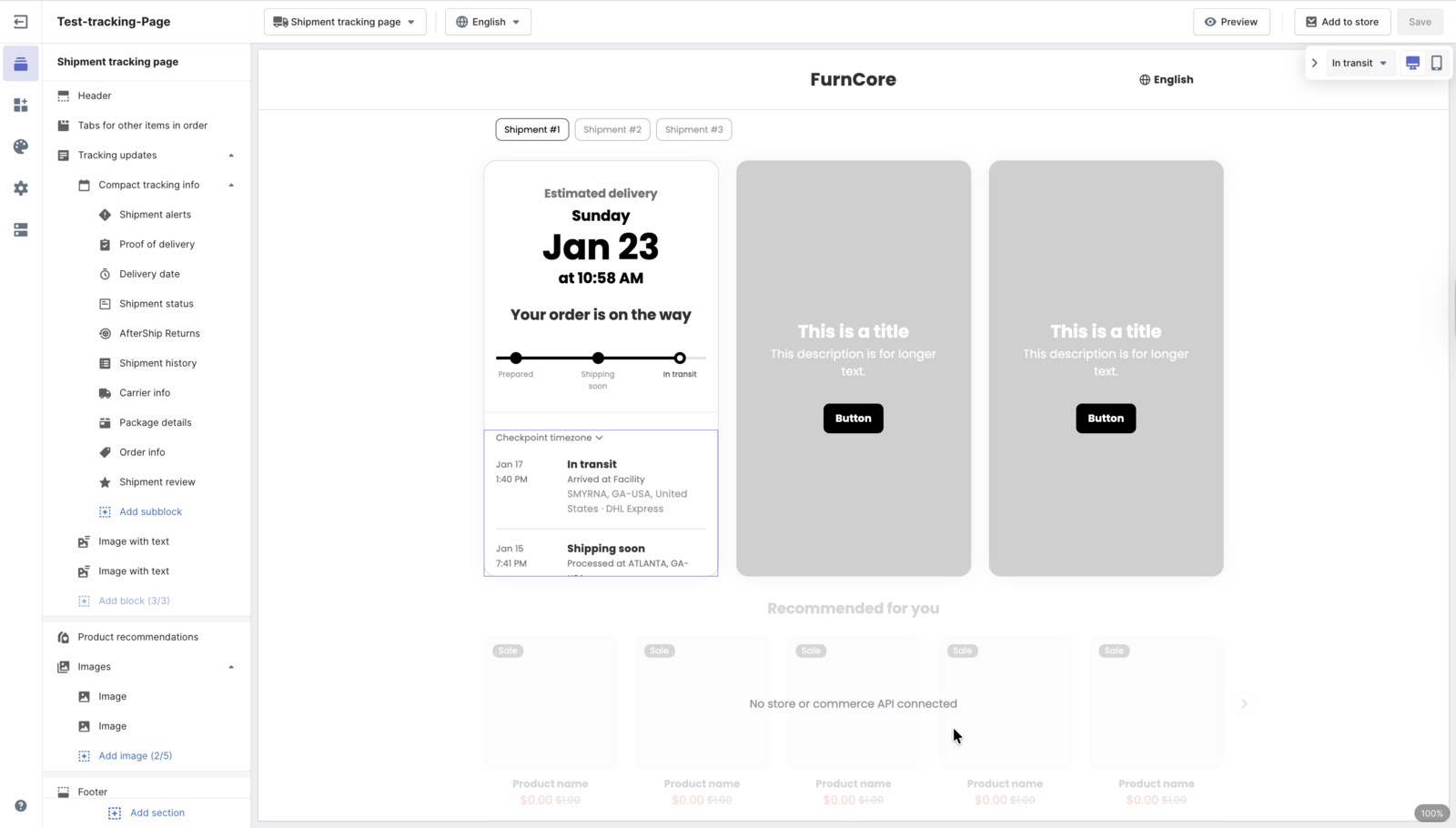
The takeaway for AfterShip is narrow on purpose: it owns parcel and the customer experience that follows it, and it leaves freight alone. For a shipper drowning in parcel portals, that focus is the point, because it clears the busywork without pretending to replace your freight desk.
2. Freightview: The Genuine LTL + Parcel Unifier
Freightview is the right answer when freight, not parcel, sits at the center of your operation.
It is a C.H. Robinson company, founded in 2013 out of Freightquote and acquired by C.H. Robinson in January 2015. It is not an evolution of MyCarrier; the two are unrelated companies. What makes Freightview worth a serious look is that it genuinely does the unified job, as a multi-modal TMS that rate-shops LTL, truckload, and parcel in one place. Of the three tools here, it is the only true LTL-plus-parcel unifier.
Be clear-eyed about its parcel scope, though. Freightview's parcel rate-shopping covers FedEx and UPS only, with no USPS or DHL. For a brand whose parcel mix leans on USPS economy services or DHL international lanes, that is a real gap.
This is where the two tools split cleanly. AfterShip brings a deeper parcel network at 100+ carriers, discounted partner rates, and the branded tracking and returns layer Freightview does not offer. Plenty of brands run both: Freightview for the freight desk, AfterShip for parcel and the post-purchase experience. They solve different halves, and that is a feature, not a compromise. The mistake is asking either tool to cover the other's lane.
3. ShipStation: The Parcel-First Leader with LTL as an Add-On
ShipStation is the comfortable pick for parcel-first SMBs that want deep warehouse tooling and only ship LTL occasionally.
It is the larger, more established parcel brand of the group, with warehouse and inventory features that come into their own at the Premium tier. For high-volume parcel operations that live in batch label printing and pick-pack workflows, that depth is a genuine draw. If your warehouse moves hundreds of parcel orders a day, that tooling earns its keep.
On freight, ShipStation is the inverse of MyCarrier: LTL is available as an add-on, delivered through ShipEngine and its SEKO connection across 40+ LTL carriers, rather than a native core mode. It works when you need it, but it is a bolt-on, not the foundation.
AfterShip's edge here is not label volume. It is the integrated post-purchase layer, where shipping, branded tracking with proactive notifications, and returns sit on one platform and one customer record. Entry pricing helps too: AfterShip offers a free tier, while ShipStation runs a 30-day trial with no permanent free plan, so starting small costs less. ShipStation is an AfterShip partner, so treat this as a fit question rather than a fight: parcel-first warehouse depth on one side, parcel-plus-post-purchase consolidation on the other.
At a Glance: Go.MyCarrier.io Alternatives Comparison
The one-line read: AfterShip owns the parcel-plus-post-purchase column, Freightview owns freight, and ShipStation sits in between.
Here is how the three line up on the criteria a mixed-mode shipper actually weighs, with Go.MyCarrier.io held up as the LTL baseline. Treat the table as a filter, not a scoreboard, because the right tool is the one that matches your shipping mix, not the one with the most checkmarks.
| Criteria | AfterShip Shipping | Freightview | ShipStation |
|---|---|---|---|
| Parcel Carrier Network Depth | 100+ parcel carriers | FedEx and UPS only | Broad parcel network |
| LTL Freight Support | No (parcel-only) | Yes (native LTL, TL, parcel) | Add-on via ShipEngine/SEKO |
| Integrated Post-Purchase Experience | Yes (branded tracking + returns) | No | Returns features, not a branded post-purchase platform |
| Pricing (billing term) | Free / about $9-11 / about $69-89 / Custom | about $99-149/mo (volume-based) | $14.99 / $29.99 / $349.99 |
Baseline (Go.MyCarrier.io, shown for reference only): LTL Freight Support is LTL-native; pricing runs $0 / $60 / $200.
Read down the LTL Freight Support row first. In one glance it tells you which tool is even in the running for your freight leg, and which is built purely for parcel. After that, the pricing and post-purchase rows do most of the deciding, because they map to the two things scaling teams answer for: cost control and customer experience.
The Verdict: When to Choose AfterShip for Parcel + Post-Purchase
Choose based on which half of your operation you are actually trying to fix. None of these tools is wrong; they are built for different problems, and the migration only hurts when you pick for the wrong half.
If your growth pain is parcel sprawl and a fragmented post-purchase experience, AfterShip Shipping is the clearest choice. It consolidates your parcel carriers, then connects each shipment to branded tracking and self-serve returns on one platform and one customer record. That ship-to-track-to-return layer is the half a scaling brand feels every day, and it is the half neither MyCarrier nor Freightview addresses. You keep your freight workflow untouched and retire the spreadsheet that has been holding your parcel reporting together.
If freight is the center of gravity, pick Freightview. It is the only true LTL-plus-parcel unifier of the three, and a buyer who wants LTL, truckload, and parcel rate-shopping in one neutral system should start there.
If you are a parcel-first SMB that ships LTL only now and then, ShipStation is a sensible fit, especially if you want deep warehouse and inventory tooling and treat freight as an occasional add-on. It is also the easiest landing spot if your team already lives in ShipStation and just wants to formalize the occasional LTL shipment.
MyDeal (Australian online marketplace, 1,900+ sellers)
“Customers can now easily track their packages without having to hunt for separate tracking pages, which not only saves them time but also creates a better overall experience.”
Kieran Boyce, General Manager of Operations
Read their story →For a growing brand, fixing the parcel and customer-experience half is the higher-leverage move, and it is exactly where AfterShip is built to win.
How to Switch the Parcel Side from MyCarrier to AfterShip
Treat this as a parcel migration, not a freight rip-and-replace, so your LTL stays exactly where it runs today.
- Audit your shipping mix, and separate parcel volume, which moves to AfterShip, from LTL freight, which stays in a freight tool such as MyCarrier, a broker, or a multi-modal TMS like Freightview.
- Connect your parcel carrier accounts to AfterShip, bringing your own negotiated rates plus AfterShip discounted partner rates across the 100+ supported parcel carriers.
- Rebuild and improve your parcel automation rules to auto-select the cheapest or fastest service, route by weight or destination, and apply label and packaging presets. Do not replicate an LTL routing rule, because there is no freight leg here to route.
- Integrate with your eCommerce platform or WMS so orders flow in automatically for label generation.
- Layer on post-purchase by turning on AfterShip Tracking for branded tracking and notifications, and AfterShip Returns for self-serve returns, so the same parcel volume gets a unified customer experience.
If you would rather automate onboarding, programmatic setup through the Carrier Accounts API, Labels and Rates API, and Webhooks is available at the Pro tier and above. Done in this order, most teams move parcel over without a freight outage and without a single missed label run.
Simplify shipping and order fulfillment across Shopify, TikTok Shop, and your carrier network.
Book a demoFrequently Asked Questions
Does AfterShip Shipping handle LTL freight?
No. AfterShip Shipping is a parcel, express, postal, and courier platform supporting 100+ carriers; it does not rate-shop, label, or produce a bill of lading for LTL freight. Keep LTL in a freight tool such as MyCarrier or a multi-modal TMS like Freightview, and use AfterShip to consolidate parcel plus branded tracking and returns.
Can I manage parcel returns alongside shipping with AfterShip?
Yes. AfterShip Shipping sits in the same platform as AfterShip Returns, so customers can self-serve returns and you manage labels and the flow in one account.
What is the difference between a TMS and a multi-carrier parcel platform?
A multi-modal TMS like Freightview rate-shops LTL, truckload, and parcel; a multi-carrier parcel platform like AfterShip Shipping rate-shops and labels parcel carriers and connects them to the post-purchase experience, but does not handle LTL freight.