
Easyship vs ShippingEasy vs Shippo: Which Actually Saves Time?

You didn't start an eCommerce brand to spend three hours a day copying and pasting tracking numbers and processing return labels. Yet, for many ops managers, that's the reality. You're looking for a shipping app to save you time, but what if you're looking in the wrong place?
The Easyship vs ShippingEasy vs Shippo debate almost always starts at the packing station, with a single question: which app prints a label fastest? It's a fair question with a hidden flaw. Label printing is a five-minute problem. The hours disappear later, in the support tickets and the returns nobody scheduled into the day.
This guide is written for the brand shipping 500 to 5,000 orders a month, where operational time is the scarcest resource on the team. First we reframe what "saving time" actually means at that volume. Then we compare the three tools on the tasks they were built for, and we call a winner instead of hiding behind "it depends." Along the way we'll weigh a different frame: AfterShip's integrated platform, where multi-carrier shipping software is the entry point to connected tracking and returns rather than a standalone label printer.
Why "Saving Time" Is More Than Just Printing Labels Faster
Time saved is not a single number. It's three, and they stack across the order lifecycle:
- Pre-shipment efficiency. Creating labels in bulk, comparing carrier rates automatically, and running rules so orders route themselves instead of waiting on a human decision.
- In-transit visibility. Proactive tracking that answers "Where is my order?" before the customer emails to ask. Real-time tracking can cut WISMO tickets (the "Where Is My Order?" pile) by 65%.
- Post-delivery automation. Returns handled through a self-service portal instead of your inbox, which can cut returns processing time by 50%.
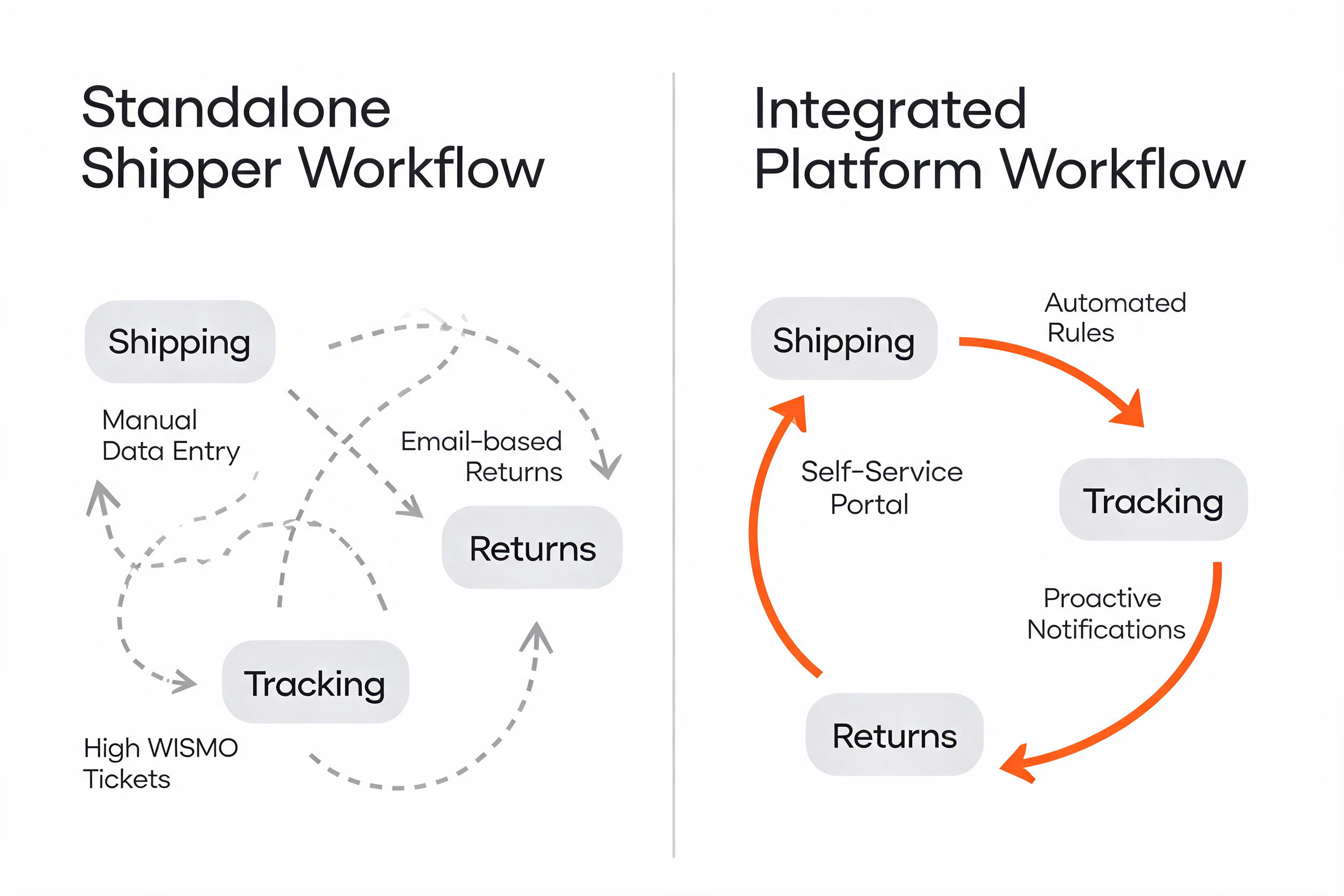
The trap is treating these as three separate purchases. When shipping, tracking, and returns each live behind a different login, every handoff between them becomes manual work: exporting a CSV, re-keying an order number, forwarding one more email. The tool saved you five minutes and the gaps between tools quietly took thirty.
Standalone shipping apps automate only pre-shipment tasks; tracking and returns stay manual. That's the part most feature lists skip. Such an app lives inside bucket one: it prints labels and syncs orders, then goes quiet the moment the parcel leaves.
Buckets two and three are where your quiet hours actually go. A support agent burns fifteen minutes hunting down a single carrier update. A "wrong size" return bounces through four emails and a spreadsheet before anyone issues a label. Multiply either one across a few thousand orders a month and you are looking at days, not minutes.
Run the math on your own week. If tracking questions and returns each eat an hour a day, that's the better part of two workdays gone, every week, on orders you already shipped correctly.
So shave a minute off label creation and you've improved the one task that was already fast. The compounding time lives downstream, in the two buckets a shipping app was never built to reach.
Head-to-Head: Comparing Core Shipping Automation
Now the comparison you came for, scored on the bucket-one tasks these tools were built to handle: bulk workflow, rule-engine depth, and how quickly a new hire can actually run the thing.
Picture a normal Monday. You have 100 orders to batch, a dozen of them international, plus a standing rule that anything over 5 lbs should route to a cheaper ground service. That scenario, not a single test label, is the honest measure of a shipping tool. At this volume the real question is not whether a tool can print a label. It's whether the rules run without you watching them.
| Criteria | Easyship | ShippingEasy | Shippo |
|---|---|---|---|
| Bulk workflow efficiency | Batch printing, intl-aware | Batch printing, real automation | Batch printing, simple |
| Automation rule engine | Rules, international-focused | Real automation, "no IT support required" | Rules (simpler) |
| UI / ease of use | Steeper learning curve | Moderate | Simple (often praised) |
| Tracking & CX | Basic; redirects to carrier | Branded notification emails (some) | Branded tracking Pro-gated (+ AI EDD on Pro) |
| Returns handling | None | Limited | Return labels all plans; no self-service portal |
| True cost | Free $0 (50) / Plus $29 / Premier $69 / Scale $99 (+ own-courier fee) | Free (25/mo) → Growth $19.99 → Basic $29.99 → Plus $49.99 → … → Enterprise (to 10k) | Free to 30 labels/mo (5¢/label own-carrier); Pro from $17/mo ($19 App Store) |
| Carriers | 550+ couriers | USPS + UPS focus (Auctane / ex-Stamps.com) | 40+ carriers |
| Ratings | Shopify 4.0/364, G2 4.4/178 | Shopify 4.3/332, G2 4.6/114 | Shopify 4.2/298, G2 4.2/77 |
For this specific task set, ShippingEasy takes it. Its automation is genuinely hands-off and doesn't need an engineer to configure, which matters the day a new team member inherits the queue and has to trust the rules already running. Easyship is the stronger choice if complex international shipping is your daily reality, because its rule engine goes deeper, though you pay for that power with a steeper learning curve. Shippo is the cleanest on-ramp of the three: the simplest interface, the fastest to learn, and a lighter rule set to match. According to reviewers on G2 and the Shopify App Store, Shippo's simplicity is a frequent highlight, while Easyship's deeper rule engine is often called more capable but steeper to learn. If you are weighing Easyship in particular, a direct comparison of AfterShip and Easyship digs into where each one fits.
For a team that leans on seasonal help or hands the queue to a new hire every few months, that low learning curve is a real form of time saved. It is just a smaller one than the buckets still ahead.
Notice the ceiling on that verdict, though. Every tool here is judged at the packing station, on the label and nothing after it.
That is the real limit of the Easyship vs ShippingEasy vs Shippo question. It picks a winner for the five-minute task and stays silent on the two buckets where your week actually disappears.
The Hidden Time Sink: How Disconnected Tracking Drains Your Support Team
The label prints, the parcel leaves, and your shipping tool considers the job done. Your customer does not. From that moment until the box lands on their doorstep, they have exactly one question, and if your systems can't answer it, they ask your support team instead.
That question is WISMO: "Where is my order?" It is the largest and most repetitive drain on an ecommerce support queue. Customer-support benchmarks from helpdesks like Gorgias put WISMO at roughly 30% to 50% of all support tickets. Every ticket is a person doing manual detective work: opening a carrier site, copying a tracking number, and typing back an update the customer could have seen themselves. At 500 to 5,000 orders a month, even a modest WISMO rate becomes hundreds of these tickets, and each one is fifteen minutes your team never gets back.
This is bucket two, and a standalone shipping app leaves it wide open. The fix is not more support headcount. It is making the answer self-serve before the question is ever asked.
AfterShip Tracking closes that gap with branded, self-serve tracking pages and automated shipment notifications across 1,200+ carriers. Customers land on a page that looks like your store, updates in real time, and pushes proactive alerts at each milestone, so they check status without emailing anyone. Merchants running real-time tracking see WISMO tickets fall by 65%, and those branded pages pull 3.2 times more views per order than a bare carrier page.
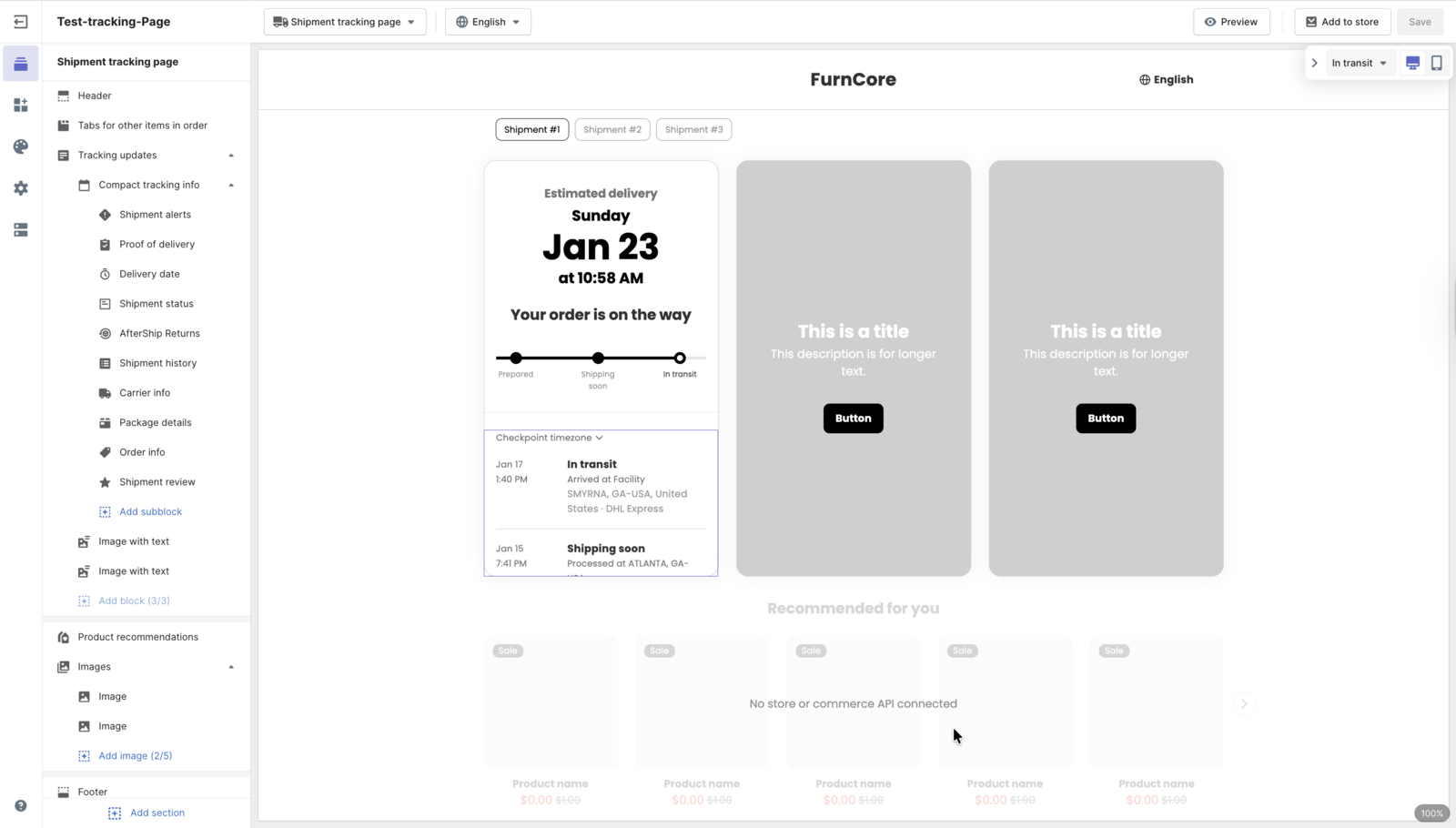
Those extra views are not vanity metrics. Each one is a customer answering their own question, and a ticket your team never has to open. Clear delivery dates matter before the sale, too: Narvar's 2025 research found 73% of shoppers say estimated delivery dates influence their purchase, and 40% won't buy without one.
The Final Frontier of Wasted Hours: Manual Returns
If tracking is the slow leak, returns are the flood. For most brands the process still runs on email chains and a shared spreadsheet: a customer requests a return, an agent replies, approves it by hand, emails a label, then updates a row nobody else can see. Every step is manual, and every handoff is a place for the request to stall.
This is bucket three, and it is where standalone shipping tools go quiet. Return labels on their own do not solve it. What saves hours is a system that decides and routes on its own.
AfterShip Returns replaces the inbox with a self-service portal that customers run themselves. You set the logic once. A representative rule looks like this: if the return reason is "wrong size," automatically approve the request and offer store credit, with no agent required. Merchants using it cut returns processing time by 50%, and because updates arrive as branded returns emails, those messages hit a 78% open rate, well above a typical marketing send. Offering store credit or an exchange instead of a cash refund also keeps the sale inside your store, so the returns flow stops being pure cost and starts recovering revenue.
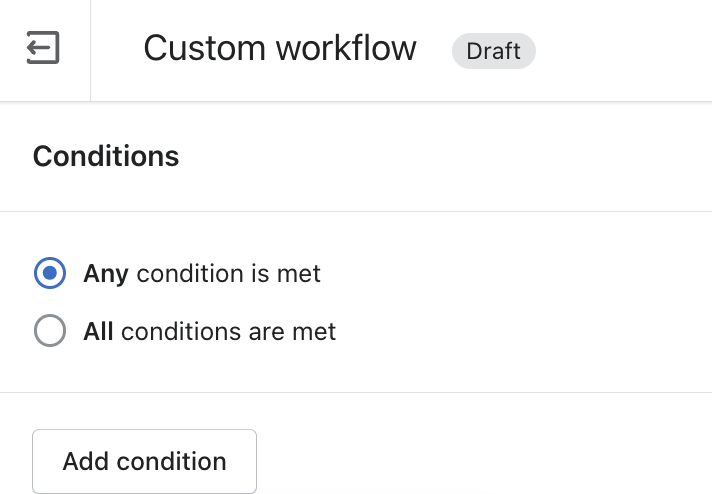
The real payoff is the closed loop. When returns connect to your shipping layer, labels generate automatically across 68 auto-label carriers. When they connect to inventory and your 3PL, an approved return updates stock and restocking instructions without a second system to reconcile by hand. The request moves from customer to warehouse without a person relaying it at every step.
Put buckets two and three side by side and the pattern is hard to miss. The hours you set out to reclaim were never really at the packing station. They were sitting in the tracking questions and the returns that a shipping app was never built to handle. AfterShip saves time by cutting WISMO tickets and automating returns.
The Verdict: Which Platform Actually Saves the Most Time in 2026?
Here is the answer without the hedging. If you print a handful of labels a week and nothing else, buy the simplest label tool and move on. If you run a scaling brand where operational time is the metric that matters most, the standalone-app question is the wrong one to be asking. The winner is not an app at all. An integrated platform saves time across shipping, tracking, and returns at once.
That distinction is the entire argument in 2026. A shipping app speeds up one bucket and stops there. An integrated stack compounds savings across all three, because the order data never leaves the system to be re-keyed by hand at every handoff. That is the difference between saving five minutes and saving five hours.
Be honest about where this flips, though. If you ship under 50 orders a month and your only goal is the cheapest USPS label on a free plan, AfterShip is more platform than you need right now, and Shippo's free tier is a perfectly good place to start. That is a real limitation, not a footnote. But the moment WISMO tickets and returns start eating more than an hour of your week, the math changes. The hour you spend babysitting those tasks is the hour an integrated stack hands back, and it keeps compounding as you grow.
Cheapest label at low volume: Shippo's free plan is enough.
Deep standalone international rules: Easyship.
Most hours saved across shipping, tracking, and returns: the integrated AfterShip platform.
Anchor your evaluation on the experience your customers actually feel, which is tracking and returns, not label speed. Those are the categories where the hours hide, so they are the categories worth judging a platform on. AfterShip's post-purchase suite earns strong marks from thousands of merchant reviews, and across G2 the platform holds a 4.7 rating from 311 reviews.
If you want to survey the wider field first, independent roundups of multi-carrier parcel management solutions map the broader category and the trade-offs between single point tools and full platforms. Read them as context, then return to the question that actually decides your week: how many hours does each option give back?
The low-friction next step is simple. Start with the bucket that hurts most today, prove the time savings for yourself, and connect the others as the results earn it.
Simplify shipping and order fulfillment across Shopify, TikTok Shop, and your carrier network.
Book a demoA few practical questions come up on the way to that decision.
Frequently Asked Questions
What about ShipStation?
ShipStation is a capable multi-channel order and shipping tool, and like ShippingEasy it is an Auctane brand, so the two are corporate siblings. It handles high-volume order and label workflows well, and it connects into AfterShip's ecosystem as a partner, so choosing it does not lock you out of branded tracking or automated returns. If you already run ShipStation for fulfillment, you can layer AfterShip Tracking and Returns on top rather than replace it.
Which shipping tool has the best USPS discounts?
Every tool here advertises its own negotiated rates, so treat any single ranked-winner claim with caution. AfterShip Shipping promotes a best USPS discount of up to 90% with no minimum volume, while Easyship, ShippingEasy, and Shippo each publish their own USPS and UPS discount programs. The right answer depends on your carrier mix and shipping volume, so compare the specific rates for the services you actually use.
Can I use AfterShip just for tracking?
Yes. AfterShip Tracking is available as a standalone subscription, so you can add branded tracking pages and proactive notifications without adopting the full suite. Many brands start there to cut WISMO tickets, then connect shipping and returns once the time savings become obvious.
Do I have to replace my current shipping app to reduce WISMO tickets?
No. AfterShip Tracking works across 1,200+ carriers, so you can keep your existing label workflow and still give customers a self-serve, branded tracking experience. The 65% reduction in WISMO tickets comes from proactive visibility, not from changing who prints your labels.