
Easyship vs. Competitors: Better Rates & Tracking for D2C Brands?


Is Your Shipping Software Secretly Costing You Money?
Your product margins are meticulously planned. Your marketing CPA is tracked to the penny. So why are you letting unpredictable international shipping rates and a poor tracking experience destroy your profitability and customer loyalty?
For most scaling D2C brands weighing Easyship against its competitors, the shipping bill is the number that gets watched. It is also the wrong number to watch alone. The advertised rate on a label tells you almost nothing about what that shipment actually costs you once it leaves the warehouse.
That gap is your Total Cost of Ownership, and it is where the real money leaks. A "cheap" label that triggers three WISMO tickets (the "where is my order" messages every silent or late shipment generates) is not cheap. Each ticket eats support time, and every shopper who cannot see where their order is becomes a shopper less likely to come back.
The numbers make the leak concrete. AfterShip's tracking page is built to cut that load at the source: proactive shipment notifications can reduce WISMO calls by up to 40%, reaching customers before they ever open a ticket. StackCommerce went further, cutting WISMO inquiries by 71% year over year after moving its post-purchase notifications onto AfterShip.
Now weigh the cost of the experience itself. When a shopper cannot see a clear delivery date, many simply do not buy.
73% of shoppers say estimated delivery dates influence their purchase decisions, and when no date is shown, 40% will not buy at all. (Narvar, 2025)
That is demand you lose before shipping is even a factor. So the honest question is not "which tool advertises the lowest rate?" It is "which platform lowers my total cost across the entire post-purchase journey?"
Easyship vs. AfterShip vs. ShipStation: The Key Differences for D2C Brands
If you are comparing easyship vs competitors right now, you are likely looking at three names. Each one solves a different problem, and those differences matter far more than the pricing pages let on.
Here is how the three break down for a D2C brand:
- Easyship is the cross-border rate shopper. It connects 550+ couriers and is genuinely strong on international rates, with landed cost (duties and taxes shown at checkout) as a real advantage for brands shipping worldwide. If your growth is international-first, this is a serious tool, and "up to 91% off retail" is Easyship's own headline rate claim.
- ShipStation is the high-volume workhorse. With 200+ carriers and a deep rules engine, it is built for warehouses pushing large daily label volumes across mostly US-focused lanes.
- AfterShip is the integrated post-purchase platform. It unifies shipping, tracking, and AI estimated delivery dates so that rates, customer experience, and conversion run on one stack instead of three.
Evaluate them on the three things a scaling brand actually feels: international rates, branded experience, and operational efficiency.
On rates, be precise about where each tool wins. AfterShip Shipping connects 130+ carriers and offers up to 90% off USPS with no minimum shipping volume requirement, a strong USPS-centric discount. That is not a claim to beat Easyship on international labels. Easyship remains the cross-border rate specialist, and the 91%-off-retail figure belongs to Easyship, not AfterShip.
International shipping also carries a complexity tax. Duties and taxes vary by country, and surfacing that landed cost at checkout is exactly where Easyship's strength shows.
Where AfterShip pulls ahead is the rest of the journey. Easyship is single-purpose rate-shopping, and ShipStation centers on fulfillment. AfterShip is the only one of the three that treats the post-purchase experience (branded tracking, delivery prediction, returns) as a revenue surface rather than an afterthought.
For a closer look at the two platforms side by side, AfterShip publishes a detailed head-to-head comparison.
The takeaway at this stage: pick the lane that matches your business, not the lowest advertised label. The sections ahead give you the criteria to do exactly that.
Feature Breakdown: What Really Matters in 2026
Feature lists are easy to pad. What actually moves a D2C P&L is narrower, so this breakdown scores the three d2c shipping platforms on the five criteria a scaling brand actually feels:
- International rate competitiveness sets your margin on every cross-border order.
- Branded tracking experience sets how many WISMO tickets you absorb and how many repeat orders you earn.
- Automation and efficiency sets how many manual minutes leave your week.
- All-in-one value sets how many separate subscriptions you can retire.
- Shopify integration depth sets how much of this runs natively versus through brittle workarounds.
AfterShip enters that comparison as a comprehensive multi-carrier shipping solution, with 130+ carriers and up to 90% off USPS at no minimum shipping volume requirement. That USPS discount is its rate headline, not a claim to undercut Easyship on international labels.
Here is the side-by-side on the criteria that matter:
| Criteria | AfterShip | Easyship | ShipStation |
|---|---|---|---|
| International Rate Competitiveness | Competitive (up to 90% off USPS, no minimum volume; 130+ carriers) - USPS-centric, not a broad international advantage | Strong cross-border (550+ couriers; landed cost / duties at checkout on Premier, $69/mo; 'up to 91% off retail') | Good (US-focused; 200+ carriers) |
| Branded Tracking Experience | Branded page PLUS on-page AI EDD, recommendation upsells, multilingual, Apple Wallet, 16 Klaviyo triggers (revenue surface) | Branded page available (carrier-tier-dependent; can redirect to the carrier's page) | Branded Tracking Page (Legacy) with templates/promo images, Standard and Premium tiers |
| Automation & Efficiency | Rules by carrier, service, weight, destination, SKU, product type; auto-select cheapest/fastest (not by carrier on-time history) | Rate-shopping automation (auto-select by rate) | Unlimited automation rule types (Standard); Auto-Routing (Premium); capable but UI is complex |
| All-in-One Value | Shipping + Tracking + Returns + EDD as one platform (billed per product; 25% first-year bundle) | Single-purpose (rate-shopping) | Shipping/fulfillment core; returns and advanced tracking via add-ons |
| Shopify Integration Depth | Built for Shopify; deeply embedded; API on Tracking Premium; native Klaviyo/Gorgias/3PL-WMS | Standard API integration | Standard API integration |
The pattern reads cleanly once it is all on one screen. Easyship owns cross-border rates, with 550+ couriers and landed cost shown at checkout. ShipStation owns high-volume throughput and its unlimited automation rules. AfterShip owns the integrated stack, covering rates, tracking, EDD, and returns on one platform instead of three. For teams that live in carrier selection and label printing, the depth of those automation rules is often the deciding factor.
Read each column for fit, not for an overall winner. A brand that is 90% international weighs Easyship's rate engine very differently than a brand losing hours a week to "where is my order" tickets.
Beyond Rates: How a Premium Tracking Experience Reduces Costs
Rates get you the sale. The tracking experience decides whether that customer ever comes back. This is where the comparison stops being about labels and starts being about retention.
Give credit where it is due. Both Easyship and ShipStation ship real branded tracking pages. Easyship offers a branded page (carrier-tier-dependent, and it can redirect to the carrier's own page), and ShipStation provides a Legacy Branded Tracking Page with templates and promo images across its Standard and Premium tiers. Neither is a bare carrier screen.
AfterShip's advantage is not that it has a tracking page. It is what that page does for revenue and support load.
A handful of capabilities turn the AfterShip tracking page from a status screen into a working surface:
- On-page AI delivery dates that show shoppers a predicted "get it by" date right on the tracking page.
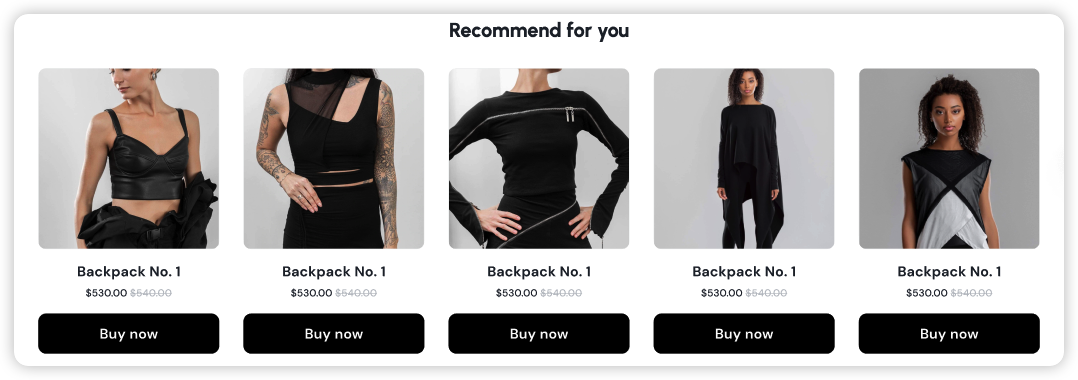
- Product-recommendation upsells, a real revenue engine rather than dead space. Miss To Mrs Box sees a 6.5% recommendation click-through, with 25% of sales attributed to tracking-page traffic.
- Multilingual pages that render in the shopper's language, not just yours.
- Apple Wallet passes so delivery status lives on the lock screen.
- 16 Klaviyo triggers that wire tracking events straight into your existing email and SMS flows.
The payoff lands on two lines of the P&L. On support cost, AfterShip's proactive shipment notifications can reduce WISMO calls by up to 40%, reaching the customer before the ticket is ever filed. On revenue, the post-purchase window turns into a repeat-purchase driver: Vivino reports up to a 30% boost in repeat sales after upgrading its tracking experience.
That is the gap between a tracking page that defends against complaints and one that actively earns the next order.
If tracking is your primary pain point, weigh it against other tracking-focused solutions like parcelLab too, not only against rate-shopping tools.
The honest read for 2026: a branded page is table stakes. What separates platforms is whether that page cuts support tickets and drives repeat revenue at the same time.
The Power of Predictability: Nail Your Delivery Promise with AI EDD
The fastest way to lose a sale is to leave the shopper guessing when their order will arrive. AfterShip's AI estimated delivery date (a predicted arrival window) closes that gap before the customer buys.
The model is built for accuracy at scale. AfterShip AI EDD reaches up to 95% prediction accuracy and covers at least 80% of deliveries, compared with under 40% for most carriers' own estimates. It is trained on 4.4B+ shipments, which is what lets it hold that accuracy across lanes and carriers.

Keep those two numbers separate, because they answer different questions. Coverage tells you how often a shopper sees any prediction at all. Accuracy tells you how often that prediction is right.
Here is the part competitors do not match. Neither Easyship nor ShipStation shows a shopper a predicted delivery date before purchase. AfterShip surfaces that "get it by" date on the product and checkout pages, where it can still change the buying decision. The pre-purchase widget is gated to Tracking Premium, so it sits with the plan built for conversion work.
That placement matters because the product page is where intent is won or lost. AfterShip attributes 75% of purchase decisions to influence on the product description, and Narvar (2025) found that 73% of shoppers say estimated delivery dates influence their purchase decisions. A credible date at that moment is not a nice-to-have. It is conversion infrastructure.
The Verdict: What's the Best Shipping Software for Your D2C Brand?
Skip the hedging. The right tool depends on where your brand actually spends its pain, so here is the call by use case.
Choose Easyship if you are cross-border-primary, or if you ship under 100 orders a month with a light post-purchase footprint. Its 550+ couriers and checkout-level landed-cost engine are a genuine strength, and at low volume you may not need anything more.
Choose ShipStation if you are high-volume and logistics-first. When the daily job is pushing large label batches through a deep rules engine, that is the workflow it was built for.
Choose AfterShip if you are a scaling, brand-conscious D2C operator. It is the only option that unifies rate execution (USPS-centric: up to 90% off USPS, no minimum volume) with a post-purchase experience that earns revenue: branded tracking, AI EDD, and returns on one platform.
Real merchants confirm the experience side. On the AfterShip Order Tracking listing, a verified tracking-experience review from June 2026:
Big Joe
“Vibhanshu was very helpful in resolving an issue quickly that was causing our customers to increase open tickets by 20%. Overall aftership tracking has helped streamline our notification post purchase process.”
Big Joe, Verified AfterShip Order Tracking review, Shopify App Store, June 2, 2026
Read their story →Separately, as a measured post-purchase outcome (not an international-shipping result):
Vivino: up to 50% reduction in WISMO tickets and a 30% increase in repeat sales from its branded tracking page.
Be honest about the edge case. For a brand shipping under ~50 domestic-only packages a month, the all-in-one platform is more than you need yet. A simpler tool can carry you until international orders or customer experience become the priority, at which point the value flips and the spend reads as an investment.
One caveat for Easyship users eyeing AfterShip: the March 2026 AfterShip and Easyship integration is labels-only. It embeds Easyship's discounted rates, not its duties-at-checkout display, so the landed-cost engine stays on Easyship's side.
The takeaway: match the platform to your trajectory, not just this month's order count.
Simplify shipping and order fulfillment across Shopify, TikTok Shop, and your carrier network.
Book a demoFrequently Asked Questions
Does AfterShip offer discounted shipping rates like Easyship?
Yes, with one important scope. AfterShip Shipping advertises up to 90% off USPS with no minimum volume requirement and bills itself as the "Best USPS discount," available across 130+ carriers. That strength is USPS-centric. For broad international rate shopping, Easyship is genuinely broader, so the better-rates answer depends on where you ship.
Can I use AfterShip just for tracking?
Yes. AfterShip Tracking is a separate product, so you can run it on its own without adopting Shipping or any other module.
How does AfterShip integrate with Shopify?
AfterShip is "Built for Shopify" and deeply embedded in the Shopify experience. API access unlocks on Tracking Premium, and it connects natively to Klaviyo, Attentive, Omnisend, Gorgias, and Zendesk, plus 3PL and WMS systems.