
Claimlane Alternatives: Why AfterShip's CX Wins for DTC Returns


Your returns process should be one of your best brand touchpoints, not your biggest source of support tickets. If you're finding your current claims tool is creating more customer friction than loyalty as you scale, you're asking the right question: what's next?
When Scaling Brands Start Looking for Claimlane Alternatives
The moment your returns tool starts generating tickets instead of trust, you have outgrown it.
Claimlane is a capable, specialist claims tool, and for plenty of smaller operations it handles damage and warranty claims well. But once a direct-to-consumer brand scales past a few thousand orders a month, the limits of any claims-first tool start to surface, and that is when teams begin evaluating Claimlane alternatives in earnest. Three growing pains tend to trigger the search, and each one carries a real business cost:
- Limited branding control, which erodes the premium experience you have worked hard to build. When the returns portal looks nothing like the rest of your store, the most emotional moment in the customer journey suddenly feels off-brand.
- Manual refund processing, which creates a steady stream of "where is my refund?" tickets. Every status your team updates by hand is a question a customer has to ask and a support hour you do not get back.
- Siloed customer data, which blocks the full customer-journey view. When returns sit in one tool and tracking, orders, and notifications sit in others, no one can see the whole story, so no one can act on it.
The stakes are not small. The NRF 2025 Retail Returns Landscape puts the US online return rate at 19.3% of online sales and the total returns market at $849.9 billion. The same research finds that 82% of consumers say free returns matter when they choose where to shop, while 9% of all returns are fraudulent and 45% of shoppers consider some rule-bending acceptable. Returns are a loyalty lever and a margin risk at the same time, so a tool that handles only one side becomes a liability as you grow. UK-scoped research from ZigZag Global adds that 79% of UK consumers would not return to a retailer after a poor returns experience.
The CX-First Answer: Moving from a Tool to a Platform with AfterShip Returns
The fix is not a better returns portal; it is a post-purchase platform.
A modern returns experience is not just a page where a shopper requests a refund. It is an integrated system of branded notifications, real-time tracking, and consistent communication that runs from the moment an order ships to the moment a refund or exchange lands. That is the line between a point solution and a platform, and it is exactly where AfterShip Returns Management changes the math for a scaling brand.
Here, "one platform" means something precise: one login, one dashboard, and one shared data model across AfterShip Returns, Tracking, and Shipping. It does not mean one invoice. Each product is its own subscription, billed separately, so Returns does not include Tracking for free. What the shared model buys you is a single source of truth, where the status a shopper sees, the status your support team sees, and the data your reports run on are all the same number. A stitched-together stack of separate apps can imitate that, but it cannot guarantee it.
This is the upgrade scaling brands graduate to among the serious Claimlane alternatives. It keeps everything a claims tool does well in the claims lane, then wraps the entire post-purchase journey in your brand and your data, so returns stop reading as a cost center and start working as a retention channel. It is the same shift brands like Goodr have made, turning the returns experience into a driver of loyalty rather than a source of friction.
3 Ways AfterShip Solves the CX Gaps in Basic Returns Tools
The platform difference shows up in three places a point solution cannot reach: the portal, the automation, and the data.
Each one maps to a growing pain from the previous section, and each one moves a number that matters, either the cost of running returns or the revenue you keep.
1. A Fully Branded, Self-Service Experience Your Customers Will Love
Your returns page should look like the rest of your store, not like a help-desk form.
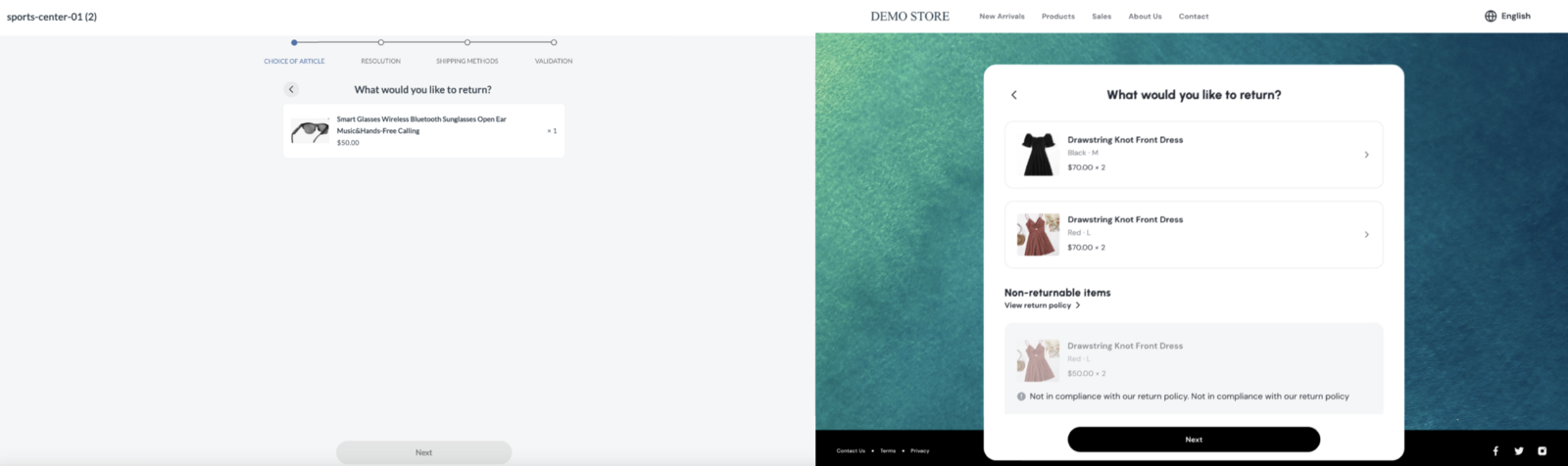
A basic claims tool tends to drop shoppers into a generic, unbranded form, and that mismatch quietly tells your best customers the experience ends at checkout. AfterShip Returns gives you a self-service portal you control from the entry Essentials tier, so branding is a starting feature, not a premium upsell.
The controls are concrete and visible. A custom domain keeps the portal at returns.yourbrand.com, so the shopper never leaves your brand. Your logo, brand assets, and color palette carry across the entire flow. Dynamic, configurable return reasons and policy rules let you shape what shoppers can do, and multi-language support meets international customers in their own language.
Each of those controls removes a reason to hesitate or open a ticket. An on-brand, self-service portal deflects "how do I return this?" questions before they reach your team, and it protects the premium perception that earns the next purchase. The difference is not cosmetic. A shopper who recognizes your brand at the return step trusts the process, and that trust is often what keeps a return from becoming a lost customer.
2. Intelligent Automation That Cuts Costs & Boosts Retention
Every manual touch in a return is a cost you can automate away, and every refund is revenue you can try to keep.
On the cost side, auto-approvals (available from Essentials) clear straightforward returns without a human in the loop, and rule-based warehouse routing with advanced workflows (Premium) sends each item to the right destination automatically. Fewer manual touches means fewer hours spent and fewer errors made.
On the revenue side, AI-powered exchanges (Premium) turn a would-be refund into a swap, while store-credit and exchange bonus incentives nudge shoppers toward keeping the value in-house. These are distinct features that work together: the AI engine recommends the right exchange, and the bonus incentive makes saying yes easy. Green, keep-the-item returns, the kind Goodr uses, skip the reverse-shipping cost entirely when sending an item back is not worth the freight.
Fraud control here is rules-based, not AI. It runs on configurable return-frequency analysis, weight-discrepancy detection, and automated policy enforcement, all included from Premium. You set the rules, and the system enforces them consistently on every return.
The marquee retention automations sit at the Premium tier, which still lands well under Claimlane's $499 entry. There is no separate 'Pro' plan to buy into.
3. The Power of a Unified Post-Purchase View
The fastest way to cut "where is my refund?" tickets is to make sure everyone is looking at the same status.
Today, AfterShip closes that gap three ways. First, proactive branded return-status notifications fire at every stage (label created, in transit, delivered, received, and refund issued) and reach customers at a 78% email open rate, so most shoppers never need to ask. Second, a single merchant dashboard shows every return's live transit status in one place, so an agent can answer in seconds instead of digging through a carrier site. Third, support-AI deflection handles the routine status questions that still come in. Together, those three handle the single largest category of returns questions before an agent ever opens a ticket.
The advantage underneath all three is the shared data model. The status a customer asks about and the status your team sees are the same record, not two systems guessing at each other. AfterShip is extending this to a single shopper-facing view of the return in transit, and the ticket-reducing wins above are already live today.
Run a claims tool alongside a separate tracking app and you get the opposite: two data sets, two logins, and a support team reconciling them by hand. The unified model is what turns returns from a question queue into a quiet, self-service flow.
AfterShip Returns vs. Claimlane: A Head-to-Head Comparison
Side by side, the difference comes down to scope: Claimlane is built for claims, AfterShip for the whole post-purchase journey.
The table below lines up AfterShip Returns and Claimlane across the six criteria a CX or operations leader actually evaluates.
| Criteria | AfterShip Returns | Claimlane |
|---|---|---|
| Customer Experience (Branding & Portal UX) | Branded self-service portal from Essentials: custom domain, logo/brand assets and colors, configurable return reasons and policies, multi-language | Branded claim intake; less emphasis on full storefront-grade portal branding |
| Automation & Rules Engine | Auto-approvals (Essentials); AI-powered exchanges, store-credit/exchange bonus incentives, green returns, advanced workflows with stackable routing rules (Premium); rules-based fraud prevention from Premium (return-frequency, weight-discrepancy, policy enforcement) | AI fraud detection gated to Custom tier only; deep, AI-driven defect adjudication and per-product/per-supplier rules |
| Carrier Network & Label Generation | 68 carriers worldwide for auto return labels + 500,000+ drop-off points; connect 3 / 5 / unlimited carrier accounts by tier; pre-negotiated AfterShip rates plus bring-your-own carrier accounts on every tier | Carrier coverage not its headline positioning |
| Ecosystem Integration (Tracking & Notifications) | Unified platform - one login, one dashboard, one shared data model across Returns + Tracking + Shipping (each billed separately); proactive return-status notifications (78% open rate); merchant dashboard with each return's live transit status | Point solution focused on claims/warranty; tracking is a separate, stitched-in tool |
| Analytics & Reporting | Advanced analytics from Premium: SKU-level return reasons (color, quality, size), refund-vs-exchange/credit conversion, processing time, return cost, transit/on-time reports - in-depth return analytics | Claims/warranty-workflow reporting; analytics is a commonly noted improvement area, not its strength |
| Enterprise/Scaling Readiness | Advanced workflows and stackable routing rules (Premium), unlimited carriers and custom rates (Enterprise), warranty portal, POS | Custom tier adds AI fraud detection; specialist depth in repair tracking, spare-parts, and supplier cost recovery |
The pattern is consistent across the table. Claimlane is a capable specialist for structured claims and warranty adjudication, while AfterShip Returns covers the entire post-purchase journey: branded self-service from the entry tier, retention automation, rules-based fraud controls in a plan under $120 a month, and one shared data model across Returns, Tracking, and notifications. Its in-depth return analytics turn return reasons into decisions rather than just reports. For a scaling DTC brand at roughly 100 returns a month, that adds up to more capability per dollar, at about $4,800 a year less than Claimlane Core at entry.
How AfterShip Stacks Up Against Other Alternatives (Loop, Returnly)
If your whole business lives inside Shopify, Loop is a fair shortlist pick; if it does not, the math changes.
You are probably weighing Loop too, and it deserves an honest look. Loop is a polished, Shopify-centric returns and exchange product, and brands that operate entirely inside Shopify often like its exchange flow. AfterShip takes a different shape: it is carrier-agnostic and multi-platform, with AI-powered exchanges and a unified post-purchase suite that puts Tracking, Shipping, and Returns on one stack. For a multi-channel brand that does not want its post-purchase experience tied to a single storefront, that carrier-agnostic, multi-platform approach is the deciding factor, and it is worth reading the full strengths compared to Loop before you choose. Returnly, once a familiar name here, was sunset by Affirm in October 2023, with roughly 1,500 of its merchants moving to Loop, so it is no longer a product you can evaluate.
“This exchange feature took every problem away.”
Nikolas Callas, Director of Operations
Read their story →After switching to AfterShip Returns, the brand doubled its exchange rate, with refunds falling from 75% to about 50% of returns.
Outcomes like that are not about a longer feature list. They come from running the whole post-purchase journey in one place, which is the easiest thing to see on your own catalog in a short walkthrough.
Returns automation that enhances the returns and exchanges experience, reduces costs, and retains more revenue.
Book a demoFrequently Asked Questions
How many carriers does AfterShip Returns support for return labels?
AfterShip Returns auto-generates return labels with 68 carriers worldwide, plus 500,000+ drop-off points, with no additional software.
How much does AfterShip Returns cost vs. Claimlane?
AfterShip Returns is Free (Return Care), Essentials $19/mo monthly ($16/mo annual), Premium $119/mo monthly ($99/mo annual), and Enterprise (custom), at an 18% annual discount. The AfterShip site leads with annual pricing; the Shopify App Store shows monthly. Claimlane Core is $499/mo and Plus is $799/mo. At the persona's ~100 returns/month scale, AfterShip Premium annual ($1,188/yr) is about $4,800/yr lower than Claimlane Core ($5,988/yr) at entry.
Is AfterShip Returns fraud prevention AI-powered?
No - it is rules-based: configurable return-frequency analysis, weight-discrepancy detection, and automated policy enforcement, included from the Premium tier. Claimlane's AI fraud detection is gated to its quote-only Custom tier (not in Core $499 or Plus $799).
Can shoppers see their return in transit on the same page?
Today AfterShip reduces "Where is my refund?" tickets through branded return-status notifications (78% open rate), a merchant dashboard showing every return's live transit status, and support-AI deflection. A single shopper-facing real-time return-transit page is on the roadmap.
What results have brands seen?
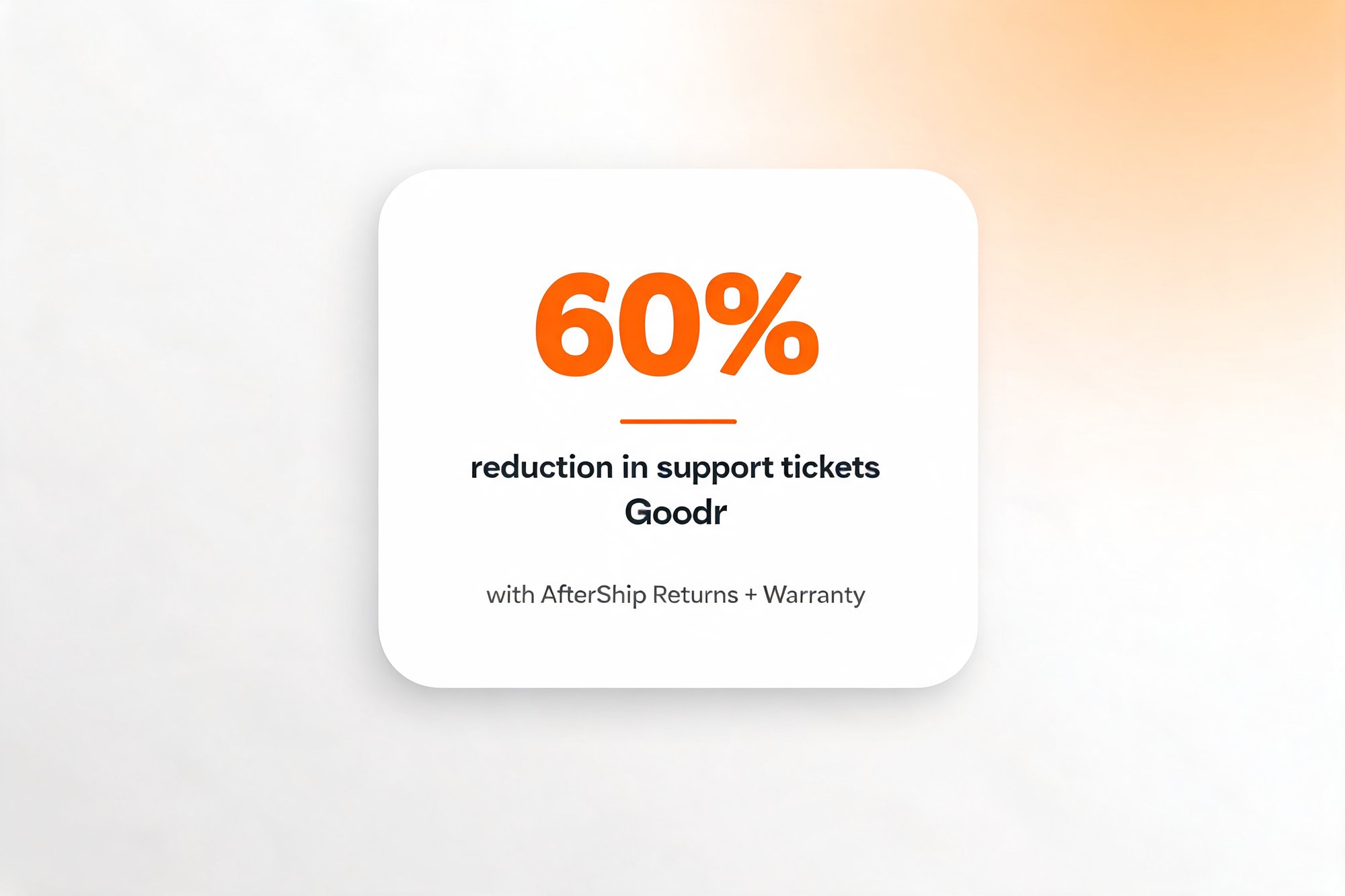
Eyewear brand Goodr cut warranty claims 75% and support tickets about 60% with AfterShip Returns and Warranty - clearing a 4,000+ claim backlog and dropping from roughly 8,000 to about 2,000 monthly claims under a 365-day window. Marc Nolan (per Nikolas Callas, Director of Operations) converted 25% of refunds into exchange and store credit.
The Verdict: Why AfterShip is the Strategic Choice for DTC Growth
Choose the tool that matches your moat. If you are a smaller seller handling occasional damage claims, or your core need is deep AI-driven defect adjudication, supplier cost recovery, and repair or spare-parts logistics, Claimlane's specialist focus is a genuine fit. But if you are a scaling DTC brand where customer experience is the moat, AfterShip Returns is the strategic investment. It is not the cheapest option, and it does not try to be. The point is more capability per dollar at your scale and a unified post-purchase suite, where Returns, Tracking, and notifications share one data model instead of becoming one more tool to stitch in. That is what turns returns from a cost center into a reason customers come back.