
What's the Best Branded Tracking Page? AfterShip vs Others


Why Your Tracking Page Is a Wasted Marketing Channel
Your branded tracking page earns 3.2x the views per order of almost any other touchpoint you own. Brands like Inspire Uplift see 80% open rates on tracking notifications, versus the 15 to 20% ecommerce email average reported in Klaviyo's 2025 benchmarks. If you're treating that page as a status checker instead of your highest-engagement marketing channel, you're leaving revenue on the table. Here's which platforms actually help you capture it.
Think about the asymmetry for a second. You fight for a 2% open rate on a promotional email and pay to acquire every click. Meanwhile, a customer who just spent money checks "where's my order" three, four, five times before the box lands.
That attention is already yours. You paid for it the moment they hit "buy."

Most brands waste it. They hand the most-viewed screen in the entire customer journey to a carrier, who shows a barcode, a map pin, and nothing else. No brand. No next product. No reason to come back.
The shift in this guide is simple. Stop scoring tracking pages on features and start scoring them on revenue per shipment. Once you do that, the question stops being "which tool has the nicest page" and becomes "which platform turns post-purchase attention into orders." That single reframe is what separates the best branded tracking page from a glorified status widget.
The 4 Pillars of a Revenue-Driving Tracking Page
If revenue per shipment is the goal, you need criteria that map to business outcomes, not a feature checklist. Four pillars do that work. Use them to score every platform on your shortlist.
- Brand immersion and trust. The page should look like your store, live on your domain, and set honest delivery expectations. AI-powered estimated delivery dates (EDD) matter here because a confident, accurate "arrives Thursday" reduces anxiety and the support tickets that follow. A fully customizable branded tracking page is the baseline, not a premium extra.
- Proactive CX automation. Smart notifications are how you cut WISMO ("where is my order") volume. The depth that counts is trigger granularity: can the platform fire a different message for "delayed at customs" than for "out for delivery," across email, SMS, and WhatsApp, without a developer?
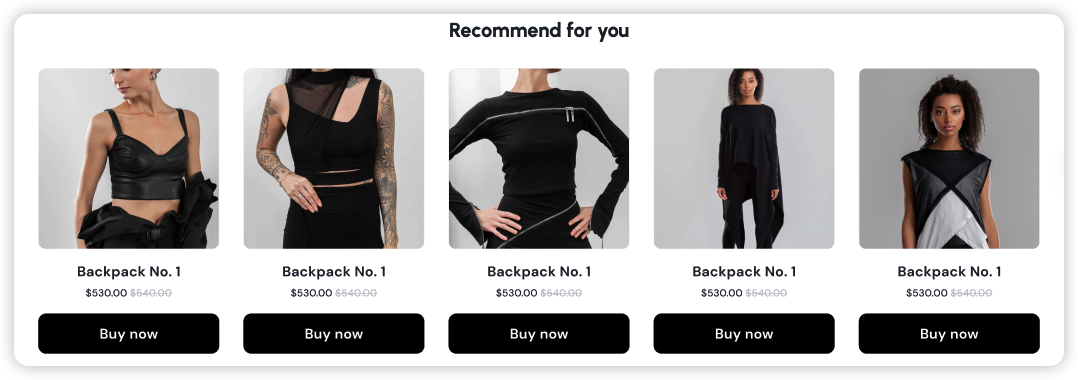
- Conversion and upsell engine. This is the pillar most teams skip. Native product recommendations, review prompts, and marketing blocks turn a status check into a second purchase. Treat the page as owned media with a job to do.
- Actionable analytics. You can't prove the page is a profit center without engagement data, click-through on recommendations, and revenue attribution. If you can't measure it, you can't defend the line item to your director.
One honest note before you shortlist. On most platforms, the two pillars that actually generate money, the conversion engine and the analytics that prove it, sit on a higher pricing tier. That is not a gotcha. The tier that proves ROI is usually the tier that generates it, and that distinction will matter when you compare the contenders next.
Score each option on all four pillars. The platform that wins on conversion and analytics, not just branding, is the one that earns its keep.
The Contenders: AfterShip vs. Narvar vs. Malomo vs. ParcelPanel
Four platforms come up again and again when DTC brands shop for a branded tracking page. Each is built for a different buyer. AfterShip is the all-in-one growth platform that treats tracking as a revenue channel. Narvar is the enterprise-service behemoth with deep customization and no public pricing. Malomo is the Shopify-first, Klaviyo-dependent marketing tool, now owned by Redo after its acquisition. ParcelPanel is the entry-level starter app for brands taking their first step past the carrier page.
Here is how they stack up on the four pillars that decide revenue per shipment.
| Criteria | AfterShip | Narvar | Malomo (Redo) | ParcelPanel |
|---|---|---|---|---|
| Branding & customization | Drag-and-drop editor, self-serve; custom domain (Premium) | Highly customizable but account-manager-led | Strong design; no design import on migration | Basic customization |
| Marketing & upsell | Native product recommendations: AI (Premium), manual/collection/condition (Pro); marketing asset blocks | Limited; add-on driven | Tracking-page marketing via Klaviyo | None native; needs third-party apps (Rebuy/Nosto) |
| CX automation & EDD | 33+ native triggers; Email/SMS/WhatsApp/Webhook + Apple Wallet; AI EDD ~90% domestic accuracy, 80%+ coverage | "Notify" sold separately; AI EDD = paid "Promise" add-on | No native notifications; relies on Klaviyo/Attentive/Postscript; no AI EDD | Carrier estimates only; no AI EDD; narrower triggers |
| Analytics & ROI tracking | Full analytics suite (Premium): engagement, CTR, rec performance; 3-yr historical via data lake (Enterprise) | Enterprise reporting | Tracking Page Revenue Report (strong for that one use case); basic elsewhere | Surface-level; no revenue attribution |
| Platform scalability | Shopify, Shopify Plus, SFCC, NetSuite, Magento, BigCommerce; Tracking + Returns + Shipping | Enterprise scale; complex | Shopify-focused; Returns via Redo | Shopify-only |
| Carriers | 1,300+ | Not published | 68 | Narrower than AfterShip |
| Pricing & transparency | Published tiers; Free (50 shipments/mo); Premium $119/mo (Shopify App Store) or $59/mo (aftership.com direct); 25% off first year bundling 2+ products | No public pricing; ~$30K–$45K/yr Basic, up to $400K+ over 2 yrs; add-ons extra; 2–3 yr lock-in | Insurance-funded (Redo), month-to-month; Shopify-focused | Entry-level / freemium |
The pattern is consistent. AfterShip leads on the revenue pillars, Narvar wins on enterprise depth at enterprise cost, Malomo is strong inside the Klaviyo bubble, and ParcelPanel is the budget on-ramp. The rest of this section explains why.
Deep Dive: Where AfterShip Excels for DTC Brands
Run AfterShip through the four pillars and the case builds itself. Start with brand immersion. AfterShip Tracking's platform gives operations and marketing teams a drag-and-drop editor, a custom domain, and full white-label control, so you publish updates without filing an engineering ticket or waiting on an account manager.
On trust, the differentiator is data depth. AfterShip supports 1,300+ carriers, so the "carrier not supported" gaps that create blind spots and tickets largely disappear. Its AI-powered estimated delivery dates reach roughly 90% domestic accuracy with 80%+ shipment coverage, compared with the under-40% coverage typical of raw carrier EDD.
A caveat worth stating plainly, because it builds trust with your director, not away from it. International AI EDD accuracy sits closer to 52% due to customs variability. The practical move is to display the carrier EDD first on cross-border lanes and layer AI EDD in as confidence builds. AfterShip lets you configure the EDD source, so an honest "we're estimating" beats a confident wrong date that generates a ticket.
The conversion pillar is where AfterShip pulls ahead for revenue-minded teams. The page carries native product recommendations and review widgets, so the most-viewed screen in your funnel actively sells. Be clear-eyed about the tier: AI-driven recommendations and the full analytics suite are Premium features, and the AI recommendation engine needs about 30 days of order data before it moves past a best-sellers fallback.
That analytics layer, sometimes referred to as AfterShip Intelligence, is not a separate product you buy. It is the engagement, click-through, and revenue-attribution reporting included in Premium, the same data you use to prove the page paid for itself.
The last advantage is structural. AfterShip runs Tracking, Returns, and Shipping on one stack with a single customer data layer, so post-purchase isn't stitched together from three vendors. For a DTC brand scaling past 5,000 orders a month, one platform and one data model is less reconciliation, fewer integrations, and a cleaner ROI story.
Where Competitors Fit (And Where They Fall Short)
Credit where it's due. Malomo's Klaviyo flow granularity is genuinely strong if your entire CX already lives in Klaviyo, and the tracking-page revenue reporting is a real strength for that one use case. ParcelPanel is a legitimate low-cost starting point for a brand that just needs to escape the bare carrier page.
One operational warning before you wire anything up. If you run AfterShip's native notifications and Klaviyo flows for the same shipment statuses, customers get duplicate sends. Pick one hub: AfterShip native for most DTC brands, or Klaviyo for deeply Klaviyo-native teams. Never both for the same events.
Now the limits. Malomo, post-acquisition by Redo, has no self-built notification capability and leans on Klaviyo, Attentive, or Postscript for messaging, which means your post-purchase comms inherit a single point of dependency. It supports 68 carriers, offers no AI EDD beyond checkout, and its analytics are thin outside the revenue report. For a comparison view, AfterShip vs Malomo lays the scope difference out directly.
ParcelPanel sits a tier below on the revenue pillars: no native upsell engine, shallow analytics with no revenue attribution, no AI EDD, and Shopify-only deployment. Brands typically outgrow it around 5,000 orders a month, right when post-purchase starts to matter financially.
Narvar is the opposite problem. It is powerful and highly customizable, but it publishes no public pricing, with third-party analyses putting the Basic plan around 30,000 to 45,000 US dollars a year before paid add-ons like Promise for EDD. Tracking-page edits route through an account manager, and contracts run multi-year. For an agile DTC brand, that is friction and cost where you need speed. The AfterShip vs Narvar breakdown covers the scope and pricing gap, and if you're auditing the wider field, this guide doubles as a top ParcelLab alternative reference.
The takeaway is not that the others are bad. It is that three of the four are built for a buyer you may not be. If your goal is revenue per shipment, only one contender is built around it.
Calculating the ROI: From Cost Center to Profit Center
Your director doesn't approve "a nicer tracking page." They approve a number. So build the business case the way a P&L owner would, on a per-order basis.
The back-of-the-napkin formula is simple:
(Average added revenue per order from tracking-page upsell) − (platform cost per order) = net gain per order.
Multiply that net gain by monthly order volume and you have an annual figure your finance team can actually evaluate. The point of the exercise is the reframe: once the page generates upsell revenue, it stops being a cost to serve and starts being a margin line.
The DTC numbers support it. Inspire Uplift saw an 80% open rate and 40% click-through on tracking notifications, driving a 30% increase in repeat sales. Vivino attributed a 30% lift in repeat sales to its branded tracking pages, alongside a 50% reduction in WISMO tickets. Reduced tickets are the cost side of the equation, and they compound: Aetrex reduced support tickets by 74% after upgrading its post-purchase experience.
80% open rate. 40% click-through. 30% more repeat sales. That is what Inspire Uplift's tracking notifications produced, on a channel most brands leave blank.
One honest dependency. The analytics you need to prove this ROI, engagement rates, recommendation click-through, and revenue attribution, sit on the Premium tier. That is the same tier that unlocks the AI recommendations generating the revenue. Pricing differs by channel, so check the figure where you'll buy: the Shopify App Store and aftership.com direct are separate commercial offers. The takeaway holds either way. The tier that proves the return is the tier that produces it.
The Verdict: What's the Best Branded Tracking Page in 2026?
For a scaling DTC brand that wants to turn post-purchase from a cost center into a revenue driver, AfterShip is the clear winner. It leads on the two pillars that actually move money, the conversion engine and the analytics that prove it, while covering branding, trust, and CX automation on one unified stack.
The honest case for the others is narrow but real. Narvar fits massive enterprises with complex, multi-million-dollar service agreements, and is hard to justify for a 5 to 50 million dollar DTC brand given no public pricing, roughly 30,000 to 45,000 dollar minimums, paid add-ons, and multi-year lock-in. Malomo, now part of Redo, suits Shopify-only brands whose entire CX runs through Klaviyo and who don't need a unified operational platform. ParcelPanel is a functional starting point for very small, budget-tight businesses, and most brands outgrow it around 5,000 orders a month.
Be realistic about switching. Basic tracking is live on day one, but a fully branded, optimized experience takes two to three weeks to rebuild, test, and tune when you migrate from ParcelPanel or Malomo, plus about 30 days for the AI recommendations to learn your catalog. That is still far faster, and fully self-serve, compared with the six to eight week (and sometimes multi-month) enterprise implementations on the other end of the market.
So the best branded tracking page isn't the one with the prettiest editor. It's the one that turns your highest-engagement screen into measurable lifetime value. For brands serious about that outcome, the choice is clear.
Frequently Asked Questions
What is the best branded tracking page software for DTC brands?
For brands that want post-purchase to drive revenue, AfterShip is the strongest fit. It combines on-brand pages, 1,300+ carrier coverage, AI estimated delivery dates, native product recommendations, and revenue analytics on one stack. Narvar suits large enterprises, Malomo fits Shopify brands running entirely on Klaviyo, and ParcelPanel works for very small, budget-tight stores.
How much does a branded tracking page cost?
AfterShip publishes its pricing: a Free plan covers 50 shipments a month, and Premium (with AI recommendations and full analytics) is $119/mo on the Shopify App Store or $59/mo direct on aftership.com, so always check the channel you're buying through. Narvar publishes no public pricing; third-party analyses put its Basic plan around $30,000 to $45,000 a year before paid add-ons.
Does a branded tracking page actually increase revenue?
Yes, when you use it as a marketing channel. Tracking pages earn roughly 3.2x the views per order of most owned touchpoints, and brands have turned that attention into sales: Inspire Uplift saw an 80% open rate and 40% click-through driving a 30% increase in repeat sales, while Vivino attributed a 30% repeat-sales lift and a 50% drop in WISMO tickets to its branded pages.
How long does it take to switch tracking page platforms?
Basic tracking can be live on day one. A fully branded, optimized experience typically takes two to three weeks to rebuild, test, and tune when migrating from a tool like ParcelPanel or Malomo, plus about 30 days for the AI recommendation engine to learn your catalog. That is still far faster than the six-to-eight-week (or longer) implementations common with enterprise platforms.
Proactive shipment tracking that delights your customers, reduces WISMO tickets, and optimizes your delivery performance.
Book a demo