
AfterShip vs. Parcel Monitor: The US Retailer's Verdict on Tracking & Support

AfterShip vs. Parcel Monitor: The 30-Second Verdict for US Retailers
Your brand's reputation is sealed in the last mile. So when it comes to post-purchase tracking, are you using a consumer-grade gadget or a business-grade logistics engine? For US retailers evaluating AfterShip and Parcel Monitor, this isn't a feature comparison. It's a choice between two fundamentally different business models.
Here's the bottom line before the deep dive. The table below scores both tools on the criteria a US operations lead actually answers to: who can deploy it, who keeps the data reliable, who picks up the phone at peak, and who turns tracking into revenue.
| Criteria | AfterShip | Parcel Monitor |
|---|---|---|
| Target User | B2B merchant platform you install and operate | B2C consumer lookup tool; no merchant deployment path |
| US Carrier Network & Reliability | 1,321 carriers, normalized to 7 statuses + 33 sub-statuses, 99.99% API uptime | Similar raw carrier count, but consumer-grade, un-normalized data |
| Support Model | 24/7 chat & email, dedicated CSM + enterprise SLAs, G2 9.2/10 | Self-service consumer FAQ; no business support tier |
| Revenue Generation | Branded tracking page (3.2x views/order), recommendations, analytics | None for merchants |
| Scalability | Integrated suite: Tracking, Returns, Shipping, EDD (separate subscriptions, one login/data model) | Tracking-lookup only; no upgrade path |
The pattern holds across every row. AfterShip is built to run a business. Parcel Monitor is built to look up a package.
It's Not a Feature Comparison; It's a Business Model Comparison
Start with the single most decisive fact: you cannot install Parcel Monitor on your store. It is a free consumer tracking site owned by Parcel Perform, and Parcel Perform's own Shopify app is currently delisted. Its listing reads, "This app is not currently available on the Shopify App Store." There is no merchant version to deploy, configure, or brand.
Parcel Monitor works the way a public directory works. A shopper pastes a tracking number into a website and reads a status. Nothing connects back to your store, your support desk, or your customer record. There is no admin panel, no webhook into your stack, and no branded surface a buyer would associate with your brand.
AfterShip is the opposite kind of product. It is a merchant platform you install and operate, live on the Shopify App Store with a 4.5-star rating across 1,202 reviews, a free tier, and paid plans above it.
Installation is not a formality. It is what makes every downstream gain possible: branded notifications, automated WISMO deflection, exception alerts, and a clean data feed your CX and analytics teams can build on. A deployed AfterShip tracking layer reduces WISMO tickets by up to 65% (AfterShip). A public lookup page deflects none of yours, because it is never wired into your store or your support flow.
That gap defines the entire AfterShip vs Parcel Monitor decision. One is a B2B SaaS platform you embed in your operations. The other is a consumer lookup tool with no merchant deployment path.
For a brand shipping 10,000 to 50,000 orders a month, "can I install it?" is not a detail. It is the first gate. A tool you cannot deploy cannot deflect a single WISMO ("Where Is My Order") ticket, brand a single notification, or feed a single dashboard.
Settle the structural question before you weigh any feature. Only one of these two options is a business system you can actually run.
Deep Dive: Tracking Reliability & US Carrier Network
Both tools cite a large carrier network. AfterShip integrates 1,321 carriers, and Parcel Monitor advertises a similar figure. Count is not the differentiator. What matters for operations is data quality.
Raw carrier data is messy. Every carrier reports milestones in its own vocabulary, on its own schedule, with its own gaps. A free aggregator passes that inconsistency straight through to whoever is doing the lookup. AfterShip normalizes it into one programmable model your systems can trust:
- 7 standardized delivery statuses plus 33 sub-statuses, so "in transit" or "exception" means the same thing whether the parcel moves on USPS, FedEx, or a regional carrier.
- 99.99% API uptime and sub-100ms response times, built on a dataset of more than 8 billion shipments tracked.
- Automatic multi-carrier detection from a single tracking number, so split shipments and carrier handoffs resolve without manual lookups.
- Algorithmic resolution of conflicting carrier data, so your dashboard shows one source of truth instead of two contradictory scans.
The business value is the consistency, not the count. A normalized status model is what lets you fire accurate alerts, populate live dashboards, and hold carriers to an SLA. A consumer aggregator surfaces raw carrier data for a one-off "where is my box" check, and stops there.
The cost of un-normalized data lands in your support queue. When a carrier posts a vague or conflicting scan, an aggregator displays it as-is, and your CX agent is left guessing whether to reassure the customer or open a claim. At 10,000 to 50,000 orders a month, even a small share of ambiguous statuses turns into hundreds of judgment calls a week. Standardized statuses remove the guesswork: a single "exception" sub-status tells your team exactly what happened and what to do next.
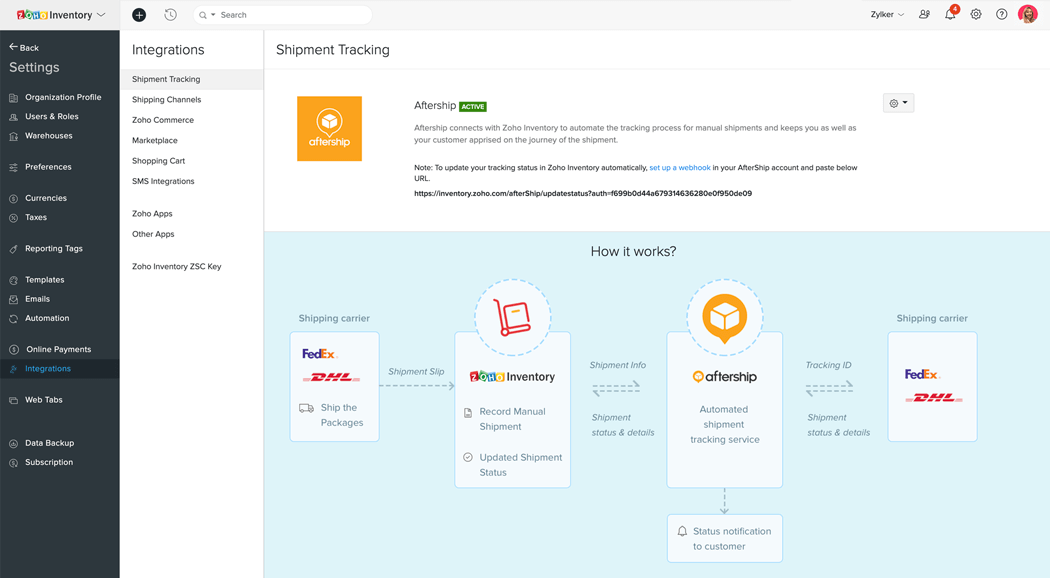
For US brands that also ship internationally, that consistency matters even more, because the complexities of international shipping tracking multiply the number of carrier handoffs behind every order. A free lookup tool can tell one shopper where one box is. A normalized data layer tells your entire operation where every box is, in one language. That is the difference between visibility and infrastructure.
Support Showdown: Proactive Partner vs. Public Help Forum
When a carrier melts down during your biggest sales week, the question is not which dashboard looks nicer. It is who answers when you escalate. This is where the AfterShip vs Parcel Monitor gap stops being abstract and starts costing you money.
AfterShip's support quality is independently rated, not self-claimed. Its G2 "Quality of Support" score is 9.2 out of 10 across roughly 196 reviews, ahead of Narvar (8.6), Route (8.9), and Easyship (7.4). Overall, AfterShip holds 4.7 out of 5 across about 306 reviews.
The delivery model matches the score. The Shopify listing states support is available 24/7 over chat and email, with dedicated customer success and enterprise SLAs at higher tiers. For an operations lead, that is peak-season insurance: a named contact and a response-time commitment for the moment volume triples and a regional carrier starts dropping scans.
There is also a difference between reactive help and a proactive partner. AfterShip's higher tiers pair you with a customer success manager who helps configure notification flows and exception rules before peak season, not after something breaks. A self-service consumer help center cannot do that, because there is no relationship to manage and no account to know.
On G2, merchants repeatedly single out responsiveness and hands-on onboarding as the reasons AfterShip earns that score.
Parcel Monitor offers none of this for a business. As a free consumer tool, its help model is self-service FAQ and consumer help content. There is no merchant SLA, no named success manager, and no escalation path for a retailer whose post-purchase experience just broke at peak. When a thousand customers are refreshing their tracking pages at once, "submit a help-center form" is not a support strategy.
When something fails at 2 a.m. during your biggest sales week, one of these tools has a person on the other end. The other has a help article.
The Experience Engine: Driving Revenue vs. Displaying Data
The tracking page is the most-opened page in the entire post-purchase journey. The only question is whether yours works for you or simply reports a status.
AfterShip's branded tracking page is a marketing surface, not a utility screen. You can carry your own logo and navigation, run cross-sell and upsell widgets, drop in promotional banners, and embed a live Instagram feed, all on a page customers return to repeatedly while they wait for delivery.
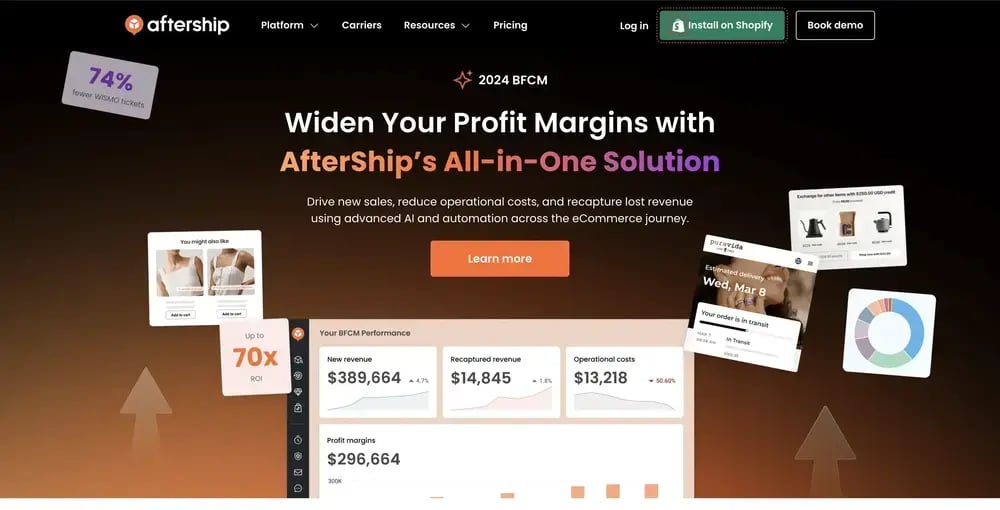
That attention has measurable value. AfterShip branded tracking pages drive 3.2x views per order (AfterShip), turning one shipment into several branded impressions. Put product recommendations on that page and the revenue follows: recommendations on a branded tracking page can generate 6 to 12% in additional new revenue annually (LateShipment merchant data).
The reason those numbers hold up is intent. A customer checking delivery status has already paid and is actively anticipating the package, which is the most receptive moment in the journey. A product recommendation in that window reaches a warm, engaged buyer rather than a cold prospect. That is why post-purchase real estate converts, but only when it is yours to merchandise.
Parcel Monitor's page does the opposite. It is a generic status screen carrying its own branding, not yours. A shopper checking a package there lands on a third-party utility, with no route back to your store and nothing to merchandise. Every one of those high-intent views is an impression you do not own.
With AfterShip, the page customers open most becomes your highest-traffic owned marketing channel. With a consumer aggregator, it is someone else's webpage that happens to mention your order.
Beyond Tracking: Why Your Next Platform Choice Matters Today
The tool you pick today has to survive the next two years of growth. A brand shipping 10,000 to 50,000 orders a month does not stand still, and the post-purchase needs that feel optional now turn urgent fast. This is where the AfterShip vs Parcel Monitor comparison stops being about tracking at all.
Three needs show up for almost every scaling retailer, and only one of these two options can meet any of them.
Returns. Returns are no longer a back-office afterthought. Baymard Institute finds that a majority of sites, around 54%, ship a returns experience with substantial usability issues. AfterShip Returns answers that with a full merchant product: a self-service returns portal, exchanges, refunds, and routing rules. It is a fully integrated returns management system that scales with order volume, the kind of stack large marketplaces already run.
Branded notifications. Carrier-native alerts require shopper opt-in and reinforce the carrier's brand, not yours. AfterShip's email and SMS notifications fire off the normalized status model and carry your branding instead, with native integrations for Klaviyo, Attentive, and Omnisend, plus webhooks and API for anything else in your stack.
Estimated delivery dates. AfterShip's AI EDD reaches up to 95% accuracy as a ceiling, covering more than 80% of deliveries, versus under 40% for most carrier-supplied dates. Treat the 95% as a best case rather than an SLA. AI EDD runs on Tracking Premium.
When you shortlist real post-purchase platforms, you weigh AfterShip against other leading platforms like Narvar, or an increasingly popular Shopify-native tool like Malomo, not against a free consumer lookup site. Parcel Monitor offers none of these as merchant features. It is consumer tracking-lookup only, with no upgrade path. Tracking, Returns, Shipping, and EDD are separate subscriptions, but they share one login, one dashboard, and one normalized data model.
The platform you install now is the one you will still be running at triple the volume. Choose for where you are going, not only where you are.
Analyzing Total Cost of Ownership (TCO), Not Just Price
Let us address the obvious counterpoint head-on: Parcel Monitor is free, and AfterShip is not. For a consumer tracking one package, free wins. For a business, price and cost are two different numbers.
AfterShip Tracking's direct plans on aftership.com start at $29 a month for Essentials and $59 a month for Premium, with Enterprise priced custom. Custom tracking domain, API and webhooks, AI EDD, and analytics begin at Premium. A brand doing 10,000 to 50,000 orders a month will exceed the published per-tier shipment volumes and should expect Enterprise pricing, which is quoted to scale rather than listed on the page.
Now the part the sticker price hides. "Free" carries a Total Cost of Ownership, and for a growing retailer it is rarely zero.
The hidden cost of a "free" tool:
- WISMO ticket labor you never deflect, because the tool is not wired into your store.
- Developer time spent building around a tool with no merchant app or API to install.
- The 6 to 12% in additional annual tracking-page revenue you forgo (LateShipment), with no branded page to merchandise.
- Brand and CSAT risk every time consumer-grade data shows a customer the wrong status.
Shopper expectations make this concrete. Forrester's April 2024 Consumer Pulse Survey found that 81% of US shoppers say specific delivery or pickup dates after purchase are important, and 73% value status-update notifications. Those are exactly the expectations a free lookup tool cannot help you meet at scale.
To be fair, AfterShip is a tiered platform, and some features such as a custom tracking domain live on higher plans. That is the trade-off of a business-grade tool: published tiers, real support, and SLAs you can hold a vendor to. A free consumer tool has none of those to fall back on when something breaks at peak. You are choosing between a cost you can budget and a risk you cannot.
The Final Verdict: The Clear Choice for Scaling US Retailers
For a US retailer focused on growth, the verdict is not close. AfterShip is a B2B post-purchase platform built for scaling businesses. It gives you an installable platform, 24/7 support rated 9.2/10 on G2, normalized carrier data, and revenue-driving tools that together justify the investment.
Parcel Monitor is a free tool for individuals to track personal packages. It has no installable merchant app, no business support tier, and none of the reliability, support, or revenue features a scaling retail operation depends on.
So the AfterShip vs Parcel Monitor choice comes down to a single question: are you tracking packages, or running a post-purchase operation? If it is the latter, only one of these tools was ever built for the job.
Proactive shipment tracking that delights your customers, reduces WISMO tickets, and optimizes your delivery performance.
Book a demoFrequently Asked Questions
Can I install Parcel Monitor on my store?
No. Parcel Monitor is a free consumer tracking site owned by Parcel Perform, and it has no installable merchant app. Parcel Perform's own Shopify listing is currently delisted. AfterShip, by contrast, is a merchant platform you install and operate directly on your store.
Which has better customer support, AfterShip or Parcel Monitor?
AfterShip. It scores 9.2 out of 10 for Quality of Support on G2 and offers 24/7 chat and email support, with dedicated customer success and SLAs at higher tiers. Parcel Monitor has no business support tier; its help model is self-service consumer content.
Is AfterShip or Parcel Monitor more reliable for tracking?
Both cite large carrier networks, so raw count is not the differentiator. AfterShip wins on data quality: it normalizes carrier data into 7 standardized statuses and 33 sub-statuses, with 99.99% API uptime. A free aggregator surfaces raw carrier data for one-off lookups.
Is free Parcel Monitor actually cheaper than paid AfterShip?
Only on the sticker price. "Free" carries a Total Cost of Ownership: unreduced WISMO labor, forgone tracking-page revenue, and CSAT risk from unreliable data. AfterShip's direct plans start at $29 a month, with custom Enterprise pricing for brands doing 10,000 to 50,000 orders a month.