
ActiveCampaign vs Emarsys: Which Is Best for Retail Teams?


Your marketing team is fighting for a 20% open rate on your latest campaign. Meanwhile, your operations team is sending shipping notifications with an 80% open rate. Why isn't that your best marketing channel? Let's fix that.
Before we get there, you have a more immediate decision in front of you. You're evaluating ActiveCampaign vs Emarsys for your DTC brand, and your CMO wants a recommendation this quarter. Both platforms are big upgrades from a basic Shopify email app, both will move retail KPIs, and both come with very different bets on where your team wants to spend its time.
This guide gives you the retail-focused breakdown, the honest verdict, and then a strategy most ActiveCampaign vs Emarsys comparisons miss entirely: how to amplify whichever platform you choose with the post-purchase channel your marketing stack ignores.
The Short Answer: When to Choose ActiveCampaign vs. Emarsys
If you want the verdict without the deep dive, here's the short answer.
| Decision dimension | Pick ActiveCampaign if | Pick Emarsys if |
|---|---|---|
| Team size & resources | You have a mid-market DTC team (5K to 50K orders/month) with engineering bandwidth to configure custom automations | You're a larger retail enterprise that needs retail-tuned playbooks without building them in-house |
| Vertical scope | Your business spans more than just retail (B2B/B2C hybrid, services, subscriptions) and you want one platform for the whole lifecycle | Retail vertical depth is non-negotiable: RFM cohorts, churn risk, and product affinity must work as pre-trained retail defaults, not custom-built models |
| Channels | Email + SMS cover 80%+ of your channel mix; web push and ads are nice-to-haves you'll add later | You orchestrate across 4+ channels today (email, SMS, web push, app push, ads, in-store) and need them unified |
| Budget | Predictable per-contact pricing with self-serve onboarding fits your budget posture | An enterprise-tier annual platform budget is approved, and you can absorb material training costs during implementation |
| Time-to-value | You want to be sending campaigns within weeks, not quarters | You can plan for a multi-quarter rollout in exchange for retail-grade personalization on Day 1 |
ActiveCampaign is the versatile automation engine. It's the right call for mid-market DTC brands that value flexibility, want a strong CRM backbone, and plan to build custom automations across the full lifecycle, not just retail use cases. The learning curve is manageable, the per-contact pricing scales predictably, and the integration ecosystem is broad enough to wire into most existing stacks.
Emarsys is the enterprise-grade, retail-specific solution. It's the right call for larger retail teams that need omnichannel personalization (email, SMS, web, app push, ads) as a default capability, with vertical-specific playbooks and AI models pre-trained on retail behavior. It's more expensive, more complex, and slower to implement. In return, you get a platform that was built for retail rather than configured for it.
Neither is a bad choice. Pick the one whose default shape matches how your team actually works.
Feature Deep Dive: Where They Shine (and Falter) for Retail
The "Short Answer" table tells you which platform to lean toward. This deeper view tells you why, on the eight criteria a retail CRM Manager actually evaluates.
| Criteria | ActiveCampaign | Emarsys | Winner |
|---|---|---|---|
| Advanced Segmentation (RFM, predictive) | Strong segmentation engine with custom fields and event triggers; RFM and predictive scoring possible but requires configuration | Pre-built retail RFM cohorts, churn risk scoring, and predictive product affinity models tuned for retail behavior | Emarsys |
| Automation Builder | Visual builder considered approachable for mid-market teams; clean canvas, low learning curve | More powerful for omnichannel orchestration but steeper learning curve; built for complex retail journeys | ActiveCampaign for ease; Emarsys for depth |
| On-site Personalization & AI | Predictive sending and predictive content available via add-ons | Native AI for product recommendations, send-time optimization, and content personalization, tuned for retail | Emarsys |
| Omnichannel Capabilities | Native email, SMS, and site messages; web push, app push, and ads via integrations | Genuinely omnichannel across email, SMS, web push, app push, ads, and in-store as one orchestration layer | Emarsys |
| SMS sender identity | Rotates source phone numbers across sends by default; dedicated numbers require A2P 10DLC or KYC registration | Dedicated short codes available for enterprise customers, but provisioning takes weeks | AfterShip (for post-purchase SMS): dedicated, consistent sender ID per brand (toll-free, long code, or short code) |
| Shopify / BigCommerce Integration Depth | Native connectors; lighter and faster to wire up | Native Shopify integration is more retail-aware but heavier to configure | Tie, depends on configuration tolerance |
| Reporting & Analytics | Strong on automation performance; weaker on retail-vertical KPIs as a default capability | Retail-specific dashboards: RFM cohorts, product affinity, churn risk, revenue attribution | Emarsys |
| Implementation Timeline & Training Cost | Self-serve onboarding with standard support included; sending campaigns in weeks | Reviewers on G2 routinely flag training costs as a barrier to full onboarding; multi-quarter rollout typical | AfterShip (for post-purchase): no mandatory training fee, one-click Shopify install |
A few patterns are worth pulling out of that table.
Segmentation and AI. Emarsys ships pre-built retail intelligence: RFM cohorts, churn risk scores, product affinity models, send-time optimization. ActiveCampaign reaches similar destinations through custom fields, predictive add-ons, and a few extra weeks of setup, which works if your team has the engineering bandwidth and saves real money if it does.
Omnichannel scope. Emarsys treats email, SMS, web push, app push, ads, and in-store touchpoints as one orchestration layer; ActiveCampaign covers email and SMS natively and adds the rest through integrations. A brand running six channels well will find Emarsys more cohesive; a brand running mostly email and SMS will not pay the difference.
SMS sender identity is where retail teams get caught off guard. ActiveCampaign rotates source phone numbers across sends by default, which fragments your sender reputation and trains customers to ignore unknown numbers. Dedicated numbers require going through A2P 10DLC or KYC registration. Emarsys lets enterprise customers provision dedicated short codes, but provisioning takes weeks. For post-purchase SMS specifically, a dedicated, consistent sender ID per brand is the baseline requirement, and it's the kind of detail that doesn't show up on a feature checklist until your reply rate craters.
Implementation cost is the other quiet differentiator. Emarsys reviewers on G2 routinely flag training costs as a significant onboarding hurdle. ActiveCampaign leans on self-serve onboarding with standard support included. Budget for both the platform cost and the time-to-first-campaign when you build out your business case.
The verdict on the comparison itself: ActiveCampaign for mid-market DTC brands that want flexibility and have technical bandwidth. Emarsys for larger retail enterprises that need a retail-tuned omnichannel engine without building it themselves. Neither verdict tells you anything about the channel that's already outperforming both of them. That's where the next section starts.
The Blind Spot: Your Marketing Platform Ignores Your Most-Opened Emails
Here's a gap that should bother every CRM Manager. Industry benchmarks consistently put marketing campaign engagement well below that of transactional messages. Salesforce's 2026 email marketing benchmarks put general marketing email CTOR in the 10 to 25% range and CTR in the 2 to 5% range. Transactional emails (order confirmations, shipping notifications, delivery updates) routinely outperform marketing campaigns on both: click-to-open rates often exceeding 30% and click-through rates often surpassing 5%. Klaviyo's 2026 omnichannel benchmark report, drawn from over 183,000 Klaviyo customers, is the canonical reference set for ecommerce email engagement benchmarks. Industry reporting puts shipping notification open rates in the 60 to 80% range.
Shipping notifications get roughly 2 to 3x the open rate of marketing campaigns.
That gap is not a small efficiency story. It is the most attentive moment in the customer relationship, and most retail brands hand it to a generic carrier template. The shipping confirmation, the in-transit update, the out-for-delivery alert, the delivered notice. Each one gets opened. Each one is built to fail as a marketing asset.
The structural reason is org chart, not technology. Pre-purchase email lives with marketing and runs through the ESP. Post-purchase notifications live with operations and run through the carrier or a shipping app. The two stacks rarely talk. ActiveCampaign and Emarsys both inherit this split, and neither was built to fix it. Their automation libraries are excellent at win-back, cart abandonment, and lifecycle nurture. Neither one knows when the package shipped.
For a brand doing 5,000 to 50,000 orders a month, that is tens to hundreds of thousands of high-attention impressions you are letting your carrier monetize for you. Or rather, not monetize at all, because the carrier doesn't have anything to sell. This is the gap. The next section is what fills it.
How AfterShip Turns Shipping Updates into a Revenue Channel
AfterShip Tracking replaces generic carrier notifications with two things your marketing team will actually recognize: a branded tracking page and a proactive notification system you control.
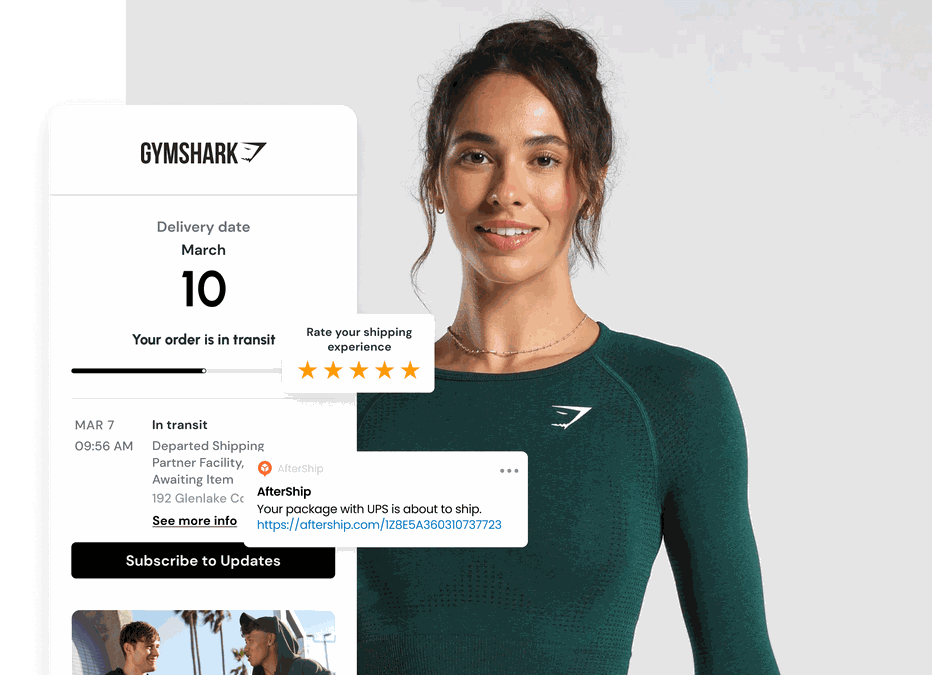
The tracking page is the anchor. Instead of dropping customers onto a third-party carrier site with banner ads for other retailers, you keep them on your domain, on a page that carries your brand, with slots for product recommendations, promotional banners, and review requests. Customers typically refresh the tracking page multiple times per shipment, and every refresh is a surface you control.
What goes in those slots is what turns a status check into a marketing moment. A beauty brand can drop a cross-sell card for the matching primer when the customer's foundation is out for delivery. An apparel brand can run a banner advertising the new drop landing the same week the package arrives. A home goods brand can swap in a review request the day after delivery, while the product is still on the kitchen counter. Each slot is template-driven, so the marketing team can swap creative without touching code.
Notifications work the same way. AfterShip sends the shipping confirmation, the delivery update, the exception alert, and the delivered notice as branded email or SMS, with the same marketing slots available inside the templates. The editor is no-code, so your team can ship template changes without an engineering ticket.
Why this works at the infrastructure level matters when you're presenting the business case to your CMO. AfterShip is Built for Shopify certified, Shopify's highest app-quality tier. That certification is the architectural proof that AfterShip pulls order, fulfillment, and carrier events directly from Shopify, in real time, through the official APIs. Your tracking and notification data capture stays clean even on weeks when your ESP's Shopify connector hiccups, because they are independent pipes.
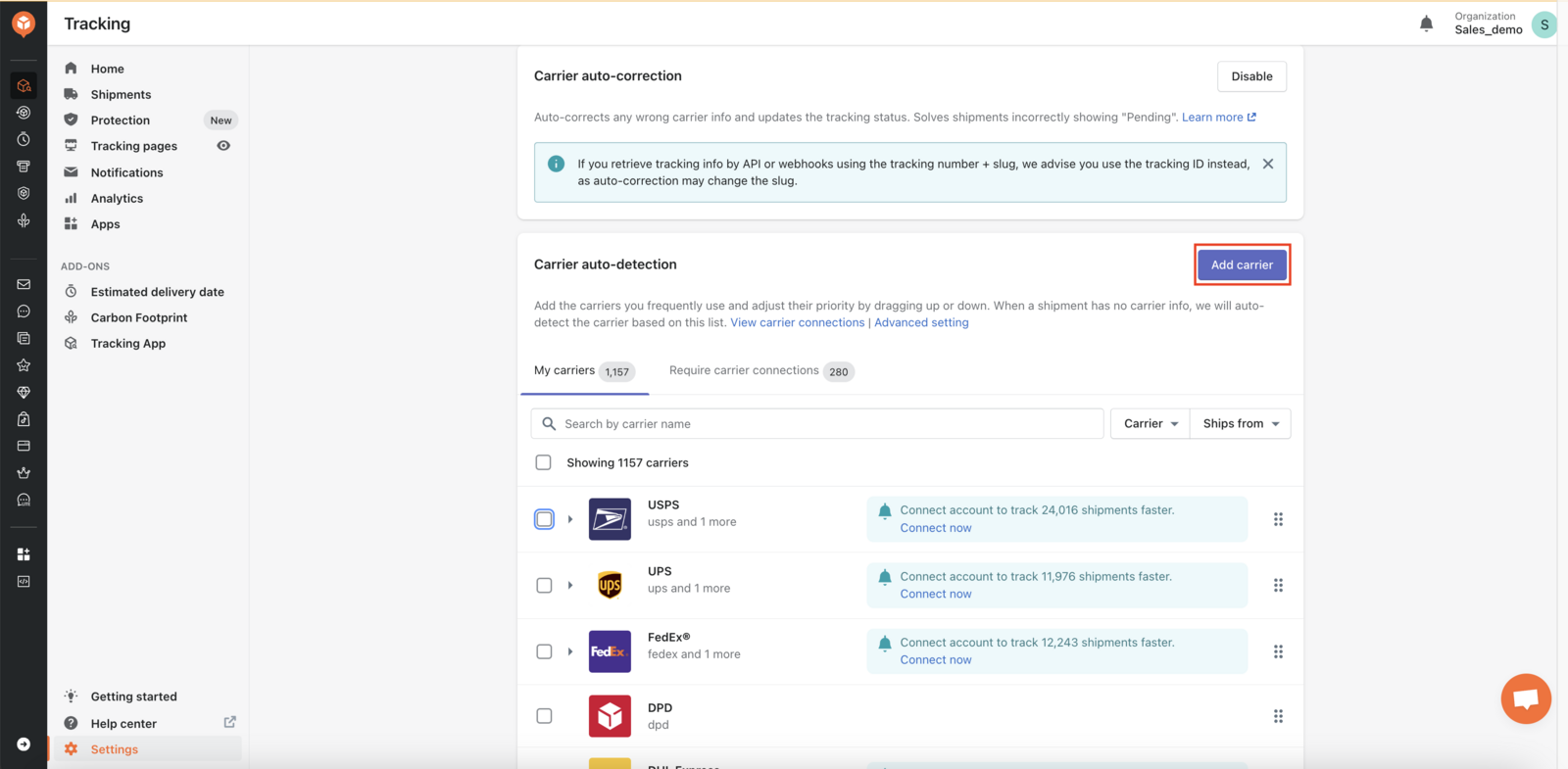
This is the operational reality behind the engagement-rate gap. The reason shipping notifications outperform marketing emails is that the customer asked for them. They are expected, awaited, opened. Turning that attention into product discovery, review collection, and repeat purchase is a separate engineering problem from your ESP, and it has its own specialist tool.
None of this replaces what ActiveCampaign or Emarsys do for you on the pre-purchase side. It runs in parallel, on a different surface, for a different moment in the customer journey. The question for the next section is how cleanly the two stacks talk to each other once you've decided to run both.
How AfterShip Connects to Your ESP
If AfterShip is the post-purchase specialist and your ESP is the pre-purchase engine, the practical question is how the two stacks share data. The honest answer is: it depends entirely on which ESP you picked.
AfterShip groups ESP integrations into three tiers. The tier determines whether you're looking at a one-click install, a documented setup project, or a custom engineering build.
| ESP | Integration Tier | Setup Effort | Event Mapping |
|---|---|---|---|
| Klaviyo | Tier 1: Native | One-click setup | Full event-to-event mapping: Pre-ship, Delivery summary, Delivery updates (in transit / out for delivery / delivered), Delivery exceptions, EDD events. Events route into a transactional flow path. |
| Attentive | Tier 2: Documented Webhook | Published setup guide; ~1 to 2 hours configuration | Customer team copies a webhook URL into AfterShip Settings > Triggers > Webhooks, generates an API key, and configures the events on the ESP side. Customer's webhook handler determines whether engagement filters apply. |
| Omnisend | Tier 2: Documented Webhook | Published setup guide; ~1 to 2 hours configuration | Same as Attentive: webhook URL plus API key plus ESP-side event configuration. |
| ActiveCampaign | Tier 3: Not Supported | No published integration: custom build required | Engineering team must write and maintain a REST API consumer against AfterShip's webhook events. |
| Emarsys | Tier 3: Not Supported | No published integration: custom build required | Engineering team must write and maintain a REST API consumer against AfterShip's webhook events. |
What "native" actually looks like in practice: a Shopify brand on Klaviyo installs AfterShip, authorizes the Klaviyo connection, and within minutes every shipping event flows into a dedicated transactional metric stream that Klaviyo treats separately from marketing flows. That separation matters more than it sounds. Transactional events do not get pulled into marketing segmentation by accident, and marketing unsubscribes do not silently kill your delivery notifications.
The GDPR posture follows the same logic. AfterShip's shipping notifications are transactional communications, sent on the lawful basis of contract performance, not marketing consent. A customer who unsubscribes from your brand's marketing list still receives their shipping confirmation, in-transit alerts, and delivered notice, because those messages fulfill the order contract she entered into at checkout. Same logic applies across email, SMS, and the tracking page itself.
A step down from native, Attentive and Omnisend sit in Tier 2: documented webhook integrations rather than one-click installs. AfterShip publishes a setup guide for each. Your team copies a webhook URL into AfterShip Settings > Triggers > Webhooks, generates an API key, and configures the events on the ESP side. Plan for an hour or two of configuration rather than minutes, and your webhook handler on the ESP side determines whether engagement filters apply.
For ActiveCampaign and Emarsys, none of this is plug-and-play. AfterShip does not publish a setup guide for either platform, and there is no one-click connector waiting in the marketplace. If you want AfterShip's post-purchase events flowing into your ActiveCampaign automation builder or your Emarsys segmentation logic, your engineering team will write and maintain a REST API consumer against AfterShip's webhook events. Plan for a multi-week build, plus ongoing maintenance.
Final Verdict: Build Your Stack for the Complete Customer Journey
The comparison itself stays where we landed it earlier: ActiveCampaign for mid-market DTC brands that want flexibility and have technical bandwidth. Emarsys for larger retail enterprises that need a retail-tuned omnichannel engine without building it themselves.
The modern retail stack reality is that whichever you pick is one half of a two-stack architecture. You need a marketing automation platform for pre-purchase and a post-purchase specialist for everything from order confirmation through delivery and review collection. The cleanest version of this combined stack remains Klaviyo plus AfterShip, both natively integrated, both built around Shopify's data model. If you've decided on ActiveCampaign or Emarsys for reasons that have nothing to do with post-purchase (which is usually the case), the honest framing is this: run AfterShip independently for branded tracking and transactional shipping notifications on its own channel, and accept that pre-purchase and post-purchase data won't unify inside your ESP without engineering work.
On budget and timing: published pricing tiers give you a directional anchor for the AfterShip side, but brands doing 10K+ orders a month typically end up on Enterprise quotes that are custom-priced rather than published. Per-message SMS pricing is country-by-country and not published either; contact sales for the rate card. On the implementation side, a self-serve Shopify brand can install AfterShip on Day 1, configure the tracking page in the no-code editor, and connect carriers the same afternoon. Week 1 covers notification triggers and brand templates. Month 1 lands the first full delivery cycle with real data. Larger implementations sit in the 4 to 6 week range to first branded notification live. There is no mandatory training fee, a meaningful contrast with the training charges Emarsys reviewers routinely flag on G2.
A renewal note worth raising with your CMO: AfterShip's published plans operate on a "your existing plan keeps working, no surprise re-tiering" basis. Enterprise contracts are custom-quoted with no published year-over-year escalator, which is the kind of detail to confirm in your MSA before signing.
Proactive shipment tracking that delights your customers, reduces WISMO tickets, and optimizes your delivery performance.
Book a demoFrequently Asked Questions
Is AfterShip a replacement for ActiveCampaign or Emarsys?
No. AfterShip is a post-purchase specialist, not a marketing automation platform. It does not handle pre-purchase lead nurturing, audience building, or campaign management. It complements ActiveCampaign or Emarsys by owning the branded tracking page and transactional shipping notifications (the highest-engagement touchpoints in the customer journey) which marketing automation platforms typically leave to generic carrier templates.
Does AfterShip natively integrate with ActiveCampaign or Emarsys?
No. AfterShip's only native ESP integration is Klaviyo, which offers one-click setup with full event-to-event mapping. Attentive and Omnisend connect via documented webhook with published setup guides. ActiveCampaign and Emarsys are not in AfterShip's supported integration stack; there is no published setup guide for either, and a brand wanting AfterShip post-purchase data inside ActiveCampaign or Emarsys would need to staff a custom engineering build against AfterShip's webhook events.
What are the key differences between ActiveCampaign and Emarsys for retail?
ActiveCampaign is a flexible automation engine for mid-market DTC brands that value a strong CRM backbone and want to build custom workflows across the full customer lifecycle. Emarsys is a retail-specific enterprise platform with pre-built RFM segmentation, predictive AI tuned for retail behavior, and genuine omnichannel orchestration across email, SMS, web push, app push, ads, and in-store. Emarsys is more expensive, more complex to implement, and typically the right choice only when retail-vertical depth justifies the investment.
How long does AfterShip take to implement for a Shopify brand?
Self-serve Shopify brands typically go live in days: install via the Shopify App Store on Day 1, configure the branded tracking page in the no-code editor, and connect carriers the same afternoon. Week 1 covers notification triggers and template branding. Month 1 lands the first full delivery cycle with refined data. Larger or Enterprise implementations sit in the 4 to 6 week range to first branded notification live. There is no mandatory training fee.