
Happy Returns or UPS? The Right Returns Model for Your Brand

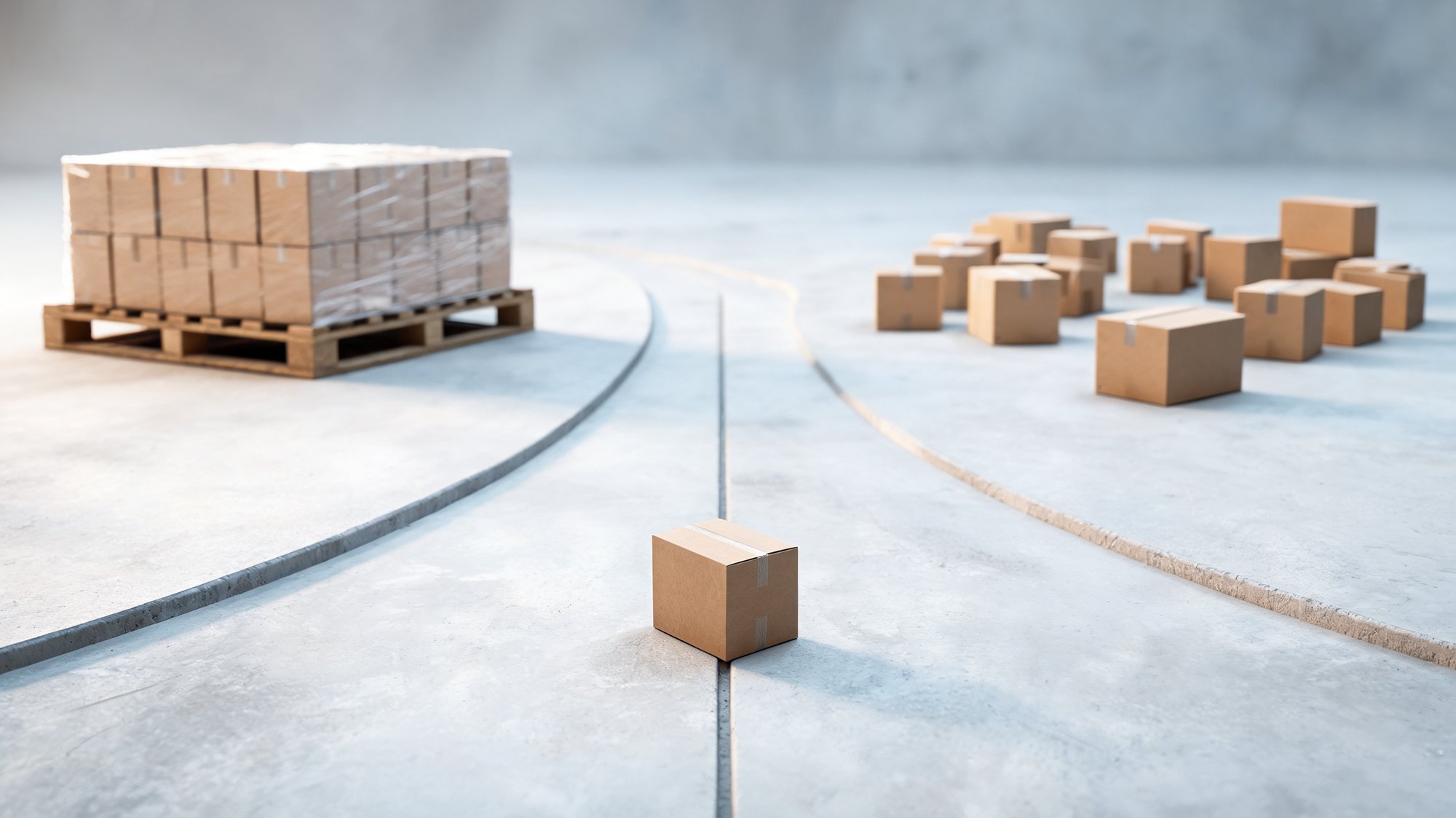
Your CFO is asking about the rising cost of returns. Your Head of CX wants to offer box-free, label-free drop-offs like the big retailers. But your long-standing UPS rep is offering you better rates. You are stuck. Happy Returns or UPS? The good news is that is the wrong question, and it gets easier once you realize both already share one parent.
Two Operating Models Under One Parent
Start by correcting the premise, because it changes the entire decision. Happy Returns is a UPS company; UPS acquired it, and the deal closed in the fourth quarter of 2023. So you are not weighing two rival firms, but two operating models that now sit under the same parent.
The first is the Happy Returns model: an asset-light network of third-party drop-off points, branded as Return Bars, where a shopper hands over an item with no box or label. Those returns are aggregated and shipped back to your warehouse in consolidated loads rather than one parcel at a time. The network reached 10,000 US drop-off locations (announced April 21, 2026), putting roughly 79 percent of the US population within five miles of one.
The second is the UPS direct carrier model: the traditional service where each customer packs the item, applies a label, and ships it back individually through the carrier's network. It is the workflow most brands already run today.
Seen side by side, the two models diverge on exactly the criteria an operations leader has to defend in a recommendation:
| Criterion | Happy Returns Model (UPS company) | UPS Direct Carrier Model |
|---|---|---|
| Return Method | Box-free, label-free drop-off at third-party Return Bars; returns are aggregated for consolidated shipment back to your warehouse. | Individual mail-back; the customer packs the item, applies a label, and ships it back through the carrier network. |
| Customer Experience | High convenience, with an instant refund or exchange at drop-off and nothing to pack or print; US-only and densest in metro areas. | Ubiquitous and familiar, using The UPS Store and drop boxes; the customer needs a box and a printed label. |
| Cost Structure | Consolidating returns can lower return shipping cost, which Happy Returns reports at up to 40 percent, set against the limits of network coverage. | Negotiated direct-carrier rates on your own UPS account, billed per parcel with no consolidation. |
| Operational Impact | Consolidated, batched inbound (about 3.6 days at fastest, roughly seven days on average) that a receiving team can staff against predictably. | A steady stream of individual parcels arriving continuously, spreading receiving and inspection across every day. |
| Brand Control | By default, the drop-off and refund moment happens on the network's surface; staying on your brand depends on wrapping it in your own portal. | By default, the return runs through the carrier's flow; staying on your brand depends on wrapping it in your own portal. |
The Customer Experience: Convenience vs Ubiquity
The two models optimize for different things, and the right call depends on where your customers are and what they expect.
The Happy Returns Return Bar model leads on convenience:
- Box-free and label-free: the shopper brings the item exactly as it is.
- An instant refund or exchange issued at the moment of drop-off.
- A quick, staffed, in-person handoff with nothing to print or pack.
Its tradeoff is reach. The Return Bar network is US-only and densest in metro areas, so the experience is strongest for urban and suburban shoppers and thinner elsewhere.
The UPS direct carrier model leads on ubiquity:
- A vast, familiar footprint of drop-off points, from The UPS Store to drop boxes.
- A process customers already understand without any onboarding.
Its tradeoff is friction. The customer has to find a box and produce a printed label before anything can ship.
Neither is universally "better"; it is a fit question. And customer demand is clear about what raises the odds of a second purchase. In NRF's 2025 research, 76 percent of consumers are more likely to choose a return option with an instant refund or exchange, and 82 percent now cite free returns as a major purchase consideration, up from 76 percent.
Unpacking the True Cost: Label Price vs Total Cost of Returns
If you evaluate these models on the shipping label alone, you will pick the wrong one. The label is the visible cost; the total cost of returns is what lands on the P&L.
On shipping, the consolidated model claims real leverage: Happy Returns, a UPS company, says it can cut return shipping costs by up to 40 percent. Treat that as the vendor's own figure, not a neutral benchmark, but the mechanism, aggregating many returns into fewer, fuller shipments, is sound. A brand with a negotiated UPS direct rate is not paying list price either; that discount is part of the same equation.
Then come the costs that have nothing to do with postage. Processing each returned item (receiving, inspecting, restocking or refurbishing) runs about $33 per return, a figure UPS CEO Carol Tome cited on the Q3 2023 earnings call in November 2023. Add the support cost of a confusing process: every "where is my refund" message is a ticket someone must work, and a poor experience does durable damage to repeat revenue.
About 71 percent of consumers say they are less likely to shop with a retailer again after a poor experience, up from 67 percent in 2024. (NRF, 2025 Retail Returns Landscape.)
That is the real scoreboard: label price, processing cost, support load, and the loyalty you keep or lose. Each model moves some of those numbers and quietly ignores others, which is precisely why forcing every return down a single model leaves value on the table.
The Operational Reality: Pallets vs Parcels
Talk to the person who runs the dock, and these two models stop looking like a marketing choice and start looking like two very different days at the warehouse.
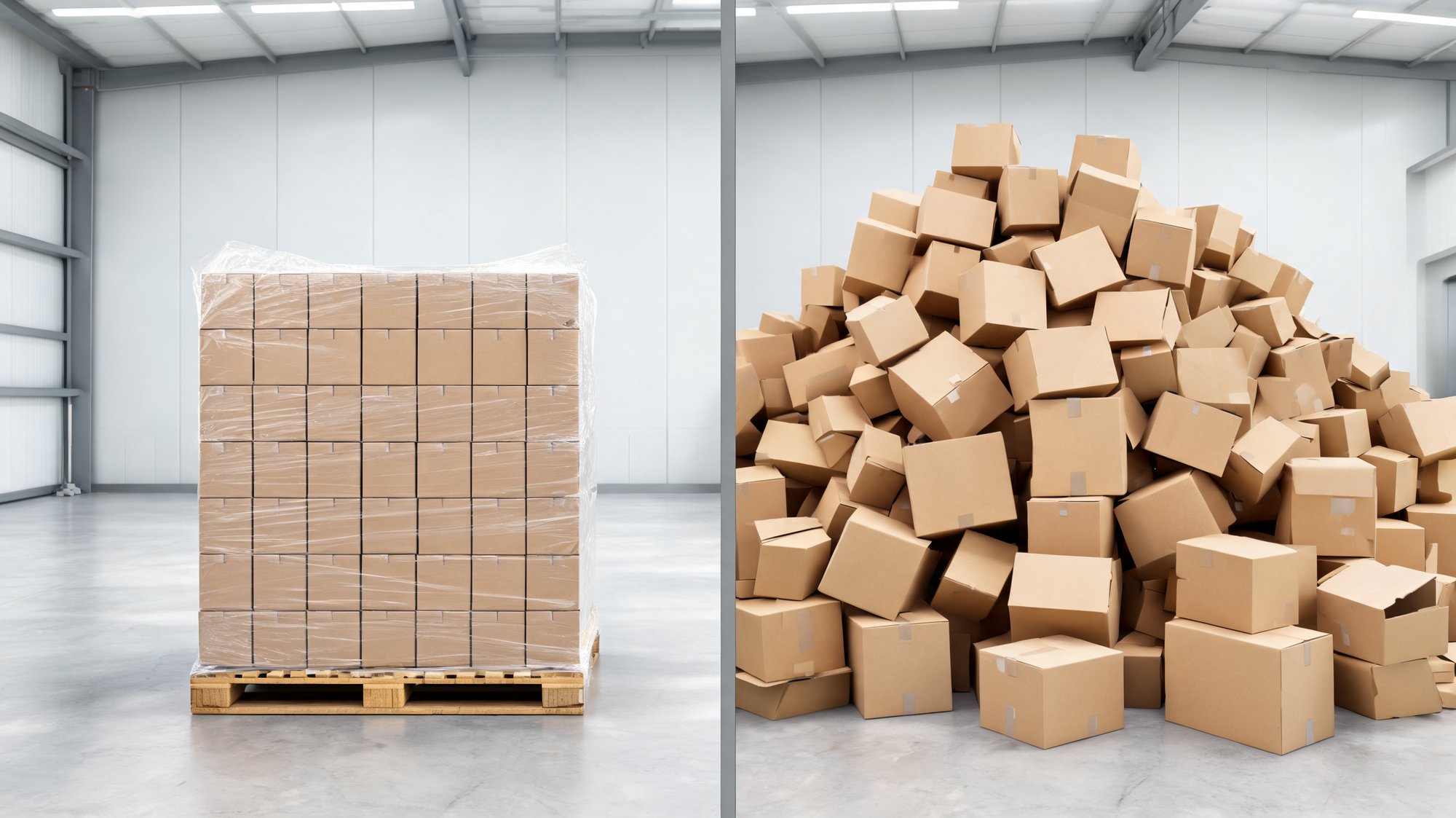
Under the Happy Returns model, your returns arrive consolidated. Items dropped at Return Bars are aggregated through the UPS network and sent back to you in batched loads rather than as a trickle of separate parcels. The transit math is favorable: consolidated returns can reach retailers in as little as 3.6 days, averaging roughly seven days. For a receiving team, a predictable, batched inbound is easier to staff against: you can schedule inspection and grading around known arrivals instead of reacting to whatever shows up.
Under the UPS direct carrier model, returns come back one box at a time. That stream is steady and familiar, but it spreads receiving, inspection, and refund work across every hour of every day, making staffing lumpier and refund timing harder to promise.
The inbound model is only half the equation. What you do with a return once it lands is where refund speed, restock rate, and customer trust are won. This is where first-party processing matters: Aetrex, running on AfterShip, cut its return processing time by 86 percent, and faster processing means faster refunds, the one thing a returning customer is waiting on.
The Strategic Mistake: Do Not Choose "OR," Build for "AND"
Here is the mistake the "Happy Returns or UPS" question quietly forces: it assumes every return should flow through one method. The strongest returns programs do the opposite, offering the right method for each situation and letting the rest of the operation follow.
Picture how that plays out. A shopper in a well-served region returning a pair of shoes is ideal for box-free Return Bar drop-off with an instant refund. A customer outside that coverage, or returning something a Return Bar cannot easily take, is better served by a UPS mail-in label. The same brand can route apparel one way and bulkier categories another, splitting by region, product category, or return reason.
That is the "AND" model: box-free drop-off and mail-in, chosen per return rather than forced across all of them. You cannot run "AND" on willpower, though; you need a system that decides, automatically and consistently, which method each shopper sees. That system, not the choice of carrier, is the real product decision in front of you.
How to Build Your Hybrid Returns Strategy with AfterShip
This is where AfterShip Returns comes in as a flexible returns management platform, not another carrier but the central nervous system above them. AfterShip provides the customer-facing portal and the backend logic, while Happy Returns and UPS become logistical pipes you plug in. You can offer several methods to route between, including box-free QR-code drop-off through FedEx and USPS, the Happy Returns Return Bar network, UPS mail-in, in-store, and more, with automatic label generation across 68 carriers.
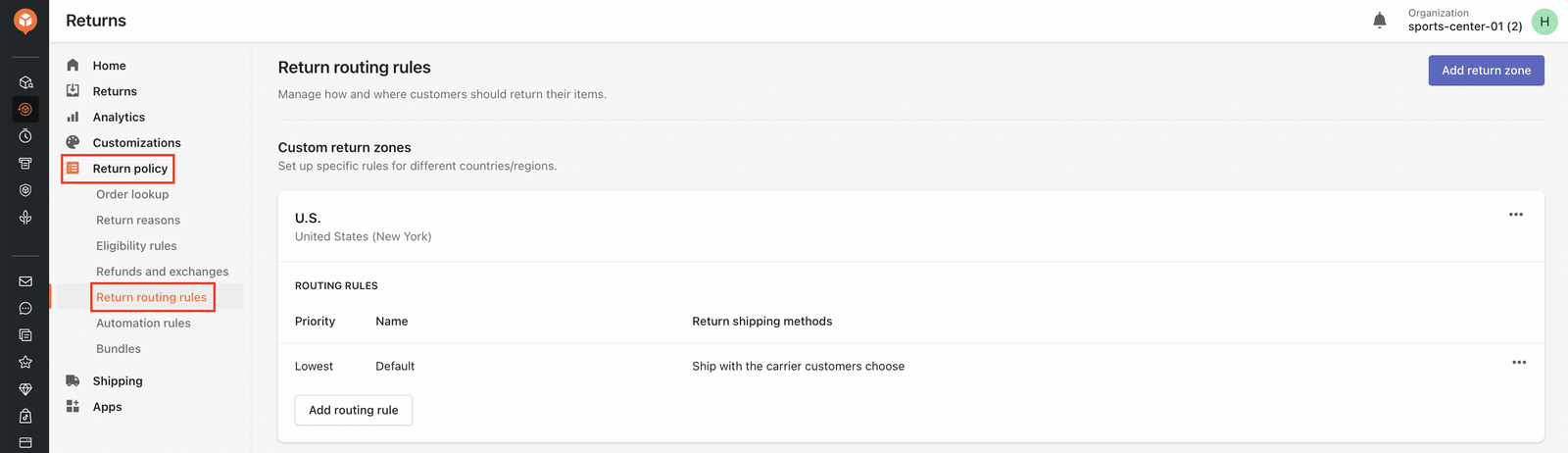
The capability that makes the hybrid real is Return Method Routing Rules, a genuine if/then engine. You define specific return method rules per return zone (a country or region), and the platform evaluates them by priority, first match wins. Each rule can key off conditions such as destination or zone, product type, product tag, SKU, return reason, resolution type, order tag, order value, return value, and customer tag.
A few specifics are worth getting right. Geography is expressed as a region or zone, not a radius around a city. There is no native customer-lifetime-value condition; to prioritize your best customers, tag them (for example, a VIP tag in Shopify) and route on that tag. Return value and customer tag are Shopify-only conditions. Inside those rules you do exactly what the "AND" strategy requires: send well-served, apparel, instant-refund-eligible returns to a box-free method, and everything else to a mail-in label, without a human grading each case.
A Unified Brand Experience, No Matter the Carrier
Whatever carrier or method a customer chooses for drop-off, with AfterShip the journey stays on your own surface. They start the return on your site, move through your branded portal, and get your branded notifications. That is exactly what you give up when you hand a customer to a carrier's website: the return becomes the carrier's experience, not yours.
Existing UPS customers do not have to trade away their economics to get this. When you set up your UPS Returns integration, AfterShip generates the return label through your own UPS account, so you keep your negotiated rates, and then layers the branded portal, routing rules, real-time return tracking, and automated label expiration on top.
Aetrex, a footwear brand running its returns on AfterShip, saw:
- Return processing time down 86 percent
- Returns NPS up 141 points
- Operational costs down 50 percent with better returns management
Read the full Aetrex case study.
The Right Model is the One You Control
Be fair about the appeal of going all in on a single provider. Committing to one network, say only Happy Returns, is genuinely simpler to stand up: one network, one workflow, one vendor relationship. If simplicity were all that mattered, the decision would be easy.
That simplicity quietly trades away flexibility, brand control, and per-return cost optimization, and the bill comes due as you scale. At 20,000 to 50,000 or more orders a month, four kinds of strategic debt start to show:
- Geographic coverage gaps. Even at 10,000 Return Bars, with about 79 percent of the US population within five miles, the remaining roughly 21 percent, who skew rural and vehicle-dependent, get a worse box-free experience. UPS itself frames the expansion as filling coverage gaps, so the gap is real.
- International growth. The Return Bar network is US-only, so a single-provider commitment breaks the moment you cross a border, while a software-orchestrated model already supports per-zone carrier rules.
- Per-return cost optimization. A single network applies one cost model to every return, while a hybrid routes the cheapest viable method per return.
- Brand control. Ceding returns to one carrier's flow pushes the portal, the notifications, and the data partly onto someone else's surface, while orchestrating through AfterShip keeps every return on your own branded portal.
So the verdict is not a logistics model at all. The winner is the software platform that gives you the flexibility to manage multiple models, and for mid-market and enterprise brands that need a sophisticated, cost-effective, branded returns strategy, that platform is AfterShip Returns. The "Happy Returns vs UPS" debate is a distraction, doubly so now that both are UPS. The real decision is whether to cede control to one logistics flow or to invest in the flexibility to build the program your business and customers actually need. For the broader evaluation criteria, see our guide to choosing the right returns software.
If you want to see how the routing and the branded experience would map to your own returns, the next step is a short conversation.
Returns automation that enhances the returns and exchanges experience, reduces costs, and retains more revenue.
Book a demoFrequently Asked Questions
Is UPS or Happy Returns better for a business?
They are not rival companies. Happy Returns is a UPS company (the deal closed in the fourth quarter of 2023), so this is one parent with two operating models. The Return Bar network is strongest for box-free convenience and instant refunds in well-served US regions, while UPS direct mail-in wins on ubiquity. For a scaling brand, the better move is usually to offer both and route each return to the right method, which AfterShip Returns is built to do.
How do Return Bars work?
A Return Bar is a third-party drop-off point in the Happy Returns network where a shopper returns an item with no box or label, often with an instant refund at drop-off. Returns are aggregated and shipped back to the retailer in consolidated loads. The network reached 10,000 US locations (April 21, 2026), placing about 79 percent of the US population within five miles of one. It is US-only.
Can I offer box-free and mail-in returns at the same time?
Yes. AfterShip Returns lets you offer multiple methods and route each return automatically with Return Method Routing Rules, a priority-based, first-match-wins if/then engine configured per return zone. Conditions include destination or zone, product type, return reason, resolution type, order or return value, and customer tag. There is no native customer-lifetime-value condition; to prioritize your best customers, tag them (for example, a VIP tag in Shopify) and route on that tag.
Does AfterShip support box-free returns without using UPS?
Yes. AfterShip Returns offers QR-code, box-free drop-off through FedEx and USPS, and integrates both the UPS Returns service and the Happy Returns Return Bar network, with automatic label generation across 68 carriers. Activating the Return Bar network requires a separately signed Happy Returns contract and is US-only; for plan specifics, book a quick demo.
If I already use UPS, do I keep my negotiated rates?
Yes. AfterShip generates the return label through your own UPS account, so you keep your negotiated rates, then adds a branded portal, routing rules, real-time return tracking, and automated label expiration on top.