
Happy Returns vs Loop: The 2026 Verdict for DTC Brands on Shopify


You've boiled your returns software decision down to Happy Returns vs. Loop. It's the right final round if you're asking a 2023 question. But for 2026, the question isn't which point solution is better; it's why you would still buy a point solution at all.
That shortlist makes sense. Both promise box-free, in-person drop-offs that cut return shipping costs and spare your customers the packing-tape ritual. If your last QBR flagged the cost of returns or the returns experience as a problem, Happy Returns and Loop are exactly where a sharp operator starts looking.
Here's the wrinkle: the market you're shopping has already moved. Loop isn't a returns-only tool anymore. It acquired Wonderment and folded it in as Loop Order Tracking, a tell that the category is consolidating around platforms rather than point solutions. That shift should shape how you read this Happy Returns vs Loop comparison.
The Skimmer's Summary: Who Wins in 2026?
If you're going to forward one screenshot to your Head of Ops before the meeting, make it this one. The table stacks Loop, Happy Returns, and AfterShip Returns across the five criteria that actually decide a returns purchase: who each is best for, the drop-off model, platform integration, cost structure, and the ideal customer.
| Criteria | Loop Returns | Happy Returns (Standalone) | AfterShip Returns |
|---|---|---|---|
| Best For | Exchange-first returns on Shopify | The in-person Return Bar network, on its own | Returns connected to the whole post-purchase journey |
| Drop-off Model | Partner carrier locations + QR code | Owned Return Bar network, 10,000 US locations (April 2026) | Mail-in + rate-shopped labels + Happy Returns Return Bar network (US-only, separate HR contract, 9-item cap) |
| Platform Integration | Returns + Order Tracking as two separate products | Standalone drop-off network, not a software platform | Returns connected with Tracking, Shipping, and analytics on one platform |
| Cost Structure | Essential from $155/mo, Advanced from $272/mo, Enterprise custom | Custom (no public pricing) | Essentials $16/mo, Premium $99/mo, Enterprise custom (direct; $19/$119 on Shopify billing) |
| Ideal Customer | Smaller, Shopify-only brands | Brands prioritizing a branded, staffed in-person return | Scaling, strategic, multi-platform operators |
The short version: Loop wins on native-Shopify exchange polish, Happy Returns wins on the owned in-person drop-off network, and AfterShip Returns wins for operators who want that same network without locking their returns data inside a single-purpose tool. The rest of this article shows the work behind that verdict; for a more granular feature-by-feature breakdown, see our in-depth comparison against Loop.
The Core Debate: Deconstructing the Drop-Off Networks
This is the question you actually came to answer. Both tools get a customer to a physical location and skip the box, but the machinery behind that promise is built differently. Those differences show up in three places your finance and CX teams care about: cost, customer effort, and how much of the experience you control.
Happy Returns, a UPS company, runs an owned drop-off network. As of April 2026, that network spans 10,000 US locations, putting 79% of the US population within five miles of a return point. Customers hand over items with no box and no printed label. Returns are aggregated at the Return Bar and shipped back in bulk, which is where the shipping savings come from. Happy Returns reports a 93 Net Promoter Score and 87% shopper adoption for the experience, and because UPS owns the rails end to end, the handoff stays consistent and tightly controlled.
Loop takes an exchange-first path built natively for Shopify. Its drop-off runs through partner carrier locations and a QR code rather than an owned bar, and the flow is engineered to steer shoppers toward an exchange instead of a refund. For a Shopify brand whose primary goal is keeping revenue in the store, that bias is the whole point.
Neither model is strictly better. Each is tuned for a different goal, which is exactly why the comparison hinges on your priorities, not theirs. Weigh them on what your CFO will ask about:
- Cost. Box-free, aggregated returns lower per-return shipping for both, but an owned network concentrates volume and removes the customer-supplied-label step. Loop's partner-location model spreads drop-off across existing carrier points, trading some of that consolidation for wider everyday coverage.
- Customer convenience. Happy Returns leans on density and a staffed, branded counter. Loop leans on a QR code a customer can take to a carrier location they may already use. Which one feels easier depends on where your customers live and how they shop.
- Brand control. A staffed Return Bar gives Happy Returns a uniform, on-brand moment at the point of return. Loop hands that control to the exchange flow and the partner location, betting that a fast exchange does more for loyalty than a branded counter.
That loyalty bet is not abstract, and the stakes are climbing.
According to the NRF's 2025 Retail Returns Landscape, 71% of consumers say they are less likely to shop with a retailer again after a poor experience, up from 67% in 2024. A returns model isn't a back-office line item. It's a retention lever, and a more expensive one to get wrong every year you wait.
So the honest answer to Happy Returns vs Loop is a split decision. Happy Returns owns the more controlled, higher-density physical network. Loop owns the exchange-first flow that keeps more revenue inside a Shopify store. Which one fits depends on whether your bigger problem is the drop-off itself, or everything happening around it.
Feature Showdown: Beyond the Drop-Off
The drop-off is one piece of a returns program. The rest of the value lives in what happens before and after a customer reaches the counter: the rules that route each return, the data that explains why it came back, and how the whole thing sits inside Shopify. On those axes, the contest looks different.
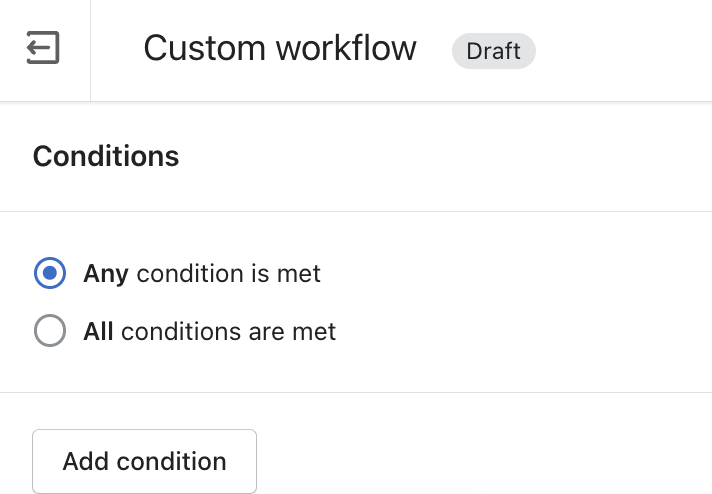
Start with automation depth. The real question isn't whether a tool can automate, it's how far the logic goes. Loop's rules engine is genuinely deep, and the bar to clear is high. Can you set conditions on customer value, so a VIP gets an instant exchange while a serial returner doesn't? Can you exclude final-sale items or specific product tags from eligibility, branch on the return reason, and route each case to a refund, an exchange, or store credit without a person in the loop? The brands that win on returns are the ones whose logic handles those edge cases on its own.
Then there's analytics. Counting returns is easy; explaining them is where margin hides. The insight that actually lowers future returns is SKU-level and variant-level: which color gets sent back, which size runs small, which item draws a recurring "quality" or "defective" reason code. That reason-code data, broken down by variant, is what tells merchandising to fix a product instead of quietly absorbing the loss. No free-text mining required; the structured reason codes do the work.
Finally, Shopify integration. The honest concession: Loop owns the most polished native-Shopify exchange admin on the market, and a Shopify-only brand will feel that polish on day one. The depth worth weighing against it sits elsewhere. AfterShip Returns lets a shopper start a gift return through a branded portal without an order login, works across international storefronts and 14+ ecommerce platforms, and is the only returns solution supporting the Shopify Store Credit API. Standalone Happy Returns mostly sits out this part of the contest; as a drop-off network, its strength is the physical experience, not a software rules-and-analytics layer.
The takeaway: on the table-stakes returns features, the options look more alike than the marketing suggests. What actually separates them is how deep the automation and analytics go, and a question the feature grid never asks: whether your returns data can see the rest of the post-purchase journey at all.
The Pivot: Are You Solving a Returns Problem or a Post-Purchase Problem?
Step back from the feature grid and ask a harder question. Why did that return happen in the first place?
A surprising share of returns aren't really returns. They're symptoms. The package showed up four days late, so the customer already rebought elsewhere. The product page set the wrong expectation, so the item never had a chance. Something went sideways earlier in the journey, and the return is just the receipt for it.
Here's the blind spot. A returns-only tool can see the return, but not the tracking event that caused it. It logs that a customer sent back a jacket, not that the jacket landed nine days late after a carrier exception. The "why" lives in a different system, on a different screen, owned by a different tool, so the pattern never connects. That's the data silo, and it quietly caps how far you can ever drive returns down.
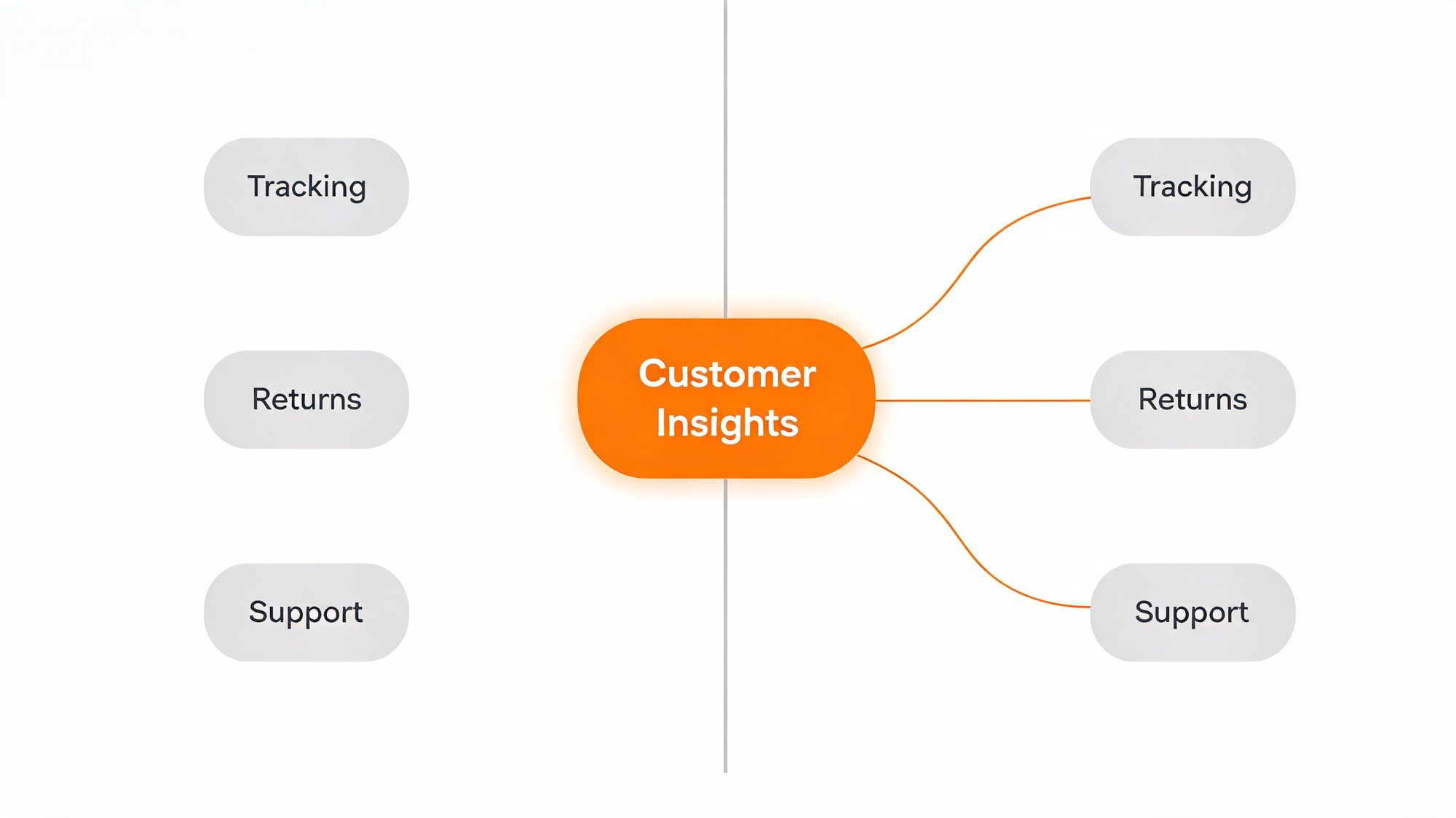
This is the real decision hiding under the Happy Returns vs Loop question. A point solution treats the return as the problem. A platform treats it as one signal in a connected post-purchase journey, where tracking, shipping, and returns data finally share a screen and a pattern in one becomes an answer in another.
So the question isn't which returns-only tool is best. It's whether you keep buying tools that can't see the cause of the problem they're hired to fix, or move to a platform that can, one that doesn't ask you to give up the drop-off network you came here for.
The Platform Advantage: Get the Best Network with Superior Integration
AfterShip Returns is the platform that closes that gap. And here's the part most teams don't see coming: it plugs into the exact Happy Returns Return Bar network you were weighing in round one. AfterShip is a named Happy Returns Preferred Portal Partner, so you get the same box-free, in-person drop-off, running on top of a connected post-purchase platform.
Read the fine print up front, because the honesty is the point. The Happy Returns drop-off through AfterShip is US-only. It requires a separately signed Happy Returns contract. And it caps each drop-off at nine items. This is the same Happy Returns (a UPS company) network and the same US footprint that Loop and standalone Happy Returns rely on. AfterShip layers the platform on top and pairs the network with mail-in, rate-shopped labels for anything international or larger than nine items, so no return is left without a path.
One label-count clarification, since the numbers blur together in comparisons. The integration page describes return shipping across "12+ couriers like UPS and USPS." That return-shipping courier set is separate from the 68-carrier pool AfterShip uses to auto-generate the cheapest label, and both are separate again from the carrier coverage on AfterShip's Tracking product. Three different sets, three different jobs.
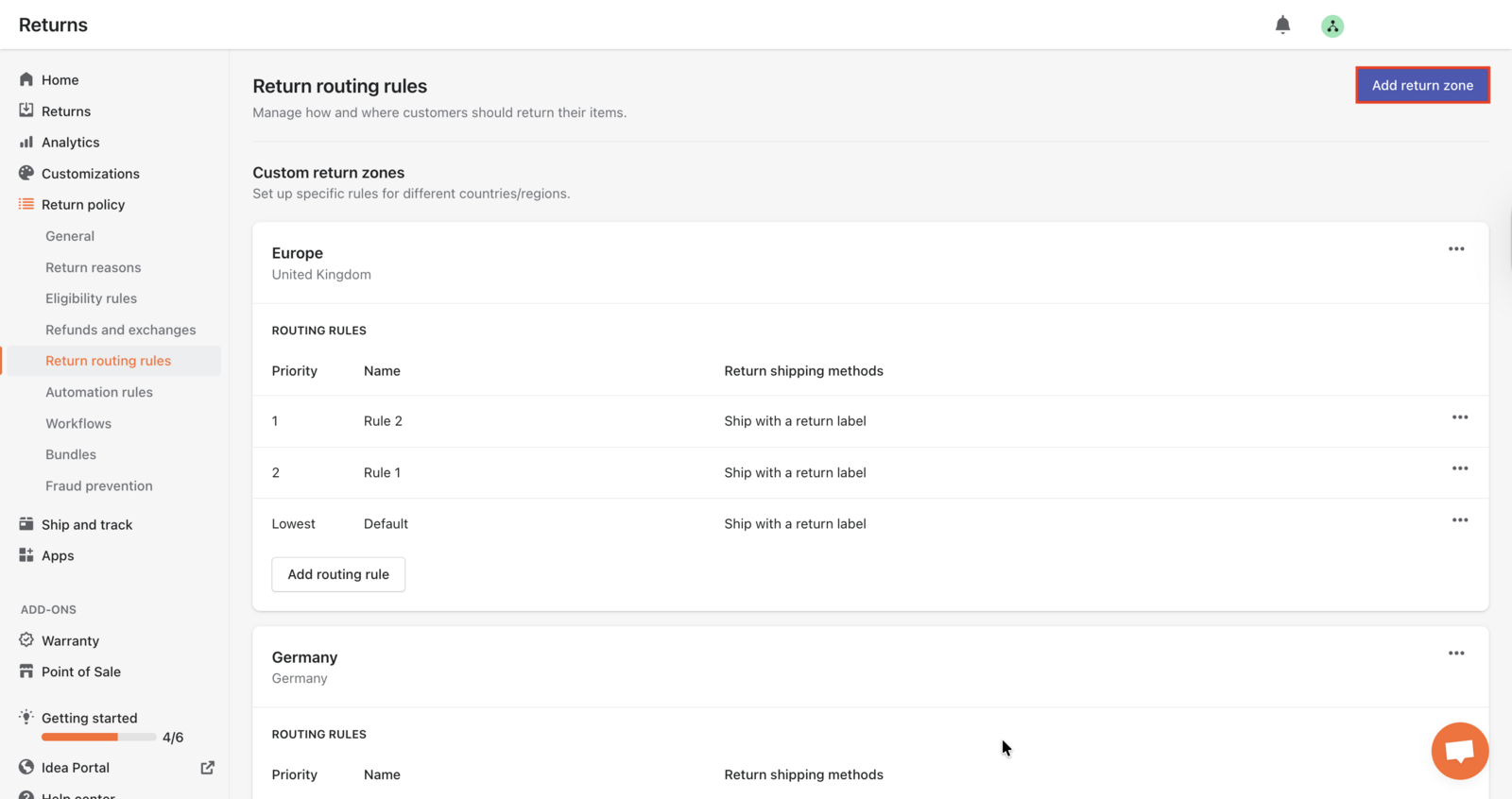
So what does the connected platform actually buy you? Start with the example that ships today.
- Shipping + Returns, live now. For mail-in returns, AfterShip runs multi-carrier smart rate-shopping across the 68-carrier pool and auto-generates the label, so every return rides the cheapest compliant option without anyone pricing carriers by hand. This is the documented, working example, and it lowers reverse-logistics cost from day one.
- Tracking + Returns, one data layer. When tracking and returns sit on the same platform, a carrier exception or a delayed delivery lives in the same system as the return it caused. An operator can connect a late delivery to a return reason instead of cross-referencing two disconnected tools. This is a connected-data advantage, not an automated flag, and return-shipment tracking through the Happy Returns flow uses the separately purchased AfterShip Tracking product.
- Returns analytics that explain the why. SKU-level and reason-code analytics surface which products come back and why, broken down by color, quality, and size at the variant level. That lets you fix a problem SKU at the source rather than re-processing the same return next month.
That's the difference between a tool that records returns and a platform that learns from them.
The payoff isn't theoretical. It shows up most clearly in brands that moved their post-purchase operations onto a connected platform instead of bolting on one more app.
“AfterShip's solutions are making our customer service agents' day-to-day operations easier. At a corporate level, it has also really helped us empower our logistics and operations teams.”
Kari Beiswanger, Senior Product Manager, Retail & Operations
Read their story →Final Verdict: Which Returns Strategy Should Your Brand Choose?
Strip away the positioning and the decision comes down to who you are and where you're headed.
- Choose Loop if you're a smaller, Shopify-only brand (roughly under $5M GMV), your single biggest KPI is driving exchanges over refunds, and you value the most polished native-Shopify exchange admin above all else. Loop built a focused, well-made tool for exactly that job.
- Choose Happy Returns on its own if the in-person Return Bar branding is the non-negotiable, and you're buying the drop-off network as a standalone.
- Choose AfterShip Returns if you're scaling past 1,000 orders a month, you want the same Happy Returns network plus mail-in returns with rate-shopped labels, you expect to support other platforms or markets (AfterShip runs across 14+ ecommerce platforms), and you want your returns data connected to the whole post-purchase journey.
The honest read: if exchanges are the only outcome you track and you'll never leave Shopify, Loop's focus is a real strength. But that focus becomes a ceiling the moment you add platforms, markets, or the need for tracking, shipping, and returns to share one screen. That's the point where the same Happy Returns network, running on a connected platform, becomes the stronger operational bet. For the broader evaluation framework, see our guide on how to choose the right returns software.
Returns automation that enhances the returns and exchanges experience, reduces costs, and retains more revenue.
Book a demoA few specifics that come up most often when teams put AfterShip, Happy Returns, and Loop side by side.
Frequently Asked Questions
Does AfterShip work with the Happy Returns network?
Yes. AfterShip Returns connects to the Happy Returns Return Bar network, which spans 10,000 US drop-off locations as of April 2026. Activating it requires a separately signed Happy Returns contract, the drop-off method is US-only, and each drop-off allows up to nine items.
What is the pricing difference between AfterShip Returns and Loop?
AfterShip Returns starts at $16/mo for Essentials, with Premium at $99/mo and Enterprise custom on direct billing (the Shopify-billing surface shows $19 and $119). Loop Returns starts at $155/mo for Essential, with Advanced from $272/mo and Enterprise custom.
How many carriers can AfterShip generate return labels for?
AfterShip Returns auto-generates return labels across 68 carriers worldwide and offers more than 310,000 drop-off locations, covering 95% of customers worldwide.
Is the Happy Returns drop-off available outside the US?
No. The Happy Returns drop-off method is US-only; both the ship-from and ship-to addresses must be in the US. International returns use mail-in shipping with rate-shopped labels.